
Looking into Tree Removal in The Florida Panhandle?
EZ Acre helps property owners in The Florida Panhandle turn overgrown ground into usable land.
Reach us at 850-787-9300 to ask how a clearing project like yours is usually handled.
The Basics of Clearing a Property
The goal of clearing is a lot that is open, accessible, and ready for whatever comes next, and the plan for the land decides how much is removed and how much is left. Reasons for clearing range from construction to simple upkeep, and that is why the first step is a conversation about the plan.
Most people who search for Tree Removal own a lot or acreage that has grown out of control, and the next step is understanding how clearing is done.
Clearing Thick Vegetation
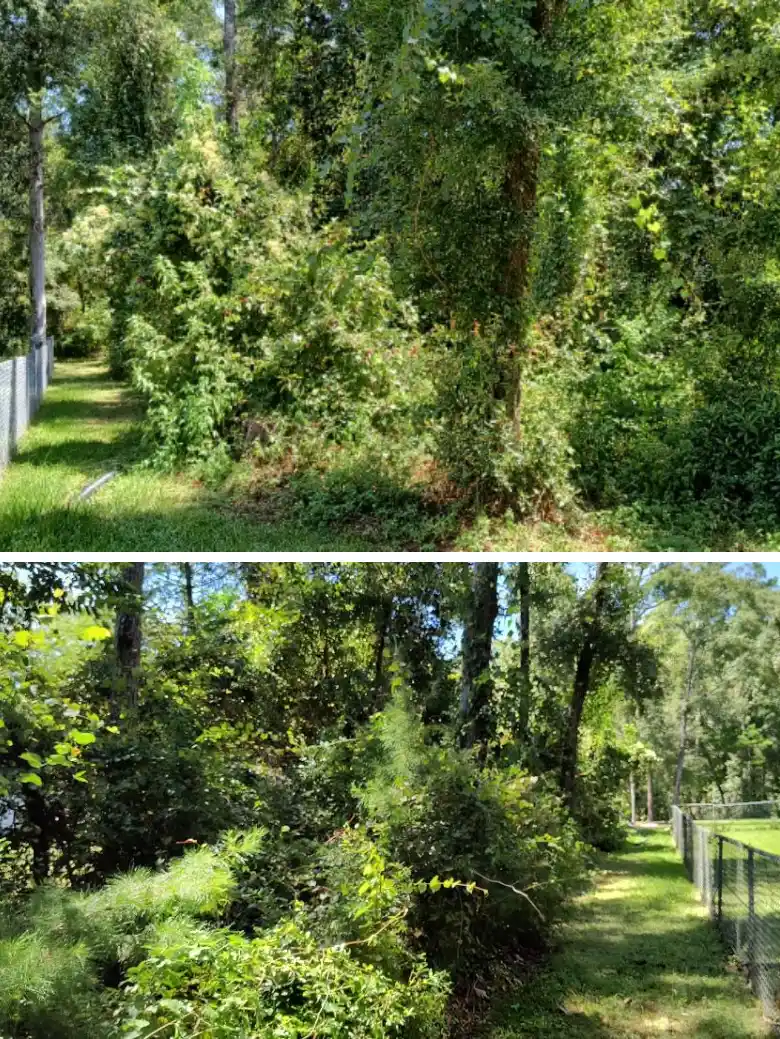
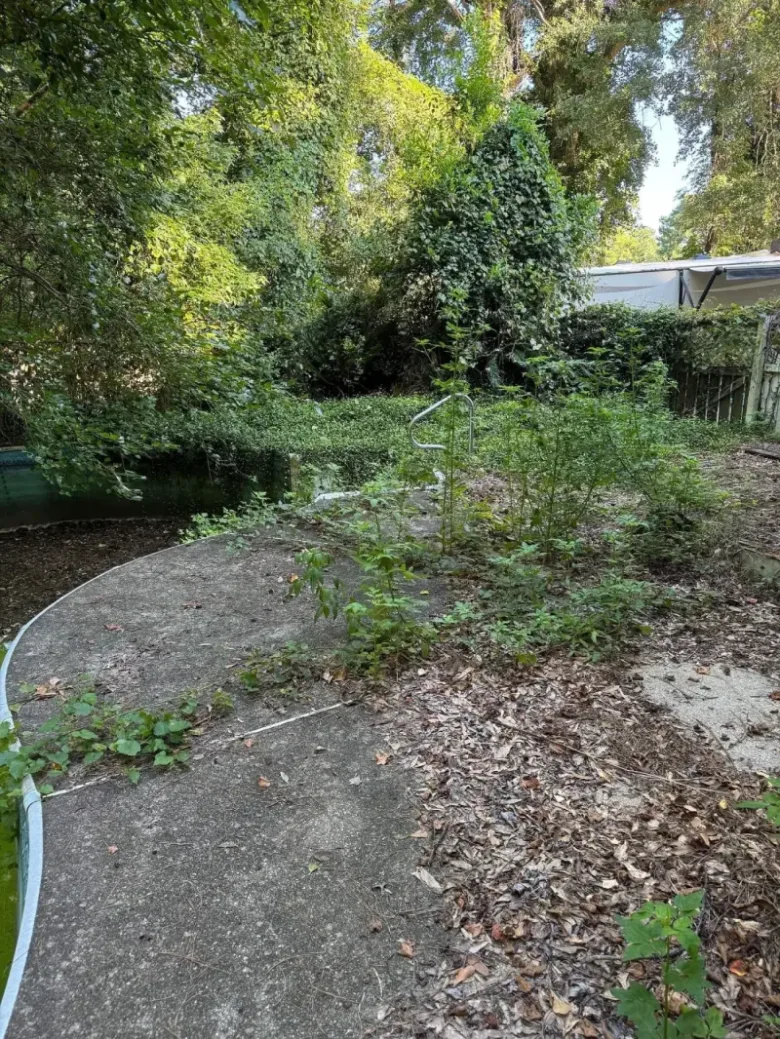
Heavy undergrowth turns a simple lot into an impassable thicket, and removing it opens up the ground so the work and the land can be seen. Fast-spreading invasive species are a problem on many neglected properties, and roots and cuttings may need special handling.
Selective underbrush removal takes out the smaller plants and leaves the larger trees standing, and the remaining trees are protected from the equipment. Clearing everything is the right plan when the land will be reshaped, and the boundary of the work is as important as the work itself.
When the Trees Have to Come Down
Trees are the largest part of many clearing jobs, and they are handled with care, and the work should never be rushed or done without a clear escape path. After the trunk comes down, the stump is the next question, and the owner should decide what to do with stumps before the job begins.
Some trees cannot be cut without a permit or approval, depending on where the property sits, and the crew can often explain what is typical, but the rules come from the local government. Nesting birds and protected animals are a factor on wooded land, and local wildlife agencies publish guidance for property owners.
Choosing a Clearing Method
A mix of tracked machines and attachments handles the trees, brush, and stumps, and smaller lots may be cleared with compact machines and chainsaws. Delicate areas near buildings, wells, and utilities call for hand tools, and that is why a site visit is such a useful first step.
Cutting and hauling away the debris is one approach, and grinding it in place is another, and some trunks can be sold or used for lumber or firewood. Ruts and bare soil can wash away in the next heavy rain, and erosion control may be required near water.
Leaving the Site Ready
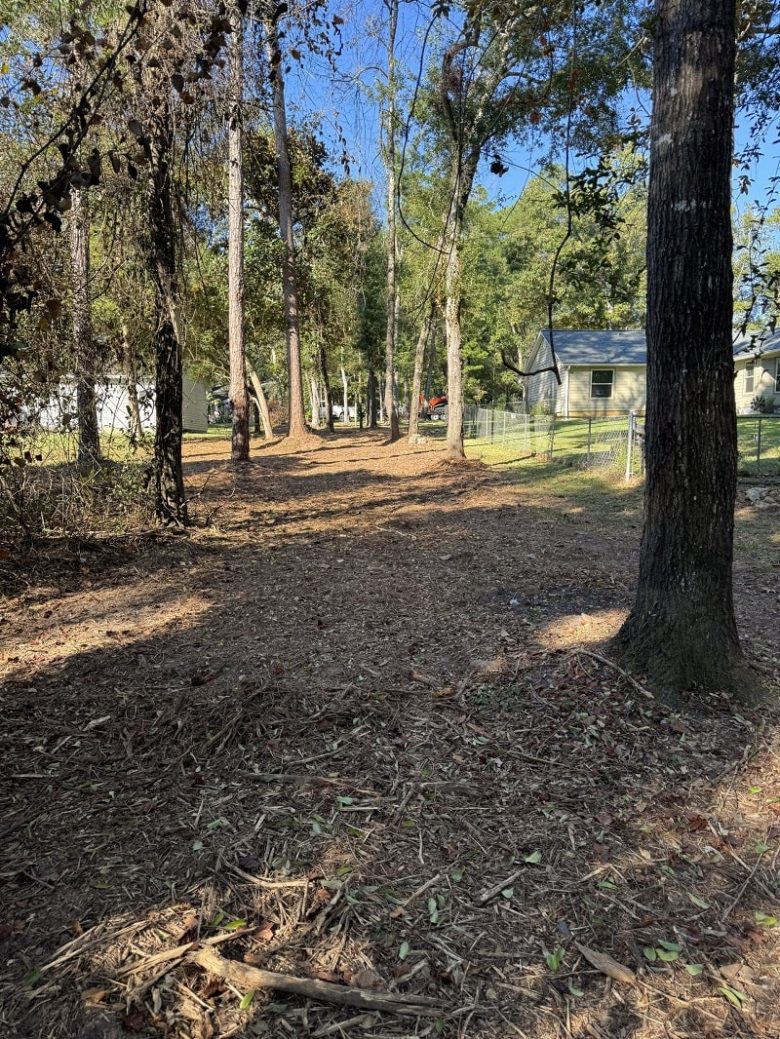
Every clearing project ends with the question of what to do with the material, and hauling, chipping, and leaving it in place each take a different amount of effort. Wood chips and mulch from a clearing job are useful on the property, and the plan should say who handles the material.
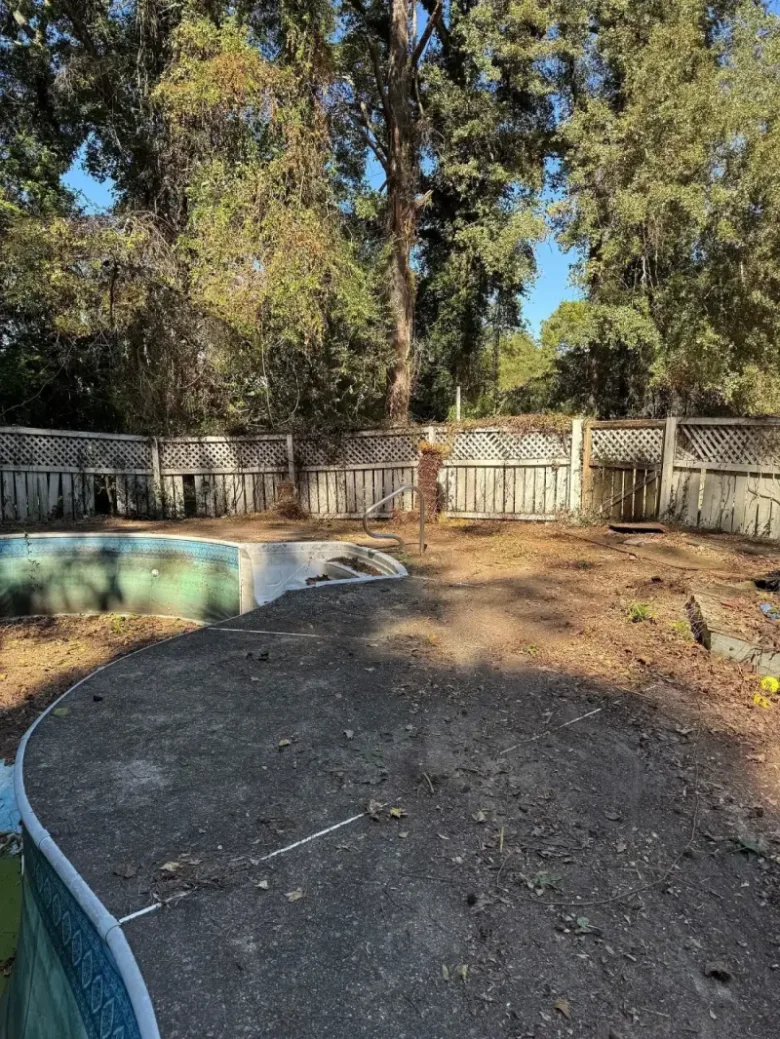
After clearing, the ground is often graded and seeded or stabilized, and owners should decide how the ground will be finished before work begins. A last look at the property catches missed spots and leftover debris, and the result should look like what was discussed.
Working the Land in The Florida Panhandle
Much of the ground around The Florida Panhandle is sandy and soft, and heavy machines can sink, and mats or tracked machines help on soft ground. The wet season runs through the summer months with frequent heavy rain, and lightning means everyone stops until it passes.
A major storm can turn a tidy lot into a field of fallen timber, and leaning or damaged trees should be handled before the next storm. In this climate, growth never fully stops, and many owners schedule follow-up passes.
Making Room for What Comes Next
Builders ask for extra room around the pad for equipment, materials, and grading, and buried roots can rot and leave voids that settle later. A driveway or access road is usually cleared wider than the paved or graveled path, and drainage along the edge keeps the surface from washing out.
A fence row left alone fills with growth that strains posts and tears wire, and a strip cleared on each side makes the fence easy to build and to maintain. Fields and pastures can be reclaimed from growth that has crept in over time, and grazing can resume only after the new grass is established.
Sensitive Areas on a Lot
Marshy corners, swales, and ponds on a property may be subject to protection, and a delineation by a qualified person may be needed before work begins. A cleared slope sheds water and sediment much faster than a vegetated one, and the plan should show where runoff will go.
Overhead lines, wells, septic systems, and drain fields all affect how a lot is cleared, and call-before-you-dig requirements apply across the state. Roots can wrap around pipes, and pulling a stump can drag a line with it, and the safest plan is to leave doubtful areas for a specialist.
Factors That Shape the Schedule
The size of the property is the first factor in how long clearing takes, and access to the property and the condition of the ground also change the pace. Schedules must allow for the weather and for the ground to dry, and owners should be flexible about start dates.
After a first clearing, fast-growing plants quickly try to reclaim the ground, and a yearly pass with a mower or a mulcher keeps the growth in check. A clearing job connected to a plan for the land gives better results, and the crew can suggest a finish that suits the plan.
Neighbors, Boundaries, and Courtesy
Clearing can change the view and the shade of an entire block, and good relations with neighbors outlast the job. A survey or a set of marked corners shows where the property ends, and the cleared area should stay well inside the line.
Preparing for a Clearing Job
Start by marking the boundaries of the area to be cleared, and it helps to photograph the property before work begins. Ask who handles permits, utility locates, and haul-away of the debris, and the schedule can be planned around approvals.
Everything above comes down to one decision, and Tree Removal in The Florida Panhandle is where you make it, and a call usually settles the rest.
Call 850-787-9300 to get your lot ready for its next use.