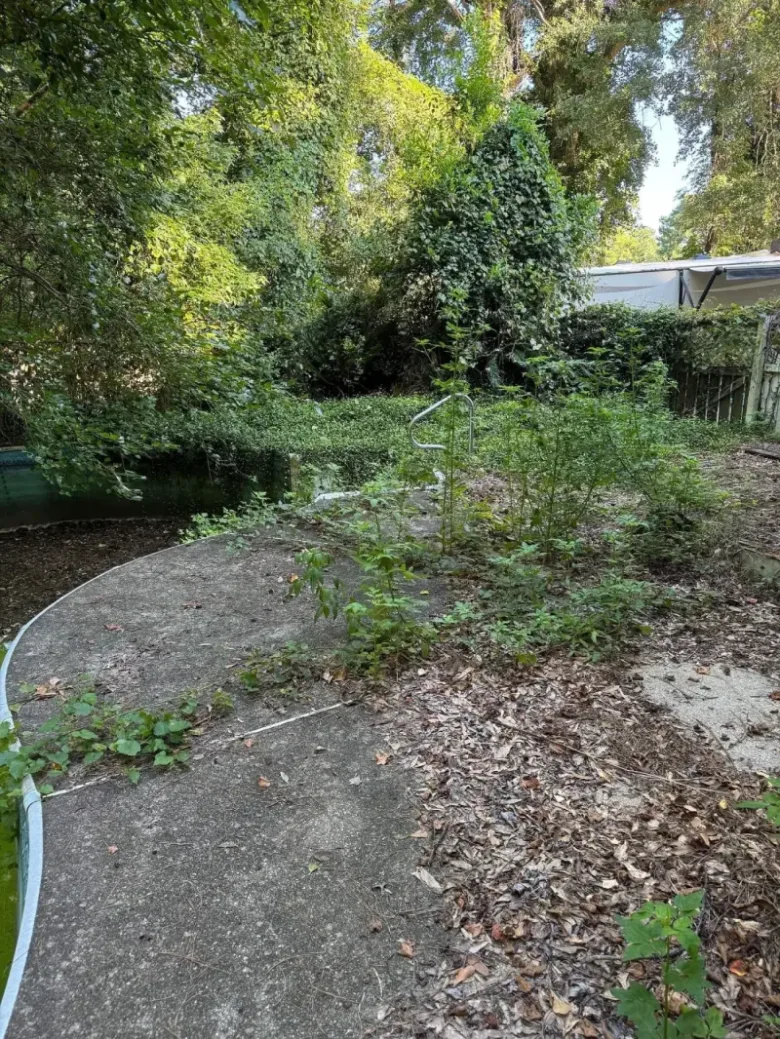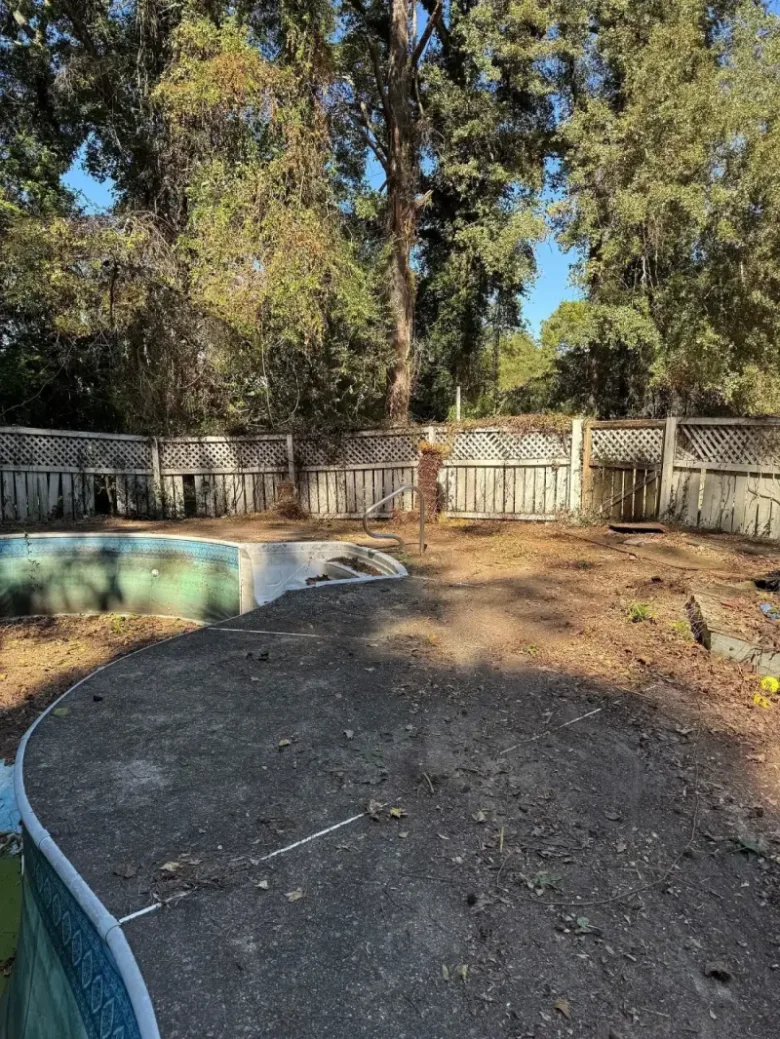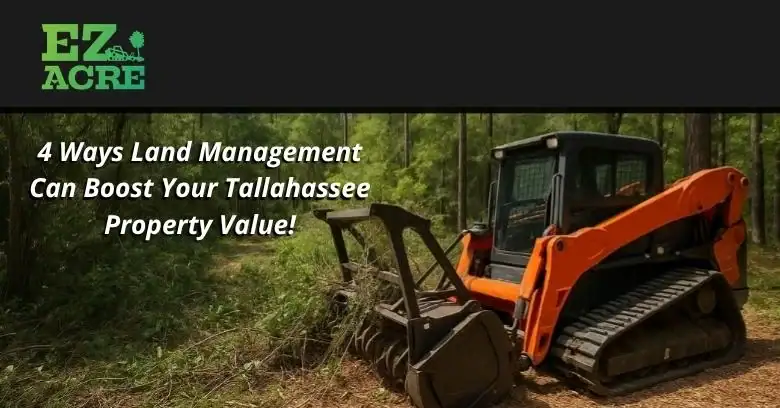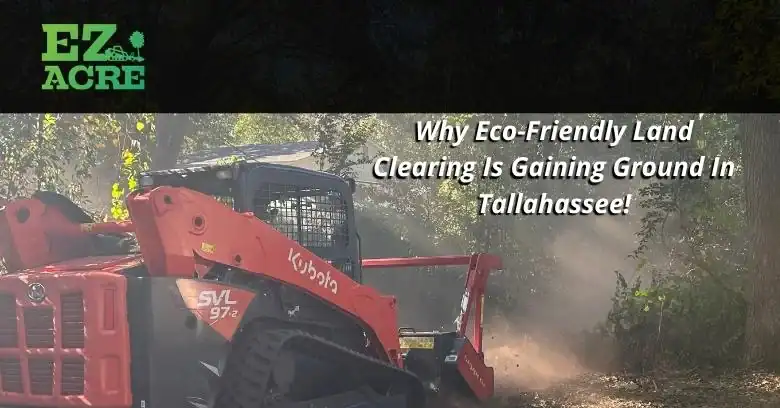
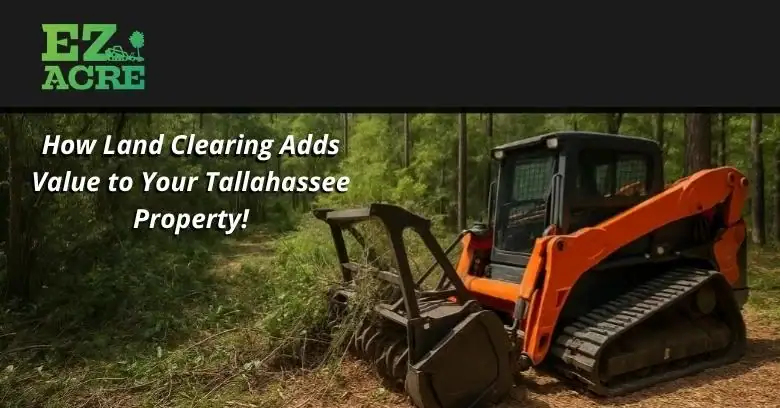
Most property owners in Tallahassee Florida do not buy raw acreage because they want a jungle. They buy it because they picture something, perhaps a homesite on the high ground, a pasture, a shop building, a pond with a clear view, or a driveway that does not require four-wheel drive. Then privet, tallow, greenbrier, and volunteer pine fill in the gaps; a couple of hurricane seasons drop timber across the interior and the property that once looked full of promise becomes something the owner avoids walking. Appraisers, buyers, and lenders in Tallahassee and nearby Quincy Florida react the same way and if nobody can see the land, nobody can value it.
That gap between what a parcel is and what it could be is exactly where land clearing work pays for itself. Removing vegetation is not landscaping; when done correctly by a skilled land clearing contractor, it is a capital improvement that changes how a parcel is used, permitted, insured, and priced. Done carelessly, it can trigger code violations, erosion on Leon County's red clay slopes, a wave of resprouting invasives, or a mulch bed sitting exactly where a building pad was supposed to go. The difference usually comes down to choosing the right method for the goal and understanding local rules before a machine ever rolls off the trailer.
This article walks through how land clearing adds measurable value to property in and around the capital region - what the two main clearing methods actually produce, which improvements move the needle for buyers and builders, what Leon County and City of Tallahassee tree and stormwater regulations require, how site conditions differ from the northern clay hills to the karst country south of town, when in the calendar the work goes best, and how to evaluate a land clearing contractor before signing anything.
Two Very Different Land Preparation Jobs Sold Under One Name
The single most expensive misunderstanding in the Tallahassee Florida land clearing trade is assuming that all clearing produces the same result. It does not. Two distinct services get marketed under the same label and they leave a property in very different conditions.
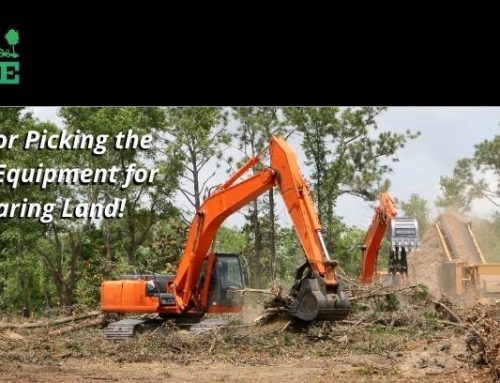
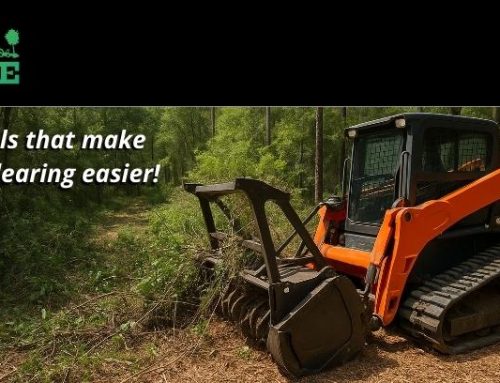
Forestry Mulching: Vegetation Ground in Place
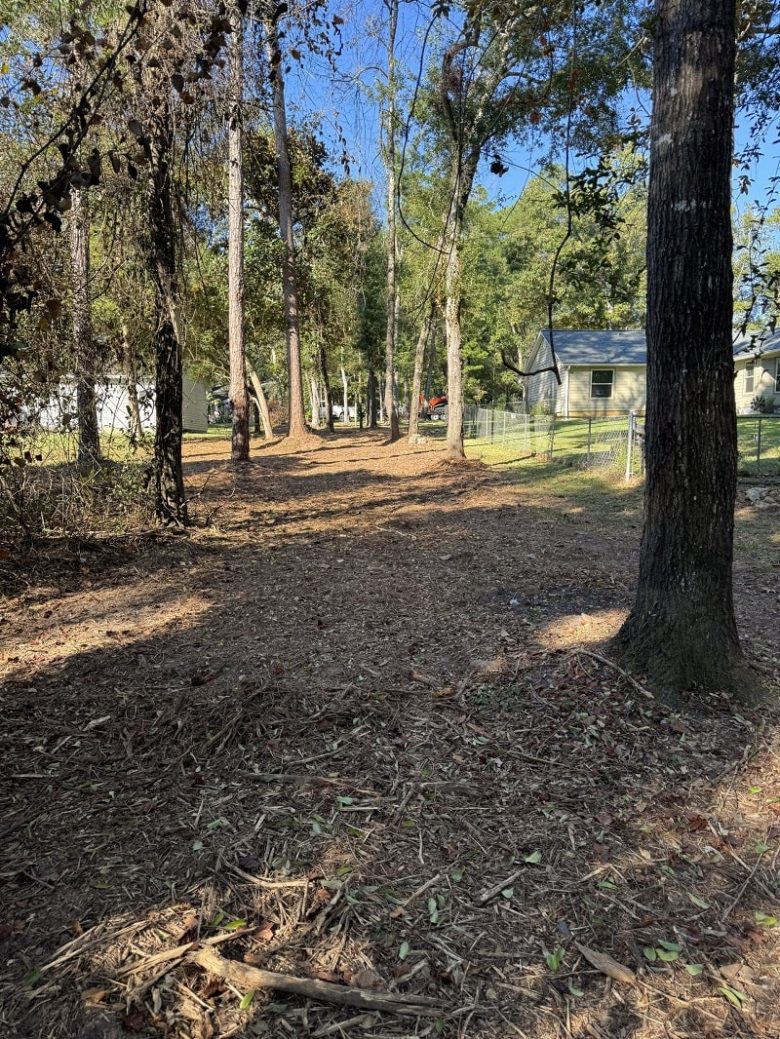
Forestry or hydraulic mulching uses a drum head, typically cutting a six- to eight-foot swath and handling stems up to roughly eight to ten inches, to grind standing brush and small trees into chips that stay on the ground. Roots remain in place. The result is a clean, walkable, park-like understory with a two to four-inch mulch mat.
That mat is genuinely useful. It suppresses regrowth, holds soil on sloping ground, decomposes back into the topsoil, and eliminates hauling and tipping fees at disposal endpoints like the Leon County Solid Waste Facility or Marpan Recycling. Production typically runs half an acre to two acres per day per machine, depending on stem density. Trade pricing across the region generally falls somewhere between $500 and $1,500 per acre for light brush, $1,500 to $3,000 for moderate growth, and $3,000 to $6,000 where hardwoods, vines, and eight-inch-plus stems dominate.
Mulching is the right call for trails, hunting lanes, fence lines, view corridors, pasture reclamation, and general overgrowth. It is the wrong call if a slab, a septic drainfield, or a compacted road base is going in that exact spot.
Grub and Haul: Root Mat Removed, Dirt Exposed
When the goal is a buildable pad in Tallahassee or Quincy Florida, the root mat has to come out and organic material has to leave the footprint. Grubbing, hauling, and rough grading is heavier, slower work and is commonly $4,000 to $10,000 or more per acre, but it is the only option that produces ground an engineer or building inspector will accept under a foundation. Mulch and stumps cannot stay beneath a slab or a drainfield; they decompose, settle, and create voids.
A practical middle path works on many parcels: grub only the building envelope, driveway, and septic area, then mulch the remaining acreage for access and appearance. That approach captures most of the visual and usability value without paying pad-grade prices across the whole tract.
Where the Added Value Actually Comes From
Land clearing raises value through several separate mechanisms and a good plan targets the ones that matter for the specific property.
1. Turning Hidden Acreage into Usable Space
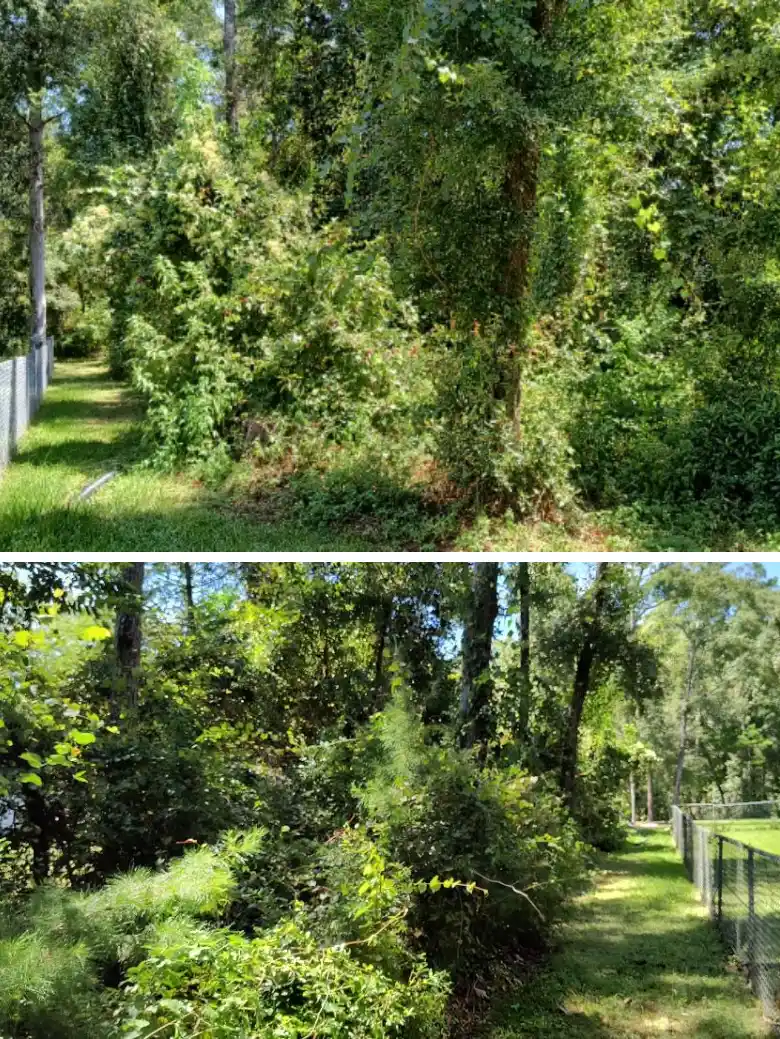
A wooded ten-acre parcel and a cleared ten-acre parcel appraise differently because buyers price usable area. Once a parcel is opened up, the pad location becomes obvious, the driveway route becomes surveyable, and a buyer can stand in one spot and see what they are buying. Land clearing in Tallahassee Florida frequently reveals topography, old fence lines, wet-weather drainage patterns, and even usable pond sites that were invisible under twenty years of brush.
2. Access, Fire Safety, and Insurability
Emergency vehicles, delivery trucks, and concrete trucks all need a passable route. So does a fire crew. Florida's peak wildfire season runs February through April and an overgrown lot near a structure is a liability during those months. The standard defensible-space model calls for a thirty-foot lean, clean, and green zone immediately around the structure and reduced fuel out to one hundred feet. Establishing that buffer is one of the cheapest risk reductions a rural homeowner can make and it is a routine part of land clearing near Quincy Florida and throughout Gadsden and Leon counties.
3. Timber That Offsets the Bill
On parcels with marketable planted pine, the math changes. Stands can carry roughly forty to seventy tons per acre, with pine pulpwood stumpage typically in the $8 to $14 per ton range and sawtimber often $25 to $35 per ton. On enough acreage, a thinning or harvest can offset a meaningful share of land clearing costs. Have that conversation before you mulch anything, because grinding merchantable stems into chips permanently destroys their value.
4. Killing Invasives Before They Take the Property Back
Chinese privet, Chinese tallow (popcorn tree), coral ardisia, camphor, nandina, mimosa, kudzu, Japanese climbing fern, air potato, and cogon grass are all established locally. Several of them resprout aggressively after cutting. Privet and tallow in particular return thicker than before unless the cut stumps receive herbicide treatment at the time of clearing. Cogon grass deserves special caution as equipment spreads it between sites, so machines should be cleaned before moving. A land clearing contractor that ignores follow-up treatment is selling a two-year result, not an improvement.
Permits, Protected Trees, and the Canopy Roads
Both the City of Tallahassee and Leon County regulate tree removal through their environmental management and land development codes. Protected and significant trees including live oak, southern magnolia, and large hardwoods among them generally require a permit before removal which may trigger mitigation or replacement inches. Thresholds change, so verify current requirements with the reviewing jurisdiction rather than assume them.
Canopy Road Protection Zones add another layer along Old Bainbridge, Centerville, Meridian, Miccosukee, Old St. Augustine, Pisgah Church, Moccasin Gap, and Sunny Hill roads. These zones extend roughly one hundred feet from the road centerline and carry tight limits on what can be cleared. A crew that starts cutting inside one of those corridors without checking creates an expensive problem for the landowner, not for itself.
Land-disturbing work above county size thresholds also requires an environmental or stormwater permit in the Tallahassee Florida area and disturbing one acre or more pulls in NPDES construction stormwater coverage with its own erosion-control obligations. Wildlife rules also apply: the gopher tortoise is state-threatened and you must survey and relocate occupied burrows under an FWC permit before disturbing ground; burrows are common in the sandy soils of south Leon County and the Wakulla flatwoods. Migratory bird nesting season runs March through August. Bat maternity season runs roughly April 15 to August 15, both of which affect tree work timing.
Before moving any equipment, request Sunshine 811 locates. They are free and require two full business days' notice and in this area, utility service splits between City of Tallahassee Utilities and Talquin Electric, so both may be involved on the same road.
Soils and Terrain Change the Plan Across the Region
North Leon County including Bradfordville, Killearn, and the Lake Iamonia side sits on rolling red clay hills where exposed soil moves fast during a summer downpour. Leaving a mulch mat rather than scraping to bare dirt is often the difference between a stable slope and a rutted washout. South Leon toward Woodville and Crawfordville sits on the Woodville Karst Plain, where sinkholes, springs protection zones, and shallow limestone demand a lighter touch and careful equipment routing.
West of the Ochlockonee, conditions shift again toward mixed hardwood bottoms and agricultural ground. Land clearing near Quincy Florida often involves pasture reclamation, fence-line restoration, and clearing around older farm infrastructure rather than new residential pads. A land clearing contractor working on properties in Quincy should be comfortable with cattle operations, gate access, and leaving ground that a bush hog can maintain afterward. Around Monticello, Miccosukee, and Lake Talquin, road access and turnaround room for lowboys often limit scheduling.
Timing the Work for Best Results
Season affects cost, quality, and comfort more than most owners expect.
- December through February is prime land clearing season as vegetation is dormant, ground is firmer, visibility through the understory is at its best, and ticks, chiggers, yellow flies, and snakes are largely absent.
- February through April is peak wildfire season, which makes it the deadline for defensible-space work rather than a comfortable starting point.
- March through August overlaps migratory bird nesting and mid-April through mid-August overlaps bat maternity season, both of which can restrict removal of certain trees.
- June through September brings six to eight inches of rain per month and saturated ground means rutting, mud tracked onto pavement, and access delays.
- June 1 through November 30 is hurricane season; the region still remembers Hermine in 2016, Michael in 2018, Idalia in 2023, the May 10, 2024 tornado outbreak, as well as Debby and Helene later that year. Post-storm debris backlogs stretch schedules for months.
Owners planning storm-hardening work including thinning stressed pines away from structures and clearing driveways so crews can reach a house are far better served doing it in winter than in the middle of a warning cone.
Choosing a Qualified Land Management Contractor
Equipment is easy to rent; judgment is not. When comparing bids, the questions that separate operators are about process, not price per hour. A qualified land clearing contractor in Tallahassee should be able to explain in plain terms which method is being used where, what happens to the debris, how property lines will be established, and what protects the septic system and driveway.
Worth asking before signing:
- Which portions get ground in place and which get excavated to dirt, marked on a map.
- Where the debris ends up and whether disposal fees are included in the number.
- How boundaries will be confirmed when no recent survey exists and whether a surveyor is needed.
- Whether cut-stump herbicide treatment is included for resprouting species.
- What ground protection is used across lawns, culverts, and paved approaches.
- Proof of liability coverage and workers compensation.
- Who is responsible for pulling tree, environmental, or stormwater permits.
Burning deserves its own conversation. Pile burning requires same-day authorization from the Florida Forest Service and land clearing debris burns carry stricter requirements than ordinary yard-trash piles. The yard-pile rules alone cap diameter at eight feet and require twenty-five feet from woods, fifty feet from paved roads, and one hundred fifty feet from occupied buildings. Many owners find grinding and spreading simpler than managing an authorized burn.
Qualified land clearing services in the Tallahassee area take a team-oriented approach built on collaboration, respect, and high energy on every project. This commitment shows in the details clients appreciate: crews arrive on time, operate equipment carefully to prevent damage, and leave the property cleaner than they found it. This standard of excellence extends to nearby locations such as Quincy, Crawfordville, Monticello, and other North Florida communities, where residential, commercial, and agricultural properties each require tailored plans to meet their specific needs.
Conclusion
Land clearing is one of the few improvements that simultaneously increases usable acreage, reduces wildfire and storm risk, exposes the true shape and quality of a parcel, and prepares it for whatever comes next and it does all of that faster than almost any other investment in raw land. The owners who get the most out of it decide the end use first, choose mulching or grubbing accordingly, verify tree and stormwater requirements before work begins, and schedule during the dry winter window when ground conditions cooperate. Waiting rarely helps as brush thickens, invasives spread, wildfire season arrives in February, and hurricane season fills local schedules from June onward.
Property owners considering land clearing in Tallahassee Florida or anywhere across the Big Bend should walk their parcel with an experienced land clearing contractor now, get a written scope that spells out method and debris handling, and reserve a winter slot before the calendar fills. The land will not clear itself and every season it waits makes the job bigger!
Key Takeaways
- Forestry mulching leaves roots and a mulch mat in place, while grubbing removes the root mat entirely. Only the second produces ground suitable for a slab, driveway base, or drainfield.
- A two to four-inch mulch mat suppresses regrowth, protects red clay slopes from erosion, and eliminates haul-off and tipping fees.
- Protected trees, Canopy Road Protection Zones, stormwater thresholds, and gopher tortoise burrows can all require permits, so verify requirements before equipment arrives.
- December through February offers the firmest ground, best visibility, and fewest pests, while summer rains and hurricane season create rutting and scheduling delays.
- Privet, tallow, and other aggressive invasives return thicker unless you treat stumps with herbicide at the time of clearing.
- Marketable pine can offset part of the project cost, so evaluate timber value before grinding anything into chips.
Frequently Asked Questions
Will the brush just grow back after land clearing?
Some of it will, unless you address regrowth directly. Species like Chinese privet, Chinese tallow, camphor, and mimosa resprout vigorously from cut stumps and root collars, so cut-stump herbicide treatment at the time of clearing is what makes the result last. A thick mulch mat also slows seed germination and periodic mowing or spot treatment keeps a cleared tract open long term.
Can a house, fence, or barn be built on mulched ground?
Not directly as mulched ground still contains stumps and an intact root mat, which cannot remain under a foundation or a septic drainfield. Fence posts can often be set in mulched areas with some adjustment around stumps and cattle can graze mulched pasture once grass establishes. For structures, the building envelope needs to be grubbed, hauled, and graded.
Is a tree removal permit required and who obtains it?
Yes, in many cases, particularly for protected or significant trees and for anything inside a Canopy Road Protection Zone. The City of Tallahassee and Leon County both regulate removal through their environmental management as well as land development codes and mitigation may apply. Assign responsibility for pulling permits in writing in the contract before work starts.
Does the mulch get hauled away or left on site?
In standard forestry mulching, the material stays on site as a soil-protecting mat, which is one reason the method costs less than grubbing. If a customer wants a bare-dirt finish, debris must be excavated and hauled to a facility such as the Leon County Solid Waste Facility or Marpan Recycling and those trucking and tipping costs are added to the job.
Will heavy equipment rut the yard or damage the driveway?
It can if the site is not managed, which is why timing, machine selection, and ground protection matter. Winter clearing on firm soil dramatically reduces rutting compared with the wet season and mats or plywood can protect lawns, culvert crossings, and paved approaches. Flag any known weak spots, including septic tanks and shallow lines, during the walkthrough.
How are property lines located without a current survey?
Crews typically start with recorded plats, county parcel mapping, existing fence lines, and found corner markers, then set flagging along the intended work limits. That is adequate for interior work well inside the boundary, but for clearing right up to a line, especially near a neighboring structure, a licensed surveyor should establish the corners first. Clearing across a boundary creates liability no contractor wants.
What protects a septic tank and drainfield during land clearing?
Locate and mark the tank lid, distribution box, and drainfield lines before any machine crosses the area, then avoid them entirely with tracked equipment. Compaction over a drainfield damages its ability to drain and grinding above shallow laterals can crush them. Owners who do not know their system layout can usually get the permit drawing from the county health department.
Can a landowner burn the debris piles themselves?
Only with authorization and land-clearing debris burns carry stricter rules than ordinary yard-trash piles. The Florida Forest Service issues same-day burn authorizations and yard-pile rules alone limit piles to eight feet in diameter with setbacks of twenty-five feet from woods, fifty feet from paved roads, and one hundred fifty feet from occupied buildings. Many owners find grinding the material simpler and safer than managing a burn.