

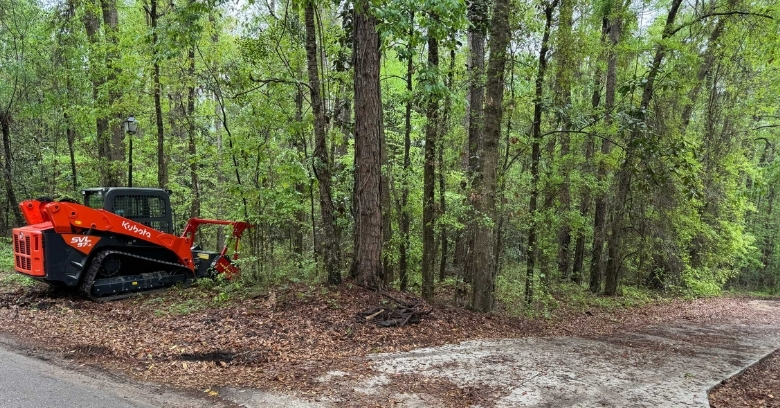
Comparing Forestry Mulching in Tallahassee Florida?
EZ Acre handles mulching jobs on lots and acreage around Tallahassee Florida.
Reach us at 850-787-9300 to describe your property and the growth on it.
Turning Growth Into Mulch
A mulch layer is any covering of plant material that sits on top of the soil, and each has its own equipment, its own purpose, and its own best season. Covered soil loses less water to the sun and the wind, and it also slows the washing away of soil in heavy rain.
Anyone comparing options for Forestry Mulching is typically facing thick growth or exposed soil, and the rest of this page explains the main types and the details that matter.
Forestry Mulching
This method grinds standing vegetation into mulch without hauling any of it away, and there are no burn piles to tend and no debris to haul. Leaving the ground largely intact is one of the main reasons owners choose mulching, and sandy soil stays in place better with the roots left in the ground.
Larger mulching heads can take trees many inches across, and smaller ones are meant for brush, and a walk through the land before the work marks what stays. The depth of chips varies with the amount of growth that was cut, and it breaks down slowly and returns nutrients to the soil.
Protecting Soil With a Liquid Mulch
Hydraulic mulching sprays a slurry of water, mulch fibers, and often seed onto bare ground, and the method covers acres in a day where hand spreading would take weeks. Hydromulch protects soil while seed sprouts and roots take hold, and slopes and drainage swales benefit the most.
Planting season and rainfall both shape the timing of a spray job, and some mixes include fertilizer to help the grass start. A mix chosen for local conditions establishes faster, and watering during the first weeks speeds up growth.
Leaving the Land in Better Shape
Mulch made from cleared brush stays on the land and feeds the soil over time, and fewer trucks and less hauling mean less fuel burned and less traffic. Near streams and wetlands, leaving roots and a mulch cover reduces runoff, and a careful crew will mark the line it will not cross.
Natural mulch has a long track record as a way to protect soil, and a depth of a few inches is enough for most beds. Chips left from a clearing or tree job can be spread on paths and beds, and extra chips can be stacked for later use.
Choosing the Right Machine for the Growth
Forestry mulchers are mounted on skid steers, tracked carriers, or excavators, and the choice depends on the site and the size of the job. A hose reaches into slopes and corners where trucks cannot drive, and the machine must be able to reach the area it will spray.
Safety is a big part of mulching work because the cutting head is powerful, and the crew checks the ground for hidden objects before the cut. Old fencing and debris can be hidden by seasons of growth, and marking the hazards before work begins is a good habit.
Working the Land in Tallahassee Florida
The soil in many parts of this region is thin and sandy and suffers in dry spells, and a layer of mulch can make a real difference to new plantings. The wet season runs through the summer with frequent heavy rain, and bare soil exposed in the wet season needs cover quickly.
Tropical systems topple trees and scatter limbs across properties, and grinding the material in place can be faster than hauling it away. Mulching reduces the thick tangle of dead and living growth that burns, and a clear zone around buildings is a common recommendation.
Holding the Ground in Place
Stumps remain after mulching, usually cut low and often ground down as part of the pass, and stumps left in place rot slowly over several seasons. A slope held by living and dead roots keeps its shape much better than bare soil, and the chip layer adds another layer of protection.
Mulch from a field machine is rougher than the bagged mulch sold for flower beds, and finer chips decay faster than larger pieces. Mulch depth matters, and too much can be as much of a problem as too little, and a light pass with a rake or box blade levels the surface.
Seasonal Planning for Mulching
Machines work best on firm ground, and the drier part of the year provides that, and the best timing depends on what is being grown. Fast-growing plants resprout from the roots left in the ground, and cutting sprouts while they are small is far easier than waiting.
Refreshing a mulch layer is routine upkeep for any landscape, and raking and fluffing the surface helps it shed water. Homeowners in fire-prone areas are advised to use a noncombustible zone near the foundation, and a little planning gives the benefit of mulch with lower risk.
Choosing Between Mulching Types
Forestry mulching is the choice when the problem is thick growth that has to come out, and a freshly graded slope or a new lawn area belongs to the spray method. Using the two together turns wild growth into a stable, planted surface, and a single conversation can settle the whole sequence.
Everyday mulching is about covering soil that already has a purpose, and a thin edge along the lawn keeps the bed neat. Asking the right question at the start saves time, and it helps to have a picture in mind of the finished property.
Sharing the Land With Animals
Wooded and overgrown land is home to birds, reptiles, and small mammals, and the best time to ask is before the machine starts. Cutting during the main nesting months can destroy active nests and young birds, and the mulcher should be stopped if a nest is found.
Planning Your Mulching Project
The first step in any mulching job is knowing exactly where it starts and stops, and it helps to know where utilities, wells, and septic fields are located. Ask who handles permits, utility locates, and any debris that will not be mulched, and the work goes smoothly.
With those questions answered, choosing among Forestry Mulching in Tallahassee Florida gets easier, and it is easy to take it from there.
Call 850-787-9300 to ask about brush, trees, and bare ground on your property.
Verified

Verified
Verified
Verified
Verified














