Property owners in North Florida typically do not wake up one morning wanting a bare dirt plot of land. They want a homesite, a pasture, a food plot, a wider driveway, a pond, or simply ground they can walk across without fighting greenbrier and privet. Land clearing is the means, not the end and that is exactly why so many owners treat it as a commodity purchase, take the lowest number per acre, and end up spending more the second time around than they would have spent doing it correctly the first time.
The stakes are higher in Florida than in many other parts of the country. Leon County and the City of Tallahassee Florida both regulate tree removal; canopy roads carry their own protection zones; gopher tortoises are a permitting issue rather than a curiosity; and the difference between red clay hills in Bradfordville and deep sand in Wakulla County changes what a machine can do in February versus August. On top of that, the region has absorbed a run of debris events including the May 10, 2024 tornado outbreak in Tallahassee, Hurricane Helene in September 2024, Idalia across Jefferson and Madison counties in 2023, and Michael in 2018 that left thousands of acres of downed timber and a lot of owners making decisions in a hurry.
This article walks through the decisions that actually determine whether land clearing returns value or drains it. Understanding the two very different jobs sold under one name, budgeting realistically per acre, navigating permits before equipment rolls, timing the work to the season and the soil, protecting access as well as existing trees, and managing regrowth and invasive species after the machines leave. The goal is simple, to help owners in Tallahassee and nearby Monticello Florida and the surrounding counties buy the right service the first time.
Know What Is Actually Being Purchased
The single most expensive misunderstanding in this trade is that land clearing describes one service when it does not. A full-service land clearing contractor sells two fundamentally different operations under the same name costing different amounts and leaving the ground in different conditions.
Forestry Mulching: Grinding in Place
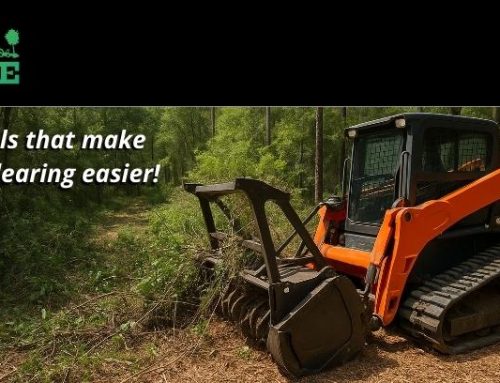
A mulching head such as a Fecon or Denis Cimaf drum on a tracked carrier grinds standing stems, brush, and small trees into chips that stay on site as a mat. Nothing is hauled. There is no burn pile, no spoil, no open dirt. The root mass stays in the ground, which is precisely why the method is so friendly to erosion-prone sites and so fast on acreage.
Trade-wide pricing typically runs from $500 to $1,500 per acre for light underbrush and $2,000 to $4,000 or more per acre once stems over eight inches dominate. Stem density, stem diameter, slope, and ground moisture drive costs. Machine size matters too as a 75-horsepower skid steer with a mulching head handles stems up to about six inches, while a 250 to 300-horsepower tracked unit handles ten to fourteen inch stems without stalling. A mulch mat laid down four to six inches deep will generally suppress regrowth for one to two growing seasons before the site needs re-treatment.
Grubbing and Root-Raking: Removing the Root Mass
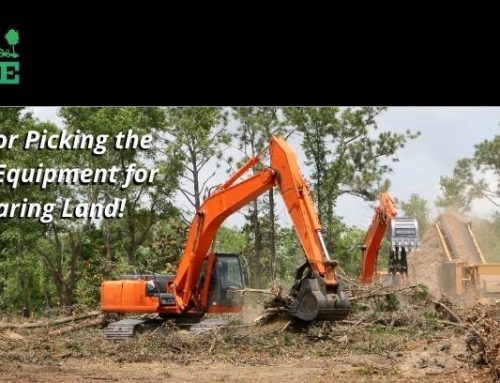
The other job uses a dozer or excavator with a root rake and grapple to pull stumps and roots out of the ground. It produces spoil that must be burned, buried where allowed, or hauled off. It is slower, dirtier, and more expensive, roughly $3,000 to $8,000 per acre nationally as an approximate range, with haul-off and tipping fees as the biggest swing factor. Stump grinding, when it is priced separately, is commonly quoted at around $2 to $5 per inch of stump diameter.
Grubbing is not optional for building pads, septic drainfields, or pond sites. Mulched ground is not compactable ground. An owner who mulches a homesite because it was cheaper, then discovers the engineer will not certify a pad full of decaying roots, pays for the work twice. A competent land clearing contractor asks what the ground will be used for before quoting anything, because the intended use and not the acreage determines the method.
Permits Come Before Equipment
Nothing destroys the economics of a land clearing project faster than a stop-work order. The regulatory layer in this region is real and you can check most of it in advance.
Tree Protection and Canopy Roads
Leon County Code Chapter 10 and the City of Tallahassee Environmental Management Ordinance both govern tree removal. Protected and patriarch trees are graded by species and diameter at breast height, and large canopy species, especially live oaks, can trigger mitigation requirements that cost real money. Thresholds change, so verify them against current code rather than assume them.
Canopy Road Protection Zones add another layer along Old Bainbridge, Centerville, Miccosukee, Meridian, Old St. Augustine, and Sunny Hill roads, where clearing is restricted within roughly 100 feet of the centerline. Owners doing land clearing in Tallahassee Florida on frontage along any of those corridors should treat the setback as a hard constraint in the site plan, not a detail to sort out later.
Stormwater, Wetlands, and Wildlife
Disturbing more than one acre triggers the FDEP NPDES Construction Generic Permit, which means a notice of intent, a stormwater pollution prevention plan, silt fence, and a stabilization plan. Wetlands bring the Northwest Florida Water Management District Environmental Resource Permit into play and in some cases, a U.S. Army Corps of Engineers Section 404 review. In the Woodville Karst Plain, sinkholes cannot be filled, period.
Gopher tortoise burrows deserve their own line item. They must be surveyed and permitted through the Florida Fish and Wildlife Conservation Commission before equipment moves and relocation, not avoidance, is usually the required path. Finally, request underground utility locates through Sunshine 811 before any grubbing begins because a root rake finds a service line the hard way.
Budget the Job, Not the Acre
A per-acre number in isolation tells an owner almost nothing. Two ten-acre tracts on the same county road can differ by a factor of three. The variables that drive a land clearing contractor's price are predictable and owners who understand them negotiate better and get more accurate bids.
- Stem density and average diameter. A pine plantation thinned last decade cuts far faster than twenty years of untouched sweetgum and water oak.
- Slope and drainage, since wet flats with titi and standing water mean days of standby.
- Disposal method such as chips left in place cost nothing to remove, while grapple loads headed to the Leon County Solid Waste facility on Apalachee Parkway carry hauling time and tipping fees.
- Access, including gate width, culvert capacity, and whether a lowboy can turn around at the road.
- Cleanup standard. Rough-cleared for pasture is a different price than pad-ready and graded.
- Stabilization work such as silt fence, bahia, and annual rye seeding on exposed soil.
There is also a potential credit on the other side of the ledger. A marketable pine stand of roughly ten acres or more may attract a logger, and stumpage at approximately $8 to $12 per ton for pulpwood and $25 to $35 per ton for sawtimber, varying by market and haul distance can offset part of the clearing bill. Owners near Monticello Florida with mature planted pine should always price a timber sale before assuming everything gets ground up.
Season, Soil, and Access
Timing is the cheapest lever available. December through March is the best window for land clearing in this region because the ground is drier, vegetation is dormant, understory visibility is good, and ticks, chiggers, yellow flies, and rattlesnakes are far less of a factor for the crew. Work planned for that window tends to finish faster - and faster is cheaper.
June through September brings daily afternoon storms and hurricane season runs from June 1 through November 30. Wet ground means rutting, rutting means repair, and standby days mean schedule slip. Soils sharpen the difference: red clay in Bradfordville and northern Leon County ruts badly when saturated. At the same time, the deep sand around Crawfordville and Wakulla works nearly year-round but erodes if it is left bare on a slope. A land clearing contractor working in Tallahassee Florida should be able to explain which soil is on the property and how that changes the machine selection as tracked carriers spread weight where rubber-tire units would sink.
Access protection matters more than owners expect. Equipment has to get in somewhere, and the route usually crosses a lawn, a driveway, or a culvert. Plywood or mats over soft spots, an agreed staging area, and a conversation about the county's driveway culvert and right-of-way permit requirements all belong in the pre-job walkthrough. Owners around Monticello Florida with long sand drives and older culverts should raise the topic before dispatching the lowboy, not after.
Protecting the Investment After the Machines Leave
Clearing is not a permanent condition. Sunlight hits the ground, seed banks wake up, and within two seasons an untreated site can look untouched. Anyone treating land clearing as a capital improvement rather than a one-time chore should plan for the follow-up.
Invasive species are the priority. Cogon grass is the critical one as mulching a cogon grass patch spreads rhizomes and makes the problem larger, so it needs herbicide treatment first. Chinese tallow, chinaberry, privet, kudzu, Japanese climbing fern, and air potato all resprout aggressively on disturbed ground. Native cover such as loblolly and longleaf pine, sweetgum, water oak, yaupon, wax myrtle, saw palmetto, greenbrier and titi in the wet flats regenerates on its own schedule and can be managed with mowing or a maintenance mulching pass.
The practical maintenance plan for most tracts is a re-treatment pass in the second season, spot herbicide on stumps and invasives, and grass establishment where the ground is meant to stay open. Bahia with an annual rye nurse crop holds soil through the first winter and keeps silt out of the ditches. Owners who budget for that follow-up keep their cleared acreage; those who do not usually pay full price again in three or four years.
Choosing the Right Land Management Contractor
The bid sheet is less informative than the conversation. Owners should ask what method is proposed and why, what happens to the debris, who pulls which permit, how access will be protected, and what the site will look like on the final day. A land clearing contractor who cannot answer those without hedging is quoting a machine, not a project.
Local knowledge is not a marketing line in this region because it is the difference between a smooth job and a permitting problem. A knowledgeable local land clearing company working across the North Florida landscape understands that every tract is a site with its own soil, slope, canopy, and regulatory profile. Property owners comparing bids for land clearing in Monticello and the surrounding Jefferson County countryside should weigh crew reliability, communication, and cleanup standards alongside the per-acre figure, because those are what determine whether the finished ground is usable.
The same standard applies to any land clearing contractor operating around Monticello, Tallahassee, Crawfordville, or Quincy. Show up on time, work to a defined finish condition, and leave the property in better shape than the day the equipment arrived. Owners who hold their contractor to that standard get an asset. Owners who shop on price alone frequently get a mess and a second invoice.
Final Thoughts
Land clearing becomes a smart investment when the method matches the end use, the permits are handled before the first machine moves, the work is scheduled into the dry winter window, and the site gets a maintenance plan instead of being abandoned to the seed bank. Every one of those decisions is made before the job starts, which is why the planning conversation is worth more than a few hundred dollars saved on the bid.
Owners in the Tallahassee Florida area planning a homesite, pasture, pond, or firebreak should start by defining the finished condition they need, then walking the property with a land clearing contractor who can explain in plain language how to get there. Winter fills up quickly across Leon, Jefferson, and Wakulla counties, and permitting for tortoises, wetlands, or protected trees adds weeks on the front end. Starting the conversation early with a Tallahassee and Monticello Florida contractor is the single easiest way to keep the project on schedule and on budget!
Key Takeaways
- Forestry mulching and grubbing are different services with different prices and different results; mulched ground will not support a building pad or a septic drainfield.
- Verify tree removal rules under Leon County Code Chapter 10, the City of Tallahassee ordinance, and any Canopy Road Protection Zone before scheduling equipment.
- Disturbing more than one acre triggers the FDEP construction stormwater permit, which requires silt fence, a stabilization plan, and formal notice.
- Survey for gopher tortoise burrows, obtain FWC permits, and request utility locates through Sunshine 811 before grubbing.
- Schedule work between December and March whenever possible for drier ground, dormant vegetation, and fewer pests.
- Treat cogon grass with herbicide before any mulching because grinding spreads the rhizomes and worsens the infestation.
Frequently Asked Questions
Do I need a permit to clear my own land in Leon County?
Often yes, depending on what is being removed and how much ground is disturbed. Leon County and the City of Tallahassee regulate protected and patriarch trees by species and diameter. Disturbance over one acre triggers a state stormwater permit and canopy road frontage carries additional restrictions. The safest approach is to confirm requirements with the county before scheduling any equipment.
Will mulching kill the stumps or will everything grow back?
Mulching cuts stems to grade but leaves the root system alive, so many species will resprout. A four to six-inch mulch mat typically suppresses regrowth for one to two growing seasons, after which a maintenance pass or stump herbicide treatment keeps the site open.
Can I build a house or install a septic system on mulched ground?
No because mulched ground is not compactable and is not suitable for a building pad or a septic drainfield. Those areas require grubbing and root removal so the soil can be compacted and tested. You must decide the intended use before choosing a clearing method.
Can the debris be burned or does it have to be hauled off?
Pile burning is possible but requires a day-of authorization from the Florida Forest Service, and it is suspended during burn bans or when drought index readings run high. When burning is not available, material is hauled, commonly to the Leon County Solid Waste facility on Apalachee Parkway, and hauling as well as tipping fees become a significant part of the cost.
Is my standing timber worth anything?
Possibly, especially with roughly ten or more acres of marketable pine. Pulpwood stumpage generally runs in the range of $8 to $12 per ton and sawtimber around $25 to $35 per ton depending on market as well as haul distance and a timber sale can offset part of the land clearing expense.
How many acres can a machine clear in a day?
It varies widely with stem density, diameter, slope, and moisture. Light underbrush moves quickly, while heavy stems over eight inches, wet flats, or steep ground can reduce daily production dramatically, which is why an on-site walkthrough produces a far more reliable estimate than an acreage figure over the phone.
Will equipment tear up my driveway or yard?
Not if you plan access in advance. Tracked machines spread weight better than rubber-tire units, mats or plywood protect soft crossings, and a designated staging area keeps traffic off the lawn, all of which should be discussed and agreed on before the equipment is delivered.
What happens if there are gopher tortoise burrows on the property?
Work must stop until the burrows are surveyed and a relocation permit is obtained through the Florida Fish and Wildlife Conservation Commission. Relocation is generally the required path rather than simply working around the burrows and the process takes time, so surveys should happen early in project planning.