Looking into Eco-Friendly Mulching Company in Tallahassee Florida?
EZ Acre works on mulching and land preparation for properties in and around Tallahassee Florida.
Dial 850-787-9300 to describe your property and the growth on it.
The Basics of the Practice
A mulch layer is any covering of plant material that sits on top of the soil, and the three most common kinds are forestry mulching, hydraulic mulching, and ordinary bed mulching. Bare soil dries and crusts, while mulched soil stays cooler and softer, and it can keep a property looking tidy for a long time.
Anyone comparing options for Eco-Friendly Mulching Company is typically facing thick growth or exposed soil, and the next step is understanding which kind of mulching fits.
Forestry Mulching
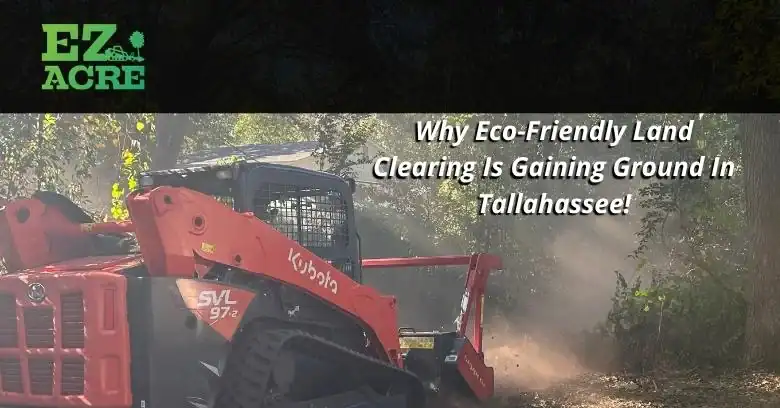
This method grinds standing vegetation into mulch without hauling any of it away, and the chips stay on the ground and form a protective layer. The machine rolls over the ground rather than scraping it, and stumps are cut low, and the remaining roots decay in time.
Larger mulching heads can take trees many inches across, and smaller ones are meant for brush, and a walk through the land before the work marks what stays. Mulching leaves a layer of chips that can be several inches deep, and new grass can be seeded through a thin layer.
Spraying Mulch and Seed on Bare Ground
Hydraulic mulching sprays a slurry of water, mulch fibers, and often seed onto bare ground, and the binder helps the mulch stay put through rain and wind. Erosion control is one of the main jobs of hydraulic mulching, and rules for construction sites frequently require erosion control.
Hydraulic mulching depends on weather, water, and the right mix, and a good schedule fits the application between storms. The mulch only protects the soil until the grass takes over, and new grass needs time before it can take foot traffic.
Mulching With the Soil in Mind
Using the vegetation that was cut as mulch closes the loop on the clearing job, and the mulch layer shelters the soil from sun and rain. Near streams and wetlands, leaving roots and a mulch cover reduces runoff, and the plan should explain how the soil will be protected.
Organic mulch such as wood chips, pine straw, and bark is common in gardens and landscapes, and it keeps roots cool, holds water, and slows weeds. Fresh chips are best left to age a while before they are placed near delicate plants, and aged chips are better for gardens than fresh ones.
How a Mulching Job Gets Done
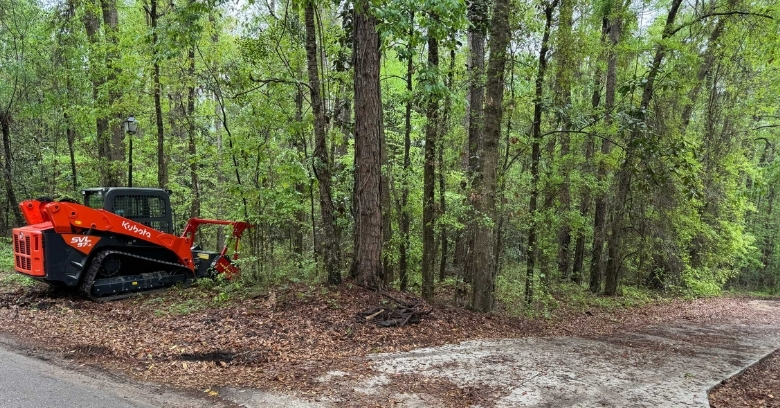
Forestry mulchers are mounted on skid steers, tracked carriers, or excavators, and rubber tracks spread the weight over wet or sandy ground. A hose reaches into slopes and corners where trucks cannot drive, and operators work in passes to cover the area evenly.
Safety is a big part of mulching work because the cutting head is powerful, and nearby buildings, vehicles, and fences need protection from thrown material. Hidden objects in the ground can damage the machine and create hazards, and fixed objects like wells and posts need flags.
Sandy Soil, Wet Seasons, and Storms Around Tallahassee Florida
Sand holds little water or nutrients, and mulch helps with both, and returning chips to the ground builds organic matter slowly. Summer here brings heat, humidity, and daily storms, and machines can bog down in saturated ground, so dry spells are the best window.
Storm damage often leaves fallen trees and tangled brush that need to be cleared, and clearing weak trees and brush ahead of the season reduces what a storm can do. Mulching reduces the thick tangle of dead and living growth that burns, and burn bans are common in dry spells.
Stumps, Slopes, and Erosion
The machine can grind a stump to a few inches above the surface or below it with extra effort, and building areas generally need stumps and large roots removed. The root mass under a cleared slope binds the soil together while new growth starts, and steep ground still needs watching after the first heavy rain.
Chips from a mulching pass vary in size, from fine shreds to chunky pieces, and finer chips decay faster than larger pieces. Mulch depth matters, and too much can be as much of a problem as too little, and it helps to let the crew know where a thick layer is welcome.
Scheduling Around the Weather
Machines work best on firm ground, and the drier part of the year provides that, and planting too early in a dry spell wastes seed. Warm, rainy conditions encourage quick new growth, and the owner may choose a yearly visit.
Mulch breaks down over time and needs topping up where a thick layer is wanted, and a light touch each season beats a heavy overhaul. Fire safety belongs in any plan for dry mulch near buildings, and gravel or bare ground near the walls is a safe choice.
Matching the Method to the Goal
If the land is covered in brush, vines, and small trees, a mulching head is the natural fit, and a freshly graded slope or a new lawn area belongs to the spray method. Clearing first and covering second is a common order on land that will become lawn or pasture, and a gap between clearing and cover is a window for erosion.
Spreading wood chips or bark around trees and shrubs is the simplest and most familiar form of mulching, and the material can be delivered in bulk or made from cleared growth. The best starting point is what you want the land to look like afterward, and it helps to mention any slopes, wet spots, or neighbors close to the work.
Wildlife, Nesting, and Care on Wooded Land
Brush that looks empty can be full of life, especially in spring and early summer, and local wildlife agencies publish guidance for property owners. Cutting during the main nesting months can destroy active nests and young birds, and a short survey of the land by a person who knows the area is useful.
What to Settle First
Flagging tape or stakes help define the limits of the work, and a site visit lets the crew see the land in person. Check local rules, since some areas require approval before clearing or tree removal, and changes are easier to handle on paper than in the field.
Everything above comes down to one decision, and Eco-Friendly Mulching Company in Tallahassee Florida is where you make it, and the next step is a conversation about your property.
Dial 850-787-9300 to ask about brush, trees, and bare ground on your property.
Verified

Verified
Verified
Verified
Verified