

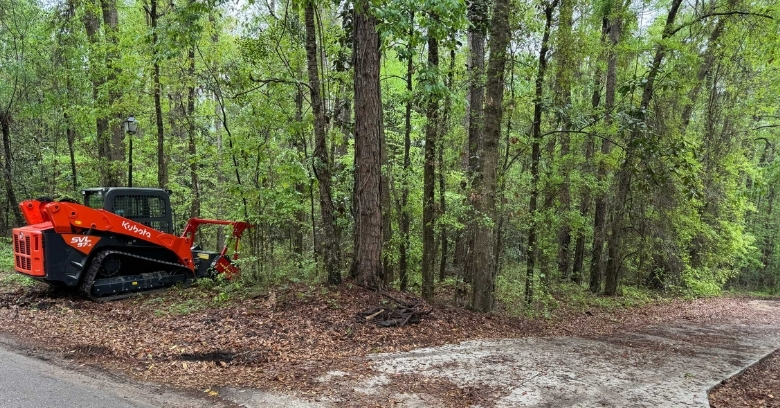
Looking into Eco-Friendly Mulching Services in Tallahassee Florida?
EZ Acre helps property owners in Tallahassee Florida turn brush and small trees into mulch.
Call 850-787-9300 to talk through what you want mulched.
The Basics of the Practice
Mulching is the practice of covering ground with a layer of organic material or of grinding vegetation into chips, and each has its own equipment, its own purpose, and its own best season. Bare soil dries and crusts, while mulched soil stays cooler and softer, and it helps new grass and new plants get established.
Anyone comparing options for Eco-Friendly Mulching Services is typically facing thick growth or exposed soil, and the next step is understanding which kind of mulching fits.
Forestry Mulching
In forestry mulching, a powerful head cuts, grinds, and spreads the growth in a single pass, and it works on thick brush, vines, palmetto, and small to medium trees. The root systems of cut plants stay in place and keep the soil from washing away, and stumps are cut low, and the remaining roots decay in time.
Machines vary in power, and the thickness of the growth determines which one is needed, and selective mulching clears the understory and keeps the shade trees. The finished ground is covered with a carpet of chips, and the layer slows weeds and holds moisture.
Protecting Soil With a Liquid Mulch
In hydraulic mulching, a machine pumps a wet blend of fiber and seed onto the surface, and it is used on slopes, new lawns, roadsides, and freshly graded sites. Hydromulch protects soil while seed sprouts and roots take hold, and sites that have been graded often get hydromulch within days.
Planting season and rainfall both shape the timing of a spray job, and some mixes include fertilizer to help the grass start. Grass types vary in how well they handle sun, shade, and sandy ground, and some sites need a second application.
Leaving the Land in Better Shape
Grinding growth into chips returns plant material to the soil as it decays, and the mulch layer shelters the soil from sun and rain. Care near water is a legal requirement in many cases, not only a preference, and a careful crew will mark the line it will not cross.
Plant-based materials break down and improve the soil over time, and mulch should not be piled against trunks or house walls. Wood chips from clearing are a practical covering for trails, bare ground, and steep banks, and the supply is usually more than the property can use.
What Shows Up on a Mulching Job
Different machines suit different terrain and different density of growth, and the choice depends on the site and the size of the job. The machine blends water, mulch, and seed and sprays the mix through a hose or a boom, and access to the site and a supply of water are part of the planning.
Operators and bystanders both face real hazards on a mulching job, and the operator works from a protected cab. Old fencing and debris can be hidden by seasons of growth, and marking the hazards before work begins is a good habit.
What the Climate Means for Mulching Work
Much of the ground in this region is light, sandy, and low in organic matter, and a covered surface stays cooler in the summer sun. Summer here brings heat, humidity, and daily storms, and schedules should always include some room for weather.
Tropical systems topple trees and scatter limbs across properties, and clearing storm debris promptly keeps the yard safe and usable. Mulching reduces the thick tangle of dead and living growth that burns, and a clear zone around buildings is a common recommendation.
After the Trees Are Cut
The machine can grind a stump to a few inches above the surface or below it with extra effort, and stumps left in place rot slowly over several seasons. Leaving roots intact means rainfall has less power to carry soil away, and new seed can be sown straight into the mulch.
Mulch from a field machine is rougher than the bagged mulch sold for flower beds, and finer chips decay faster than larger pieces. Mulch depth matters, and too much can be as much of a problem as too little, and it helps to check the depth near foundations and keep it thin there.
Scheduling Around the Weather
Machines work best on firm ground, and the drier part of the year provides that, and planting too late can leave bare ground exposed to the storms. Warm, rainy conditions encourage quick new growth, and a managed property stays open with little effort.
Mulch breaks down over time and needs topping up where a thick layer is wanted, and a light touch each season beats a heavy overhaul. Dry wood chips can burn, so thick mulch is best kept away from structures, and it helps to ask local fire officials about the recommendations for the area.
Which Type of Mulching Fits Your Land
If the land is covered in brush, vines, and small trees, a mulching head is the natural fit, and a freshly graded slope or a new lawn area belongs to the spray method. A property may be cleared by mulching and then seeded with a hydraulic application, and owners should ask how the pieces fit together.
Spreading wood chips or bark around trees and shrubs is the simplest and most familiar form of mulching, and a thin edge along the lawn keeps the bed neat. Owners who describe the problem rather than the method get better advice, and it helps to have a picture in mind of the finished property.
Sharing the Land With Animals
Thick brush shelters animals that nest, burrow, and hide in the growth, and some species and their burrows are protected by law. The calendar matters for both legal and practical reasons, and it helps to ask about local rules on nesting season and protected species.
Preparing for a Mulching Job
Start by marking the area to be mulched and describing the growth, and it helps to photograph the property before work begins. Locating buried utilities before any machine goes on the ground is a standard step, and the schedule can be planned around approvals.
That is how most property owners approach Eco-Friendly Mulching Services in Tallahassee Florida, and the next step is a conversation about your property.
Call 850-787-9300 when you are ready to plan a mulching project.
Verified

Verified
Verified
Verified
Verified














