Looking into Hydraulic Mulching in Tallahassee Florida?
EZ Acre handles mulching jobs on lots and acreage around Tallahassee Florida.
Dial 850-787-9300 to start a conversation about your land.
Mulch as a Way to Clear and Protect
The word mulching covers several kinds of work, from grinding brush on site to spreading a protective layer over bare soil, and a short description of the property usually shows which type fits. Covered soil loses less water to the sun and the wind, and it also slows the washing away of soil in heavy rain.
People looking up Hydraulic Mulching usually have a clear idea of the result they want, and the question left is which method suits the property.
Clearing With a Mulching Head
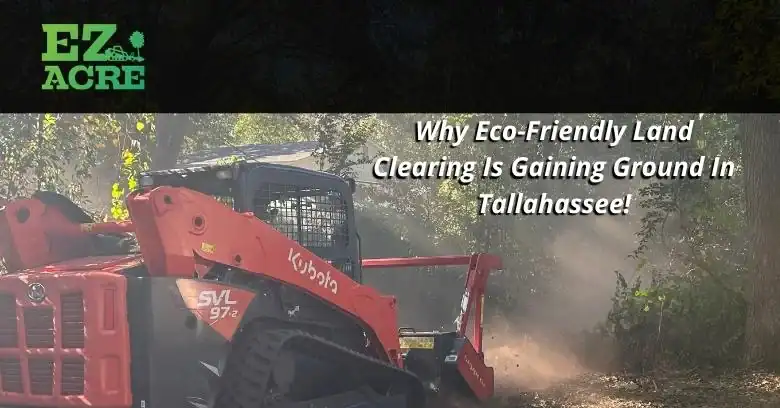
This method grinds standing vegetation into mulch without hauling any of it away, and there are no burn piles to tend and no debris to haul. Forestry mulching disturbs the soil less than pushing and piling does, and fewer ruts and less bare soil mean less cleanup afterward.
Larger mulching heads can take trees many inches across, and smaller ones are meant for brush, and the result is a clean, open, park-like look. The depth of chips varies with the amount of growth that was cut, and it breaks down slowly and returns nutrients to the soil.
Spray-On Mulch Explained
Spray-applied mulch covers large areas of soil quickly and evenly, and the method covers acres in a day where hand spreading would take weeks. Disturbed ground is vulnerable until grass grows in, and rules for construction sites frequently require erosion control.
Applying hydromulch just before a long dry spell wastes seed, and some mixes include fertilizer to help the grass start. A mix chosen for local conditions establishes faster, and patience pays off once the lawn fills in.
Gentler Ways to Clear and Cover Ground
Grinding growth into chips returns plant material to the soil as it decays, and fewer trucks and less hauling mean less fuel burned and less traffic. Care near water is a legal requirement in many cases, not only a preference, and owners should ask about local rules before work begins.
Plant-based materials break down and improve the soil over time, and it needs to be refreshed as it breaks down. Wood chips from clearing are a practical covering for trails, bare ground, and steep banks, and a thick layer on paths keeps mud down.
Machines Behind the Work
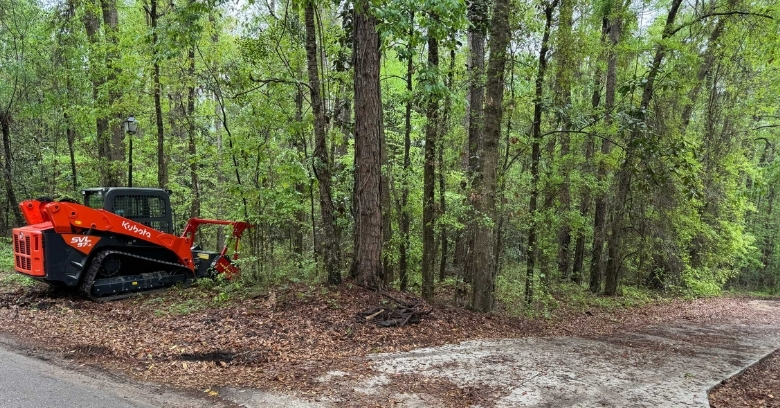
A tracked mulcher can work on soft ground that would stop a wheeled machine, and operators can work close to structures and fences with the right setup. The machine blends water, mulch, and seed and sprays the mix through a hose or a boom, and the machine must be able to reach the area it will spray.
Operators and bystanders both face real hazards on a mulching job, and the crew checks the ground for hidden objects before the cut. Metal and stone strike the teeth and can fly out at high speed, and fixed objects like wells and posts need flags.
Working the Land in Tallahassee Florida
Sand holds little water or nutrients, and mulch helps with both, and mulching can help new lawns and trees get a start. Summer here brings heat, humidity, and daily storms, and machines can bog down in saturated ground, so dry spells are the best window.
After a hurricane, mulching is one way to deal with a large volume of vegetation on site, and clearing weak trees and brush ahead of the season reduces what a storm can do. Thick underbrush is fuel, and dry spells make fires more likely, and burn bans are common in dry spells.
Holding the Ground in Place
The machine can grind a stump to a few inches above the surface or below it with extra effort, and stumps to be removed completely are handled with a dedicated stump grinder. Roots that stay in the ground are the best natural defense against erosion, and bare patches can be covered by hydraulic mulch if needed.
Freshly ground chips are uneven and can contain splinters and long strands, and aging in place lets the layer settle and mellow. Mulch depth matters, and too much can be as much of a problem as too little, and a light pass with a rake or box blade levels the surface.
When Mulching Works Best
Dry weather lets the operator work safely and cleanly on most ground, and planting too late can leave bare ground exposed to the storms. Warm, rainy conditions encourage quick new growth, and cutting sprouts while they are small is far easier than waiting.
Refreshing a mulch layer is routine upkeep for any landscape, and weeds that sprout through a thin layer are pulled early. A clear gap around a house is a common wildfire recommendation, and chips are better used farther out on the property.
Choosing Between Mulching Types
If the land is covered in brush, vines, and small trees, a mulching head is the natural fit, and hydraulic mulching is the choice when the problem is bare soil that needs cover. Many projects use both methods in sequence, and a single conversation can settle the whole sequence.
Spreading wood chips or bark around trees and shrubs is the simplest and most familiar form of mulching, and the appearance is a bonus on top of the benefits to the plants. Asking the right question at the start saves time, and it helps to think about how the land will be used over the next year.
Sharing the Land With Animals
Before a mulcher goes in, the land may hold nests, dens, and burrows, and a walk through the area before the cut shows many of the signs. Timing the work outside the peak nesting period reduces harm to wildlife, and leaving a strip of untouched growth gives animals a place to go.
Preparing for a Mulching Job
The first step in any mulching job is knowing exactly where it starts and stops, and a plan on paper keeps the crew and the owner on the same page. Check local rules, since some areas require approval before clearing or tree removal, and the owner and the crew start with the same expectations.
With those questions answered, choosing among Hydraulic Mulching in Tallahassee Florida gets easier, and it is easy to take it from there.
Reach us at 850-787-9300 to start planning the work.
Verified

Verified
Verified
Verified
Verified