Getting ready for Invasive Growth Clearing Services in The Florida Panhandle?
EZ Acre helps property owners in The Florida Panhandle turn overgrown ground into usable land.
Phone 850-787-9300 to start a conversation about your land.
What the Work Really Covers
Clearing takes a wild or overgrown parcel and turns it into ground that can be built on, fenced, or farmed, and the amount of work depends on how thick the growth is and what the owner plans to do. A buyer may clear a lot to build, while an owner may clear to reclaim a neglected yard, and that is why the first step is a conversation about the plan.
Most people who search for Invasive Growth Clearing Services own a lot or acreage that has grown out of control, and the next step is understanding how clearing is done.
Clearing Thick Vegetation
Brush is the mix of shrubs, saplings, vines, and tangled growth that fills in an untended lot, and clearing it makes it possible to survey, plan, and build. Fast-spreading invasive species are a problem on many neglected properties, and the removal plan should include a way to keep them from returning.
Selective clearing removes only the growth that is in the way, and a walk through the land with the crew helps settle this. Total clearing is the usual approach for a building pad or a new road, and owners should say early which approach they want.
Trees in a Clearing Project
Felling, limbing, and cutting up trees takes planning and the right equipment, and ropes, lifts, and sectional cutting are used when a tree cannot fall freely. Stump removal is a separate step from cutting the tree, and the plan for the area decides the best method.
Regulations on trees vary, and some places require approval before cutting, and the city or county office can say what applies to a given lot. A wooded lot is a home for animals, and the law protects some of them, and the planning stage is the time to raise this.
Equipment and Methods
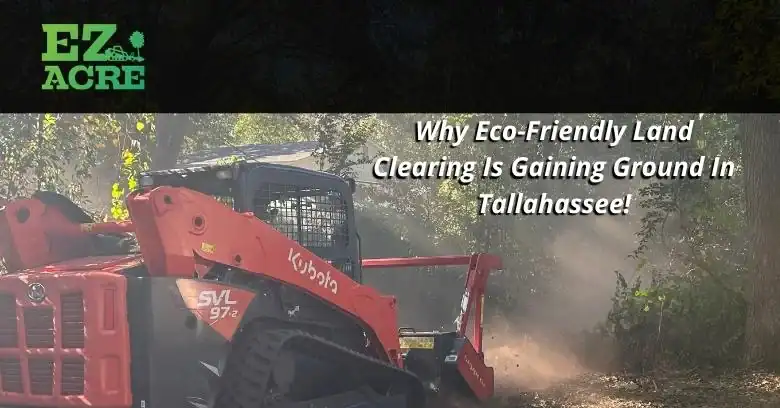
A mix of tracked machines and attachments handles the trees, brush, and stumps, and dense woods call for bigger, stronger equipment. Hand work is still part of the picture, especially around structures and fences, and the right plan blends both.
Some jobs call for burning, though local rules limit it, and mulching leaves a layer of chips on the ground. The weight of a machine and the wetness of the ground work against each other, and stabilizing bare ground after clearing is a regular step.
Finishing the Job Right
Every clearing project ends with the question of what to do with the material, and hauling, chipping, and leaving it in place each take a different amount of effort. Wood chips and mulch from a clearing job are useful on the property, and owners often ask to keep the chips.
Leaving raw soil without cover invites erosion and a new flush of weeds, and grading away from buildings helps the water drain. A last look at the property catches missed spots and leftover debris, and the result should look like what was discussed.
Local Ground and Weather Around The Florida Panhandle
Low, flat ground holds water after rain, and that affects how and when machines can work, and working in mud damages the land and slows the job. Heat and humidity are hard on crews and on equipment, and drinking water and breaks are essential.
A major storm can turn a tidy lot into a field of fallen timber, and leaning or damaged trees should be handled before the next storm. Brazilian pepper, vines, and other aggressive plants take over neglected ground, and regular maintenance keeps the work manageable.
Shaping the Cleared Area
The cleared area for a building is always larger than the building itself, and a surveyor can mark the limits before the clearing begins. A driveway or access road is usually cleared wider than the paved or graveled path, and branches over the drive have to be raised well above the highest vehicle.
Overgrown fence lines are a common reason people call for clearing, and the work is done carefully near neighbors so nothing crosses a property line. Pasture restoration begins with clearing, and the grass follows, and grazing can resume only after the new grass is established.
Know What the Property Includes
Parts of many properties are wetlands, and wetlands are protected by law, and the local or state agency can say where the limits are. Stripping vegetation exposes the soil, and rain can wash it into ditches and ponds, and the work should be staged so that bare ground is exposed for as short a time as possible.
Utilities and structures below and above the ground must be located before clearing, and call-before-you-dig requirements apply across the state. Roots can wrap around pipes, and pulling a stump can drag a line with it, and the crew should be told about any lines before the work begins.
Scope, Schedule, and Follow-Up
Acreage, density of growth, and the size of the trees all set the length of the job, and a site visit gives the crew a better idea of the timeline. A dry week can move a job along far faster than a wet one, and the dry months are the most dependable time for clearing.
Growth returns, and a cleared lot will need attention again, and stump sprouts and root suckers should be cut or treated promptly. A clearing job connected to a plan for the land gives better results, and that conversation is part of the work.
Neighbors, Boundaries, and Courtesy
A clearing job is loud, dusty, and visible, and the neighbors will notice, and good relations with neighbors outlast the job. Cutting trees or brush that belong to a neighbor can lead to disputes, and disputes are far easier to prevent than to settle.
Getting the Job Scoped Right
The first step in any clearing job is knowing exactly where it starts and stops, and talk about trees, stumps, and debris before the crew arrives. Make sure everyone knows what is included in the work and what is not, and the work goes smoothly.
A clear idea of the goal for the land makes Invasive Growth Clearing Services in The Florida Panhandle simple to narrow down, and the next step is a conversation about your property.
Reach us at 850-787-9300 to ask about brush, trees, and stumps on your property.