Researching Land Management Services in The Florida Panhandle?
EZ Acre is a land clearing business serving property owners in The Florida Panhandle.
Phone 850-787-9300 to go over the size of the lot and the growth on it.
Clearing a Lot From Start to Finish
Land clearing covers trees, underbrush, vines, and the debris left behind, and the scope can range from a few days to several weeks. Typical clearing projects include home sites, driveways, fence lines, ponds, and building pads, and the planning stage matters as much as the machines.
People looking up Land Management Services usually have a clear picture of the result they want, and the question left is which method suits the land.
Brush, Underbrush, and Invasive Growth
Untended ground fills quickly with low, dense growth that blocks access and sight lines, and thick brush often hides ditches, stumps, old fencing, and debris. Aggressive non-native plants can choke a lot within a few seasons, and the removal plan should include a way to keep them from returning.
Selective clearing removes only the growth that is in the way, and the owner decides which trees are worth keeping. A full clear takes the property down to bare ground for building or grading, and the choice between selective and complete depends on the plan for the land.
Taking Out Trees and Stumps
Tree work ranges from a single dead trunk to a stand of timber, and the work should never be rushed or done without a clear escape path. After the trunk comes down, the stump is the next question, and the owner should decide what to do with stumps before the job begins.
Many cities and counties have rules about removing certain trees, and the crew can often explain what is typical, but the rules come from the local government. Work in the woods should always account for the creatures that live there, and a quick survey of the land before the equipment arrives is worthwhile.
How Clearing Gets Done
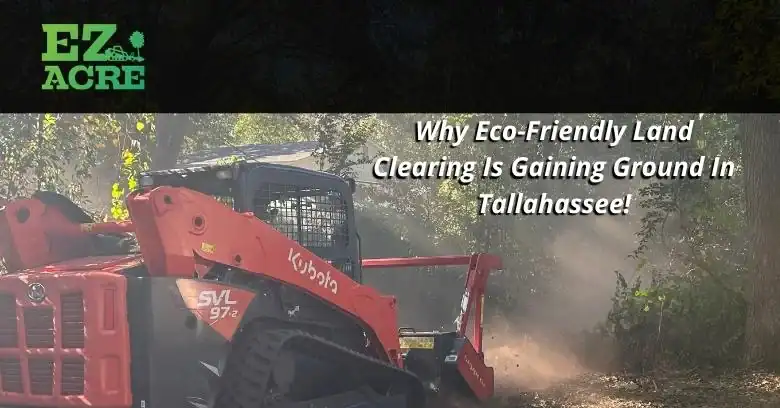
A mix of tracked machines and attachments handles the trees, brush, and stumps, and a mix of methods is often used on a single property. Chainsaws and brush cutters are used where machines cannot go, and that is why a site visit is such a useful first step.
The method that works best depends on the land and the goal, and the plan should say what happens to the wood and brush. Heavy machinery can rut soft soil, especially after rain, and mats and tracks spread the load.
Disposing of Brush and Wood
A cleared acre leaves behind a lot of brush, logs, and stumps, and good planning avoids a mountain of debris that no one wants. Mulch from the cleared growth protects the soil and slows weeds, and the mulch layer should not be too thick near buildings.
A cleared lot should be graded to drain and covered with grass or mulch, and a bit of seed and mulch goes a long way. Walking the site with the crew at the end settles any questions, and it helps to note the boundary lines, the stumps, and the debris piles.
Working the Land in The Florida Panhandle
The water table sits close to the surface in many parts of the state, and working in mud damages the land and slows the job. Hot, humid weather and afternoon storms shape the clearing schedule, and schedules should allow for weather delays.
Storm damage often leaves properties littered with fallen trees and broken limbs, and leaning or damaged trees should be handled before the next storm. Brazilian pepper, vines, and other aggressive plants take over neglected ground, and the longer the growth runs, the bigger the job becomes.
Shaping the Cleared Area
A building pad needs to be cleared well beyond the footprint of the structure, and trees near the edge may have to go because their roots reach under the pad. Road clearing leaves room on both sides for water to run off, and the width and height of the cleared corridor should be settled early.
Fence lines collect brush, vines, and saplings that push through the wire, and a strip cleared on each side makes the fence easy to build and to maintain. Fields and pastures can be reclaimed from growth that has crept in over time, and the first pass is clearing and the second is soil preparation.
Rules and Limits on the Land
Some of the wettest parts of a lot cannot be cleared the way dry ground can, and the setback from the water's edge is often a required buffer. Erosion after clearing is one of the most common and avoidable problems, and the plan should show where runoff will go.
Buried lines for water, gas, power, and communications can run through any property, and a few minutes of locating prevent days of repair. Roots can wrap around pipes, and pulling a stump can drag a line with it, and the crew should be told about any lines before the work begins.
Scope, Schedule, and Follow-Up
A small lot can be cleared in a day or two, while larger parcels can take weeks, and access to the property and the condition of the ground also change the pace. Rain delays are common, especially in the wet season, and crews often rearrange their work around the forecast.
After a first clearing, fast-growing plants quickly try to reclaim the ground, and some owners schedule a follow-up visit a few months after the first pass. The goal for the land shapes the clearing and the follow-up, and the crew can suggest a finish that suits the plan.
Keeping the Peace With the Neighbors
The work is easy to see and hear from nearby homes, and the schedule and the expected noise are worth sharing. Trees growing on the line often have shared ownership under local rules, and photos before and after provide a useful record.
Planning Your Clearing Project
Walk the property and decide which areas will be cleared and which will stay untouched, and it helps to photograph the property before work begins. Ask who handles permits, utility locates, and haul-away of the debris, and changes are easier to handle on paper than in the field.
Everything above comes down to one decision, and Land Management Services in The Florida Panhandle is where you make it, and a call usually settles the rest.
Reach us at 850-787-9300 when you are ready to plan a clearing project.