Getting ready for Lot Clearing Services in The Florida Panhandle?
EZ Acre works on lot clearing, brush removal, and tree work around The Florida Panhandle.
Dial 850-787-9300 to go over the size of the lot and the growth on it.
What the Work Really Covers
Land clearing removes trees, brush, stumps, and debris so a piece of ground can be used, and a lightly overgrown lot is a very different job from a wooded acre. A buyer may clear a lot to build, while an owner may clear to reclaim a neglected yard, and the right approach is built around the goal of the owner.
Most people who search for Lot Clearing Services own a lot or acreage that has grown out of control, and the next step is understanding how clearing is done.
Brush Removal Explained
Brush is the mix of shrubs, saplings, vines, and tangled growth that fills in an untended lot, and removing it opens up the ground so the work and the land can be seen. Some plants take over a property so thoroughly that they have to be removed on purpose, and a careful plan makes the difference between a short fix and a lasting one.
Selective clearing removes only the growth that is in the way, and the remaining trees are protected from the equipment. Complete clearing removes everything within the work area, and owners should say early which approach they want.
Trees in a Clearing Project
Cutting a tree down is the most dangerous part of clearing, and it is done by trained crews, and hazard trees near a house or a power line are handled very differently from trees in an open field. Stumps remain after a tree is cut, and they can be ground down or pulled out, and the plan for the area decides the best method.
Many cities and counties have rules about removing certain trees, and checking local requirements before work begins avoids trouble. Some species and their burrows are protected, and land with them needs extra care, and a quick survey of the land before the equipment arrives is worthwhile.
Tools of the Trade
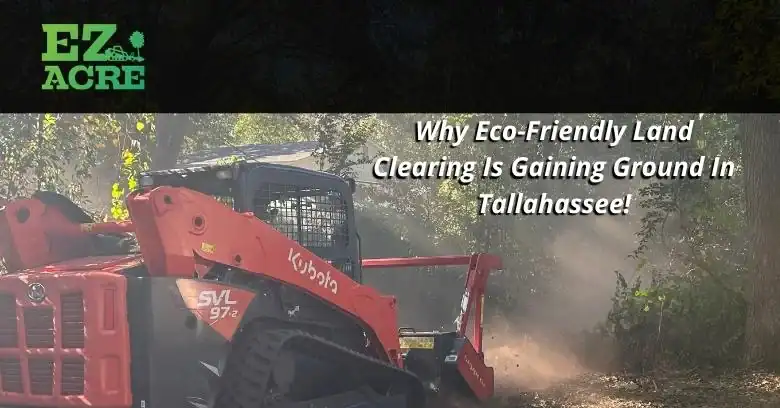
Skid steers with forestry heads can cut, grind, and clear in a single pass, and smaller lots may be cleared with compact machines and chainsaws. Hand work is still part of the picture, especially around structures and fences, and that is why a site visit is such a useful first step.
There is more than one way to clear a lot, and each has trade-offs, and piling and burning is often restricted, especially in dry spells. Ruts and bare soil can wash away in the next heavy rain, and crews usually plan the work around dry weather.
What Happens to the Material
Clearing produces a large amount of wood, brush, and plant material, and the way it is handled depends on the amount and the use the owner has in mind. Material that stays on site can be a benefit rather than a burden, and a layer of mulch can keep the ground from eroding.
A cleared lot should be graded to drain and covered with grass or mulch, and grading away from buildings helps the water drain. The end of the job is the time to point out anything that needs another pass, and a clear understanding at the start makes this step simple.
What the Climate Means for Clearing Work
The water table sits close to the surface in many parts of the state, and working in mud damages the land and slows the job. Summer here brings heat, humidity, and daily thunderstorms, and schedules should allow for weather delays.
Hurricane season runs from June through November, and storms can bring down trees and fill yards with debris, and leaning or damaged trees should be handled before the next storm. In this climate, growth never fully stops, and many owners schedule follow-up passes.
Building Pads, Driveways, and Fence Lines
The cleared area for a building is always larger than the building itself, and a surveyor can mark the limits before the clearing begins. A drive that is cleared with trucks and emergency vehicles in mind works better for everyone, and measuring the largest vehicle that will use the drive is a good starting point.
Clearing along a boundary opens the line for repair or a new fence, and the work is done carefully near neighbors so nothing crosses a property line. Turning overgrown ground back into pasture starts with removing the woody growth, and grass seed or sod goes in once the ground is ready.
Wetlands, Water, and Protected Areas
Marshy corners, swales, and ponds on a property may be subject to protection, and clearing in the wrong place can bring fines and an order to restore the area. A cleared slope sheds water and sediment much faster than a vegetated one, and the plan should show where runoff will go.
Utilities and structures below and above the ground must be located before clearing, and a few minutes of locating prevent days of repair. Work near lines should never be improvised, and nothing is more disruptive than a mistake in this area.
Keeping the Land Clear
A small lot can be cleared in a day or two, while larger parcels can take weeks, and a site visit gives the crew a better idea of the timeline. A dry week can move a job along far faster than a wet one, and owners should be flexible about start dates.
Maintenance is part of owning cleared land, and a yearly pass with a mower or a mulcher keeps the growth in check. It is wise to say how the property will be used over the next several seasons, and the best time to have it is before the machines arrive.
Neighbors, Boundaries, and Courtesy
The work is easy to see and hear from nearby homes, and trees on the boundary may belong to both owners. Knowing where the boundary lies protects both owners, and a surveyor can be hired when the line is unclear.
What to Settle First
Start by marking the boundaries of the area to be cleared, and talk about trees, stumps, and debris before the crew arrives. Check the rules for the property, since some areas require permits for clearing, and the schedule can be planned around approvals.
A clear idea of the goal for the land makes Lot Clearing Services in The Florida Panhandle simple to narrow down, and the next step is a conversation about your property.
Ring 850-787-9300 to ask about brush, trees, and stumps on your property.