Getting ready for Residential Lot Clearing in The Florida Panhandle?
EZ Acre works on lot clearing, brush removal, and tree work around The Florida Panhandle.
Phone 850-787-9300 to start a conversation about your land.
What Land Management Involves
Clearing takes a wild or overgrown parcel and turns it into ground that can be built on, fenced, or farmed, and a lightly overgrown lot is a very different job from a wooded acre. Some owners clear to reduce brush that has taken over fence lines and drives, and talking through the purpose first saves time and effort.
That is the need behind many searches for Residential Lot Clearing, and the rest of this page covers the main methods and the details that matter.
Clearing Thick Vegetation
Brush is the mix of shrubs, saplings, vines, and tangled growth that fills in an untended lot, and selective removal can clear the brush while leaving the trees worth keeping. Some plants take over a property so thoroughly that they have to be removed on purpose, and regrowth is common, and a second pass is often needed.
Selective clearing removes only the growth that is in the way, and it often costs less effort than clearing everything. Complete clearing removes everything within the work area, and the cleared area should be marked clearly before work begins.
Tree Removal, Cutting, and Stump Work
Cutting a tree down is the most dangerous part of clearing, and it is done by trained crews, and hazard trees near a house or a power line are handled very differently from trees in an open field. Stump removal is a separate step from cutting the tree, and the owner should decide what to do with stumps before the job begins.
Tree protection rules differ from one jurisdiction to the next, and owners should ask about rules before they sign off on tree removal. Nesting birds and protected animals are a factor on wooded land, and local wildlife agencies publish guidance for property owners.
How Clearing Gets Done
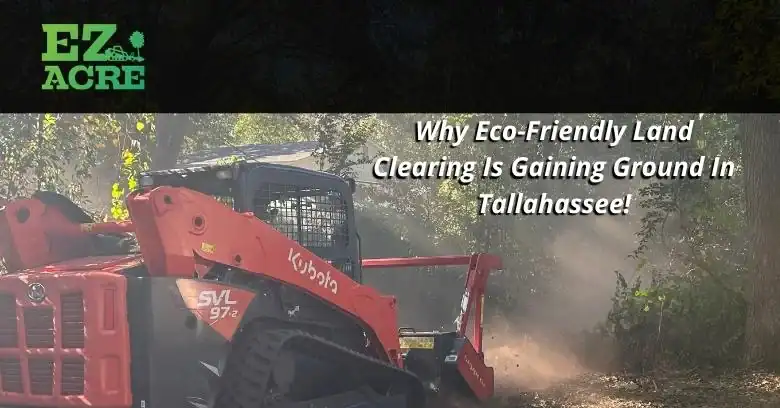
Clearing crews use skid steers, excavators, bulldozers, and mulching heads, and a mix of methods is often used on a single property. Crews switch between machine and hand methods as the terrain demands, and the right plan blends both.
Some jobs call for burning, though local rules limit it, and mulching leaves a layer of chips on the ground. Heavy machinery can rut soft soil, especially after rain, and stabilizing bare ground after clearing is a regular step.
Leaving the Site Ready
Every clearing project ends with the question of what to do with the material, and local rules affect what can be burned or dumped. Spreading chips on bare ground helps hold it in place, and the mulch layer should not be too thick near buildings.
After clearing, the ground is often graded and seeded or stabilized, and owners should decide how the ground will be finished before work begins. A final walk around the site confirms that the job matches the plan, and asking questions at the end is part of a good job.
Local Conditions That Shape Clearing
Soils in this part of the state are often sandy and drain quickly, though low spots can stay wet for long periods, and the crew plans around the wet season and the condition of the ground. The wet season runs through the summer months with frequent heavy rain, and lightning means everyone stops until it passes.
Hurricane season runs from June through November, and storms can bring down trees and fill yards with debris, and leaning or damaged trees should be handled before the next storm. A lot that was clear a year ago can be thick with growth today, and the longer the growth runs, the bigger the job becomes.
Building Pads, Driveways, and Fence Lines
Clearing for a home site extends past the walls to leave room for work and drainage, and a surveyor can mark the limits before the clearing begins. Long driveways need a corridor clear of limbs that could scrape trucks and trailers, and the width and height of the cleared corridor should be settled early.
Clearing along a boundary opens the line for repair or a new fence, and fence rows are cleared with mowers, mulchers, or hand tools depending on the growth. Land that was once open can be taken over by brush and young trees in a few seasons, and the first pass is clearing and the second is soil preparation.
Sensitive Areas on a Lot
Wetlands and waterways come with rules that can restrict clearing, and the setback from the water's edge is often a required buffer. A cleared slope sheds water and sediment much faster than a vegetated one, and silt fence, mulch, and quick reseeding are standard protective steps.
Buried lines for water, gas, power, and communications can run through any property, and flags and paint mark the locations so the crew can see them. Grinding a stump is often safer than pulling it when lines are close, and owners should keep records of where lines were found.
Keeping the Land Clear
Acreage, density of growth, and the size of the trees all set the length of the job, and access to the property and the condition of the ground also change the pace. Weather is the biggest unknown in any outdoor job, and the dry months are the most dependable time for clearing.
Clearing is not always a one-time job, and a thin layer of mulch or a cover of grass slows the weeds. Planning for the future of the property prevents wasted effort, and the owner and the crew can agree on the follow-up before the job starts.
Working Alongside the Neighbors
A clearing job is loud, dusty, and visible, and the neighbors will notice, and crews can avoid working at the earliest or latest hours. Marking the boundary before work begins prevents honest mistakes, and owners should ask the crew to respect the markers.
Questions to Settle Before Work Begins
Walk the property and decide which areas will be cleared and which will stay untouched, and a plan on paper keeps the crew and the owner on the same page. Make sure everyone knows what is included in the work and what is not, and changes are easier to handle on paper than in the field.
A clear idea of the goal for the land makes Residential Lot Clearing in The Florida Panhandle simple to narrow down, and the details are quick to confirm.
Ring 850-787-9300 to get your lot ready for its next use.