Looking into Selective Underbrush Removal Services in The Florida Panhandle?
EZ Acre clears land, brush, and trees for property owners in The Florida Panhandle.
Call 850-787-9300 to talk through the job before work begins.
The Basics of Clearing a Property
Clearing takes a wild or overgrown parcel and turns it into ground that can be built on, fenced, or farmed, and the amount of work depends on how thick the growth is and what the owner plans to do. Some owners clear to reduce brush that has taken over fence lines and drives, and no two clearing jobs look exactly alike.
People looking up Selective Underbrush Removal Services usually have a clear picture of the result they want, and the next step is understanding how clearing is done.
Cutting Back the Tangle
Brush is the mix of shrubs, saplings, vines, and tangled growth that fills in an untended lot, and clearing it makes it possible to survey, plan, and build. Some plants take over a property so thoroughly that they have to be removed on purpose, and regrowth is common, and a second pass is often needed.
Choosing what stays is part of good clearing, and the remaining trees are protected from the equipment. Total clearing is the usual approach for a building pad or a new road, and the choice between selective and complete depends on the plan for the land.
Tree Removal, Cutting, and Stump Work
Cutting a tree down is the most dangerous part of clearing, and it is done by trained crews, and crews look at lean, rot, and dead limbs before starting a cut. A stump left in the ground can sprout, rot, or get in the way of building, and leaving stumps may be fine on land that will stay wild.
Many cities and counties have rules about removing certain trees, and owners should ask about rules before they sign off on tree removal. Wildlife and nesting season can also affect when and how trees are cut, and the planning stage is the time to raise this.
How Clearing Gets Done
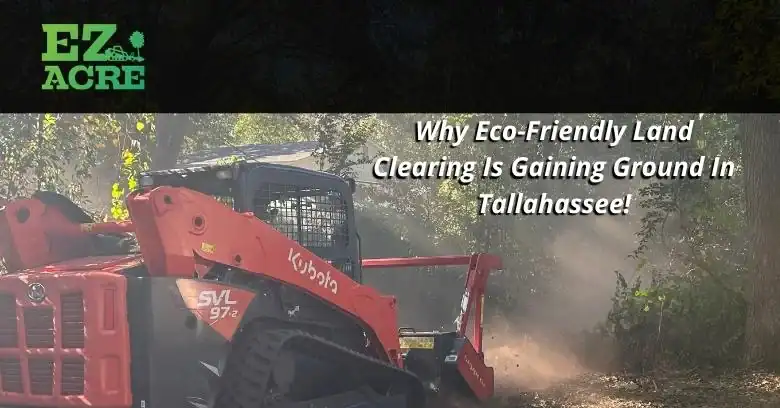
Excavators with grapples pick up trunks and root balls and stack them, and smaller lots may be cleared with compact machines and chainsaws. Chainsaws and brush cutters are used where machines cannot go, and that is why a site visit is such a useful first step.
The method that works best depends on the land and the goal, and mulching leaves a layer of chips on the ground. Equipment and methods determine how much the job disturbs the ground, and crews usually plan the work around dry weather.
Leaving the Site Ready
The debris from a clearing job can be much more than most people expect, and local rules affect what can be burned or dumped. Mulch from the cleared growth protects the soil and slows weeds, and the mulch layer should not be too thick near buildings.
Leaving raw soil without cover invites erosion and a new flush of weeds, and it also makes the property look finished. The end of the job is the time to point out anything that needs another pass, and it helps to note the boundary lines, the stumps, and the debris piles.
Working the Land in The Florida Panhandle
Much of the ground around The Florida Panhandle is sandy and soft, and heavy machines can sink, and working in mud damages the land and slows the job. Summer here brings heat, humidity, and daily thunderstorms, and drinking water and breaks are essential.
A major storm can turn a tidy lot into a field of fallen timber, and keeping a property tidy and open reduces the damage a storm can do. Brazilian pepper, vines, and other aggressive plants take over neglected ground, and an annual cut is far easier than a complete restoration.
Making Room for What Comes Next
Builders ask for extra room around the pad for equipment, materials, and grading, and buried roots can rot and leave voids that settle later. Long driveways need a corridor clear of limbs that could scrape trucks and trailers, and the width and height of the cleared corridor should be settled early.
Fence lines collect brush, vines, and saplings that push through the wire, and existing fence is often protected from the equipment while the brush is cut. Reclaiming a field means cutting the brush, treating the stumps, and then reseeding, and the timing of each step depends on the season and the weather.
Wetlands, Water, and Protected Areas
Low, wet ground on a lot may be classified as a wetland, which limits what can be done, and a delineation by a qualified person may be needed before work begins. Water, silt, and runoff need attention on any cleared lot, and crews often keep a buffer of trees and brush between the work and the water.
The first call on a clearing job is the utility locating service, and call-before-you-dig requirements apply across the state. Roots can wrap around pipes, and pulling a stump can drag a line with it, and the crew should be told about any lines before the work begins.
Factors That Shape the Schedule
A small lot can be cleared in a day or two, while larger parcels can take weeks, and access to the property and the condition of the ground also change the pace. Heavy storms can halt clearing and leave the site too soft to work, and the dry months are the most dependable time for clearing.
A lot that is cleared and then left alone will grow over again, and some owners schedule a follow-up visit a few months after the first pass. It is wise to say how the property will be used over the next several seasons, and that conversation is part of the work.
Neighbors, Boundaries, and Courtesy
Machines and chain saws make noise, and neighboring property owners feel it, and a short note or a conversation before the work begins goes a long way. A survey or a set of marked corners shows where the property ends, and disputes are far easier to prevent than to settle.
Questions to Settle Before Work Begins
The first step in any clearing job is knowing exactly where it starts and stops, and it helps to know where utilities, wells, and septic fields are located. Check the rules for the property, since some areas require permits for clearing, and changes are easier to handle on paper than in the field.
A clear idea of the goal for the land makes Selective Underbrush Removal Services in The Florida Panhandle simple to narrow down, and the next step is a conversation about your property.
Ring 850-787-9300 to start planning the work.