Looking into Selective Underbrush Removal in The Florida Panhandle?
EZ Acre helps property owners in The Florida Panhandle turn overgrown ground into usable land.
Dial 850-787-9300 to start a conversation about your land.
What Land Management Involves
The goal of clearing is a lot that is open, accessible, and ready for whatever comes next, and the plan for the land decides how much is removed and how much is left. Typical clearing projects include home sites, driveways, fence lines, ponds, and building pads, and the planning stage matters as much as the machines.
A search for Selective Underbrush Removal often starts with a property that has more growth than anyone can handle by hand, and the rest of this page covers the main methods and the details that matter.
Brush, Underbrush, and Invasive Growth
Overgrown lots collect thick brush, from woody shrubs to climbing vines, and clearing it makes it possible to survey, plan, and build. Some plants take over a property so thoroughly that they have to be removed on purpose, and regrowth is common, and a second pass is often needed.
Selective underbrush removal takes out the smaller plants and leaves the larger trees standing, and the remaining trees are protected from the equipment. Complete clearing removes everything within the work area, and the boundary of the work is as important as the work itself.
Trees in a Clearing Project
Trees are the largest part of many clearing jobs, and they are handled with care, and the work should never be rushed or done without a clear escape path. Stumps remain after a tree is cut, and they can be ground down or pulled out, and leaving stumps may be fine on land that will stay wild.
Local governments often regulate the removal of large or protected trees, and the city or county office can say what applies to a given lot. Work in the woods should always account for the creatures that live there, and the planning stage is the time to raise this.
Machines Used on Site
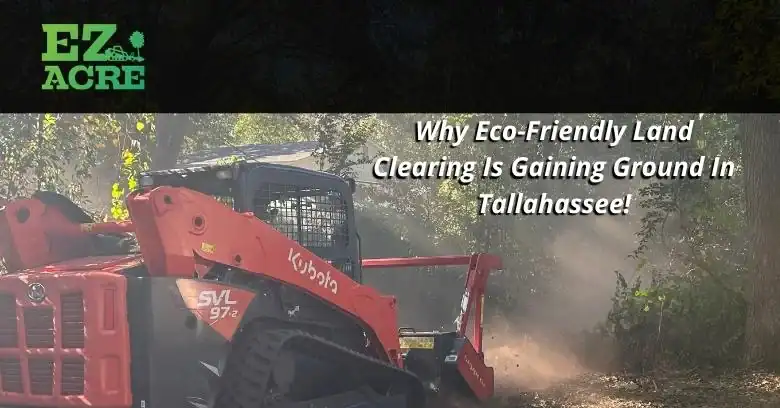
Skid steers with forestry heads can cut, grind, and clear in a single pass, and smaller lots may be cleared with compact machines and chainsaws. Delicate areas near buildings, wells, and utilities call for hand tools, and that is why a site visit is such a useful first step.
Choosing between cutting, mulching, and hauling away depends on what the owner wants left behind, and the plan should say what happens to the wood and brush. Equipment and methods determine how much the job disturbs the ground, and mats and tracks spread the load.
What Happens to the Material
A cleared acre leaves behind a lot of brush, logs, and stumps, and good planning avoids a mountain of debris that no one wants. Material that stays on site can be a benefit rather than a burden, and chips near a house should be kept away from the foundation.
Cleared soil is exposed and needs to be protected from the next storm, and owners should decide how the ground will be finished before work begins. Walking the site with the crew at the end settles any questions, and small corrections are easy before the equipment leaves.
Working the Land in The Florida Panhandle
Soils in this part of the state are often sandy and drain quickly, though low spots can stay wet for long periods, and dry weather is the best time to bring in heavy equipment. Hot, humid weather and afternoon storms shape the clearing schedule, and crews often start early to beat the heat and the afternoon rain.
A major storm can turn a tidy lot into a field of fallen timber, and clearing weak trees and dead limbs ahead of the season is a smart precaution. A lot that was clear a year ago can be thick with growth today, and the longer the growth runs, the bigger the job becomes.
Clearing for Construction and Access
The cleared area for a building is always larger than the building itself, and that margin gives the builder room to work and the water room to drain. A drive that is cleared with trucks and emergency vehicles in mind works better for everyone, and branches over the drive have to be raised well above the highest vehicle.
Brush growing into a fence damages it and hides breaks from view, and a surveyor can mark the line so the cleared strip follows the boundary. Fields and pastures can be reclaimed from growth that has crept in over time, and grazing can resume only after the new grass is established.
Sensitive Areas on a Lot
Wetlands and waterways come with rules that can restrict clearing, and the setback from the water's edge is often a required buffer. Erosion after clearing is one of the most common and avoidable problems, and silt fence, mulch, and quick reseeding are standard protective steps.
The first call on a clearing job is the utility locating service, and the owner should know where the well and septic field sit. Trees and stumps near underground lines call for extra care, and nothing is more disruptive than a mistake in this area.
From First Visit to Finished Lot
A small lot can be cleared in a day or two, while larger parcels can take weeks, and a site visit gives the crew a better idea of the timeline. Rain delays are common, especially in the wet season, and the dry months are the most dependable time for clearing.
Maintenance is part of owning cleared land, and regular upkeep costs less effort than another full clearing. Planning for the future of the property prevents wasted effort, and that conversation is part of the work.
Working Alongside the Neighbors
People next door often have strong feelings about trees that come down, and crews can avoid working at the earliest or latest hours. A survey or a set of marked corners shows where the property ends, and a surveyor can be hired when the line is unclear.
Preparing for a Clearing Job
Survey stakes or flagging tape help define the boundary of the work, and it helps to know where utilities, wells, and septic fields are located. Utility locating before any digging is a standard step, and there are no surprises when the crew arrives.
A clear idea of the goal for the land makes Selective Underbrush Removal in The Florida Panhandle simple to narrow down, and a call usually settles the rest.
Phone 850-787-9300 to ask about brush, trees, and stumps on your property.