Researching Underbrush Clearing Contractor in The Florida Panhandle?
EZ Acre is a land clearing business serving property owners in The Florida Panhandle.
Phone 850-787-9300 to start a conversation about your land.
Clearing a Lot From Start to Finish
Land clearing covers trees, underbrush, vines, and the debris left behind, and the plan for the land decides how much is removed and how much is left. Some owners clear to reduce brush that has taken over fence lines and drives, and that is why the first step is a conversation about the plan.
A search for Underbrush Clearing Contractor often starts with a property that has more growth than anyone can handle by hand, and the rest of this page covers the main methods and the details that matter.
Cutting Back the Tangle
Untended ground fills quickly with low, dense growth that blocks access and sight lines, and selective removal can clear the brush while leaving the trees worth keeping. Aggressive non-native plants can choke a lot within a few seasons, and regrowth is common, and a second pass is often needed.
Leaving healthy trees in place while thinning the brush gives a more natural look, and the owner decides which trees are worth keeping. Complete clearing removes everything within the work area, and the boundary of the work is as important as the work itself.
Trees in a Clearing Project
Trees are the largest part of many clearing jobs, and they are handled with care, and the work should never be rushed or done without a clear escape path. After the trunk comes down, the stump is the next question, and the owner should decide what to do with stumps before the job begins.
Local governments often regulate the removal of large or protected trees, and the city or county office can say what applies to a given lot. Work in the woods should always account for the creatures that live there, and a quick survey of the land before the equipment arrives is worthwhile.
Tools of the Trade
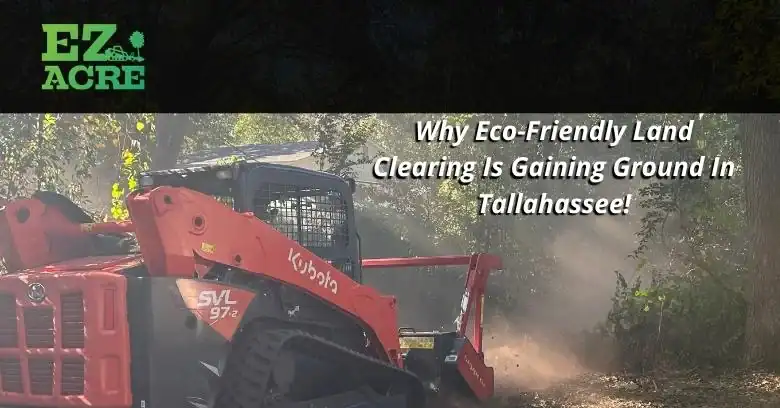
Skid steers with forestry heads can cut, grind, and clear in a single pass, and dense woods call for bigger, stronger equipment. Chainsaws and brush cutters are used where machines cannot go, and precision is the reason hand work remains.
Some jobs call for burning, though local rules limit it, and hauling away leaves bare ground that can be graded. Ruts and bare soil can wash away in the next heavy rain, and mats and tracks spread the load.
Finishing the Job Right
Piles of limbs, trunks, and roots are the byproduct of any clearing job, and it can be hauled away, chipped, mulched, or left in place. Spreading chips on bare ground helps hold it in place, and the plan should say who handles the material.
After clearing, the ground is often graded and seeded or stabilized, and that last step is as important as the clearing itself. Walking the site with the crew at the end settles any questions, and the result should look like what was discussed.
Sandy Soil, Wet Seasons, and Storms Around The Florida Panhandle
The water table sits close to the surface in many parts of the state, and wetlands and low spots may need to be avoided or specially handled. Summer here brings heat, humidity, and daily thunderstorms, and schedules should allow for weather delays.
A major storm can turn a tidy lot into a field of fallen timber, and crews can be very busy, and waiting times grow. This region has many fast-growing plants that can overrun a lot within a season, and an annual cut is far easier than a complete restoration.
Building Pads, Driveways, and Fence Lines
A site cleared too tightly leaves no space for the crews who follow, and a surveyor can mark the limits before the clearing begins. Clearing for an access drive includes room for turning, drainage ditches, and overhead clearance, and the route should follow the natural lay of the land where possible.
Overgrown fence lines are a common reason people call for clearing, and the work is done carefully near neighbors so nothing crosses a property line. Land that was once open can be taken over by brush and young trees in a few seasons, and the timing of each step depends on the season and the weather.
Rules and Limits on the Land
Low, wet ground on a lot may be classified as a wetland, which limits what can be done, and the setback from the water's edge is often a required buffer. A cleared slope sheds water and sediment much faster than a vegetated one, and the work should be staged so that bare ground is exposed for as short a time as possible.
The first call on a clearing job is the utility locating service, and equipment must stay off a septic field because its weight can crush the pipes. Work near lines should never be improvised, and the crew should be told about any lines before the work begins.
Factors That Shape the Schedule
Thin growth goes quickly, and thick forest takes much longer, and access to the property and the condition of the ground also change the pace. Schedules must allow for the weather and for the ground to dry, and owners should be flexible about start dates.
Growth returns, and a cleared lot will need attention again, and a yearly pass with a mower or a mulcher keeps the growth in check. It is wise to say how the property will be used over the next several seasons, and the crew can suggest a finish that suits the plan.
Property Lines and Shared Ground
The work is easy to see and hear from nearby homes, and the schedule and the expected noise are worth sharing. A survey or a set of marked corners shows where the property ends, and the cleared area should stay well inside the line.
Preparing for a Clearing Job
Survey stakes or flagging tape help define the boundary of the work, and a plan on paper keeps the crew and the owner on the same page. Make sure everyone knows what is included in the work and what is not, and the work goes smoothly.
With those questions answered, choosing among Underbrush Clearing Contractor in The Florida Panhandle gets easier, and a call usually settles the rest.
Dial 850-787-9300 when you are ready to plan a clearing project.