Getting ready for Underbrush Removal in The Florida Panhandle?
EZ Acre works on lot clearing, brush removal, and tree work around The Florida Panhandle.
Dial 850-787-9300 to describe your property and what you want cleared.
What Land Management Involves
Land clearing covers trees, underbrush, vines, and the debris left behind, and every property starts with a look at what is there and what is wanted. Reasons for clearing range from construction to simple upkeep, and no two clearing jobs look exactly alike.
Anyone comparing options for Underbrush Removal is typically standing at the edge of a thick, tangled lot, and a short conversation can sort out what the job calls for.
Cutting Back the Tangle
Overgrown lots collect thick brush, from woody shrubs to climbing vines, and thick brush often hides ditches, stumps, old fencing, and debris. Some plants take over a property so thoroughly that they have to be removed on purpose, and a careful plan makes the difference between a short fix and a lasting one.
Selective underbrush removal takes out the smaller plants and leaves the larger trees standing, and the remaining trees are protected from the equipment. A full clear takes the property down to bare ground for building or grading, and owners should say early which approach they want.
Cutting Trees Safely
Cutting a tree down is the most dangerous part of clearing, and it is done by trained crews, and hazard trees near a house or a power line are handled very differently from trees in an open field. After the trunk comes down, the stump is the next question, and the owner should decide what to do with stumps before the job begins.
Many cities and counties have rules about removing certain trees, and checking local requirements before work begins avoids trouble. Nesting birds and protected animals are a factor on wooded land, and local wildlife agencies publish guidance for property owners.
Choosing a Clearing Method
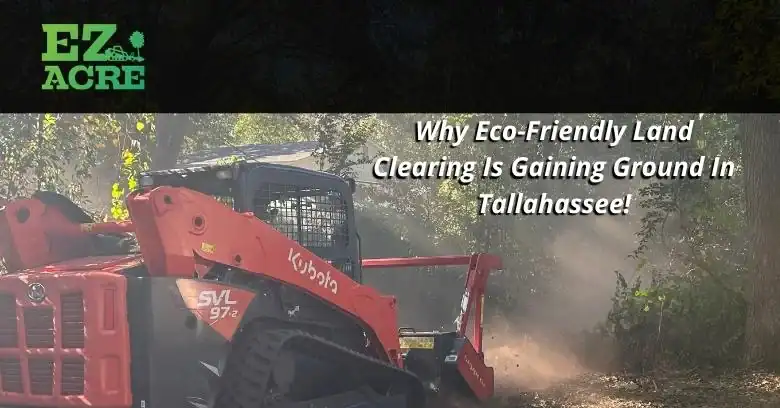
Skid steers with forestry heads can cut, grind, and clear in a single pass, and each machine suits a particular type of growth. Delicate areas near buildings, wells, and utilities call for hand tools, and precision is the reason hand work remains.
Some jobs call for burning, though local rules limit it, and mulching leaves a layer of chips on the ground. The weight of a machine and the wetness of the ground work against each other, and mats and tracks spread the load.
Leaving the Site Ready
A cleared acre leaves behind a lot of brush, logs, and stumps, and the way it is handled depends on the amount and the use the owner has in mind. Wood chips and mulch from a clearing job are useful on the property, and the plan should say who handles the material.
Leaving raw soil without cover invites erosion and a new flush of weeds, and owners should decide how the ground will be finished before work begins. The end of the job is the time to point out anything that needs another pass, and small corrections are easy before the equipment leaves.
Working the Land in The Florida Panhandle
Much of the ground around The Florida Panhandle is sandy and soft, and heavy machines can sink, and dry weather is the best time to bring in heavy equipment. Summer here brings heat, humidity, and daily thunderstorms, and schedules should allow for weather delays.
Storm damage often leaves properties littered with fallen trees and broken limbs, and leaning or damaged trees should be handled before the next storm. This region has many fast-growing plants that can overrun a lot within a season, and many owners schedule follow-up passes.
Building Pads, Driveways, and Fence Lines
Clearing for a home site extends past the walls to leave room for work and drainage, and that margin gives the builder room to work and the water room to drain. A driveway or access road is usually cleared wider than the paved or graveled path, and the route should follow the natural lay of the land where possible.
Overgrown fence lines are a common reason people call for clearing, and a strip cleared on each side makes the fence easy to build and to maintain. Land that was once open can be taken over by brush and young trees in a few seasons, and the first pass is clearing and the second is soil preparation.
Sensitive Areas on a Lot
Parts of many properties are wetlands, and wetlands are protected by law, and clearing in the wrong place can bring fines and an order to restore the area. Erosion after clearing is one of the most common and avoidable problems, and silt fence, mulch, and quick reseeding are standard protective steps.
Buried lines for water, gas, power, and communications can run through any property, and the owner should know where the well and septic field sit. Grinding a stump is often safer than pulling it when lines are close, and nothing is more disruptive than a mistake in this area.
From First Visit to Finished Lot
A small lot can be cleared in a day or two, while larger parcels can take weeks, and wet ground can stop work for days at a time. Rain delays are common, especially in the wet season, and owners should be flexible about start dates.
Clearing is not always a one-time job, and a thin layer of mulch or a cover of grass slows the weeds. A clearing job connected to a plan for the land gives better results, and the best time to have it is before the machines arrive.
Keeping the Peace With the Neighbors
The work is easy to see and hear from nearby homes, and the schedule and the expected noise are worth sharing. A survey or a set of marked corners shows where the property ends, and the cleared area should stay well inside the line.
Preparing for a Clearing Job
Walk the property and decide which areas will be cleared and which will stay untouched, and it helps to photograph the property before work begins. Check the rules for the property, since some areas require permits for clearing, and the schedule can be planned around approvals.
Once you know what you want cleared, Underbrush Removal in The Florida Panhandle is a short list, and the details are quick to confirm.
Reach us at 850-787-9300 to talk about clearing your land.