Comparing Eco-Friendly Mulching Services in Quincy Florida?
EZ Acre works on mulching and land preparation for properties in and around Quincy Florida.
Call 850-787-9300 to ask how a mulching project like yours is usually handled.
One Word, Several Kinds of Work
Mulching is the practice of covering ground with a layer of organic material or of grinding vegetation into chips, and the three most common kinds are forestry mulching, hydraulic mulching, and ordinary bed mulching. Mulch holds moisture, shades the soil, and slows weeds, and it helps new grass and new plants get established.
That is the need behind many searches for Eco-Friendly Mulching Services, and the rest of this page explains the main types and the details that matter.
Mulching as a Clearing Method
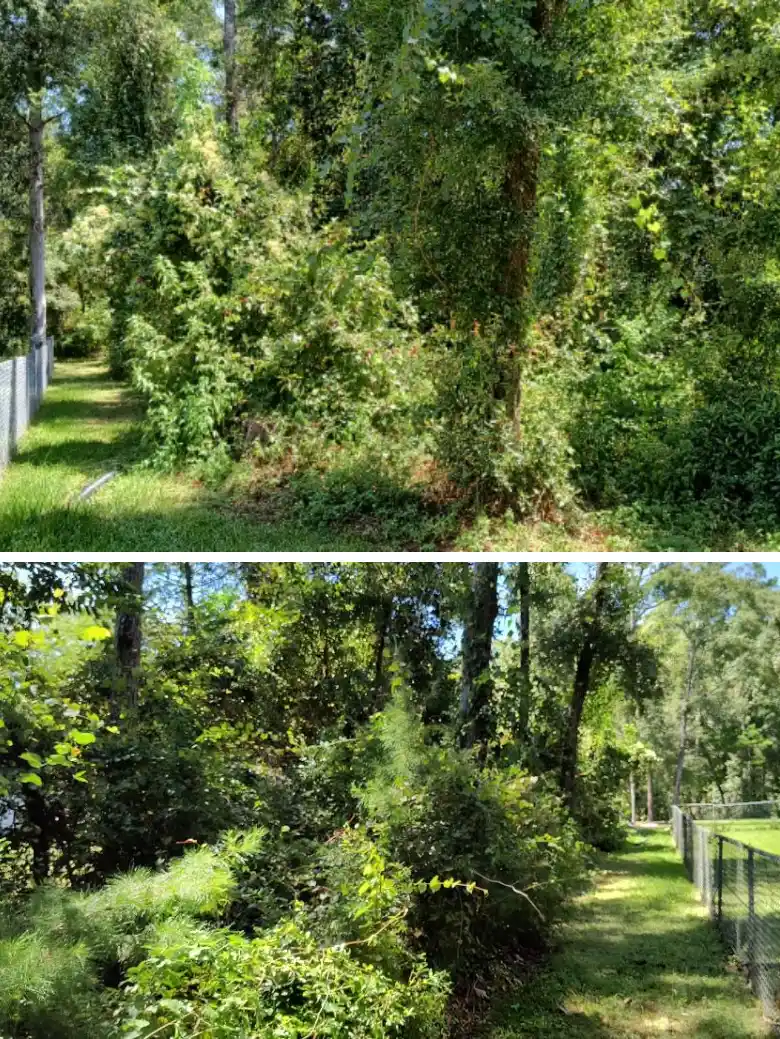
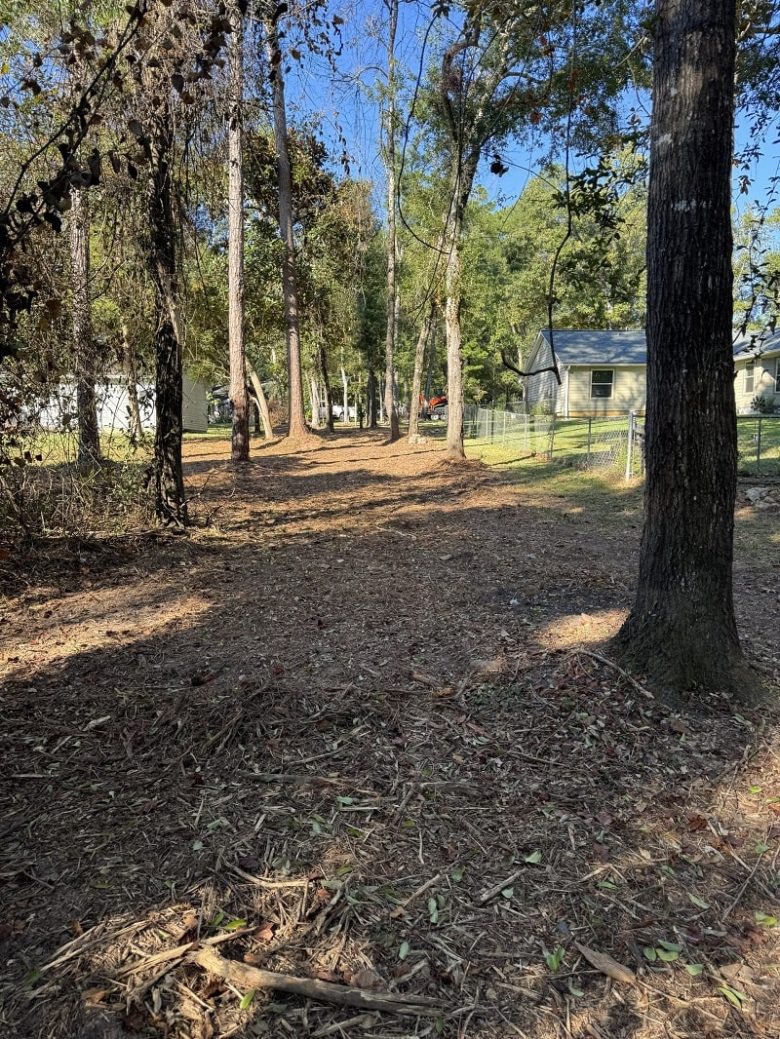
In forestry mulching, a powerful head cuts, grinds, and spreads the growth in a single pass, and one machine does the work that once took a crew with saws, a chipper, and a truck. Leaving the ground largely intact is one of the main reasons owners choose mulching, and the mulch layer protects the surface from the next rain.
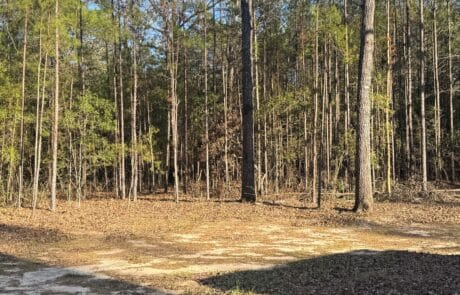
Larger mulching heads can take trees many inches across, and smaller ones are meant for brush, and the result is a clean, open, park-like look. A mulched lot has a soft, brown surface instead of bare soil, and the layer slows weeds and holds moisture.
Hydraulic Mulching
Spray-applied mulch covers large areas of soil quickly and evenly, and a green dye often shows where the spray has been applied. Disturbed ground is vulnerable until grass grows in, and slopes and drainage swales benefit the most.
A mix with seed needs enough moisture to sprout, so the season matters, and a good schedule fits the application between storms. The mulch only protects the soil until the grass takes over, and owners should ask what seed is in the mix.
Keeping Organic Matter on the Property
Leaving chips in place recycles nutrients that would otherwise be hauled to a landfill, and nothing leaves the property except what the owner chooses to send away. Near streams and wetlands, leaving roots and a mulch cover reduces runoff, and a careful crew will mark the line it will not cross.
Organic mulch such as wood chips, pine straw, and bark is common in gardens and landscapes, and it keeps roots cool, holds water, and slows weeds. Fresh chips are best left to age a while before they are placed near delicate plants, and owners often ask the crew to leave the chips where they are useful.
Mulching Equipment and Methods
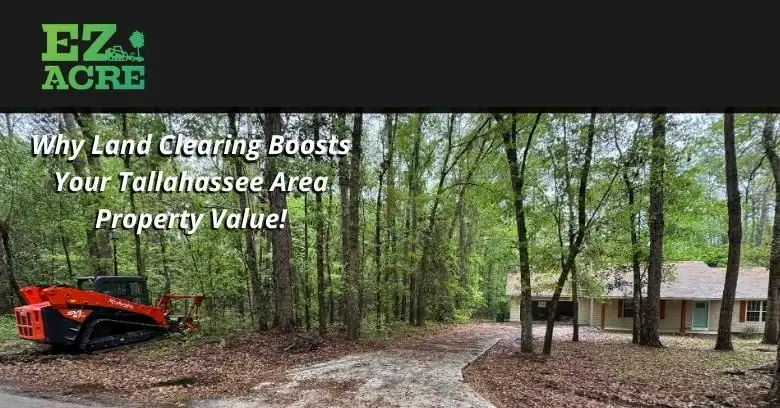
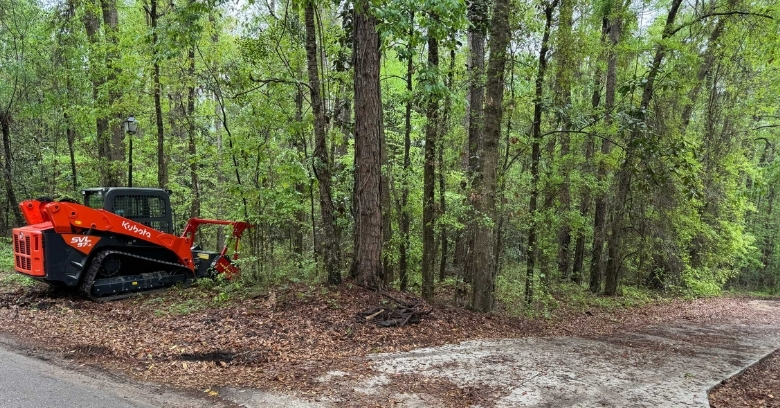
Forestry mulchers are mounted on skid steers, tracked carriers, or excavators, and rubber tracks spread the weight over wet or sandy ground. A hose reaches into slopes and corners where trucks cannot drive, and operators work in passes to cover the area evenly.
The area around a working mulcher is no place for spectators, and the operator works from a protected cab. Rocks, old fence wire, buried metal, and stumps are risks for any mulching head, and marking the hazards before work begins is a good habit.
Local Conditions That Shape Mulching
Sand holds little water or nutrients, and mulch helps with both, and mulching can help new lawns and trees get a start. Rain and heat are the two main drivers of the schedule, and hydraulic mulching must be timed between rains.
Tropical systems topple trees and scatter limbs across properties, and a mulched lot is easier to inspect for damage. Dense brush can also feed wildfires in dry seasons, and burn bans are common in dry spells.
Roots, Chips, and Bare Soil
Stumps remain after mulching, usually cut low and often ground down as part of the pass, and building areas generally need stumps and large roots removed. The root mass under a cleared slope binds the soil together while new growth starts, and mulching is often chosen for slopes, ditch banks, and pond edges.
Chips from a mulching pass vary in size, from fine shreds to chunky pieces, and the appearance changes over time from fresh wood color to soft brown. Excess mulch on a cleared lot can be raked or spread thin, and a light pass with a rake or box blade levels the surface.
Timing, Seasons, and Upkeep
The dry months are the most dependable time for heavy mulching equipment, and planting too early in a dry spell wastes seed. Regrowth is normal and does not mean the first pass was wasted, and the owner may choose a yearly visit.
Refreshing a mulch layer is routine upkeep for any landscape, and thin patches show up first near edges and on slopes. Homeowners in fire-prone areas are advised to use a noncombustible zone near the foundation, and chips are better used farther out on the property.
Choosing Between Mulching Types
Forestry mulching is the choice when the problem is thick growth that has to come out, and hydraulic mulching is the choice when the problem is bare soil that needs cover. Many projects use both methods in sequence, and a gap between clearing and cover is a window for erosion.
Bed mulching suits yards, gardens, and the areas around new plantings, and it keeps roots cool, holds water, and slows weeds. Telling the crew whether the aim is clearing, cover, or decoration points to the right service, and it helps to mention any slopes, wet spots, or neighbors close to the work.
Sharing the Land With Animals
Brush that looks empty can be full of life, especially in spring and early summer, and the best time to ask is before the machine starts. Nesting season is the time of year when clearing needs the most care, and it helps to ask about local rules on nesting season and protected species.
Preparing for a Mulching Job
A clear boundary and a plan for the work area prevent disputes and mistakes, and it helps to photograph the property before work begins. Locating buried utilities before any machine goes on the ground is a standard step, and the work goes smoothly.
A clear idea of the goal for the land makes Eco-Friendly Mulching Services in Quincy Florida simple to narrow down, and a call usually settles the rest.
Phone 850-787-9300 to talk about mulching your land.
Verified

Verified
Verified
Verified