

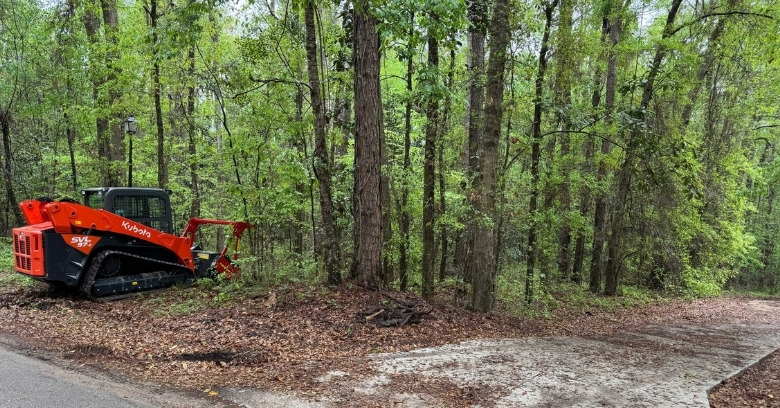
Looking into Mulching in Tallahassee Florida?
EZ Acre works on mulching and land preparation for properties in and around Tallahassee Florida.
Phone 850-787-9300 to go over the size of the area and the kind of vegetation.
One Word, Several Kinds of Work
A mulch layer is any covering of plant material that sits on top of the soil, and the right type depends on whether the goal is clearing, erosion control, or protection. Mulch holds moisture, shades the soil, and slows weeds, and it also slows the washing away of soil in heavy rain.
Most people who search for Mulching have brush or bare ground that needs attention, and knowing the options makes it easier to ask good questions.
Grinding Brush and Trees in Place
This method grinds standing vegetation into mulch without hauling any of it away, and it works on thick brush, vines, palmetto, and small to medium trees. The machine rolls over the ground rather than scraping it, and stumps are cut low, and the remaining roots decay in time.
Larger mulching heads can take trees many inches across, and smaller ones are meant for brush, and the cutting head can be steered close to trees without harming them. A mulched lot has a soft, brown surface instead of bare soil, and a thick layer may need to be raked near buildings.
Spraying Mulch and Seed on Bare Ground
In hydraulic mulching, a machine pumps a wet blend of fiber and seed onto the surface, and the fibers hold the seed in place and keep the moisture near it. Hydromulch protects soil while seed sprouts and roots take hold, and good timing matters, since a storm can arrive before the cover does.
Planting season and rainfall both shape the timing of a spray job, and slopes may need an extra layer or a stronger binder. The mulch only protects the soil until the grass takes over, and patience pays off once the lawn fills in.
Mulching With the Soil in Mind
Grinding growth into chips returns plant material to the soil as it decays, and the roots stay in the ground to hold the soil. On environmentally sensitive ground, mulching with less soil disturbance is usually preferred, and clearing around water often needs special permission.
Plant-based materials break down and improve the soil over time, and a depth of a few inches is enough for most beds. Wood chips from clearing are a practical covering for trails, bare ground, and steep banks, and extra chips can be stacked for later use.
How a Mulching Job Gets Done
Forestry mulchers are mounted on skid steers, tracked carriers, or excavators, and operators can work close to structures and fences with the right setup. A hose reaches into slopes and corners where trucks cannot drive, and the size of the tank decides how many acres a load covers.
Machines that grind trees and brush are heavy and loud, and the operator works from a protected cab. A walk-through before the work reveals many of the surprises, and nothing replaces a slow look at the ground first.
Sandy Soil, Wet Seasons, and Storms Around Tallahassee Florida
Sand holds little water or nutrients, and mulch helps with both, and a layer of mulch can make a real difference to new plantings. The wet season runs through the summer with frequent heavy rain, and hydraulic mulching must be timed between rains.
Storm damage often leaves fallen trees and tangled brush that need to be cleared, and clearing storm debris promptly keeps the yard safe and usable. Mulching reduces the thick tangle of dead and living growth that burns, and a clear zone around buildings is a common recommendation.
After the Trees Are Cut
Mulching removes everything above the ground and leaves the root system in place, and pastures and wild land can usually live with low stumps. Roots that stay in the ground are the best natural defense against erosion, and mulching is often chosen for slopes, ditch banks, and pond edges.
Chip size depends on the machine, the teeth, and the type of growth, and the rough texture makes the layer stay in place. Piling chips deeply against trees or buildings invites rot and pests, and owners can ask for the layer to be spread evenly.
When Mulching Works Best
The dry months are the most dependable time for heavy mulching equipment, and new seed needs rain after the application, but not a flood. Growth comes back quickly after mulching in a warm, wet climate, and cutting sprouts while they are small is far easier than waiting.
Refreshing a mulch layer is routine upkeep for any landscape, and raking and fluffing the surface helps it shed water. Fire safety belongs in any plan for dry mulch near buildings, and cigarette butts and sparks are risks in dry weather.
A Simple Way to Decide
Overgrown acreage that needs to be opened up calls for a grinding machine, and the two methods often follow each other on the same property. Forestry work opens the ground, and the hydraulic spray then protects it, and owners should ask how the pieces fit together.
Spreading wood chips or bark around trees and shrubs is the simplest and most familiar form of mulching, and it keeps roots cool, holds water, and slows weeds. Owners who describe the problem rather than the method get better advice, and it helps to mention any slopes, wet spots, or neighbors close to the work.
Protecting Habitat During the Work
Brush that looks empty can be full of life, especially in spring and early summer, and the crew can pause or adjust the work for a nest or a den. Cutting during the main nesting months can destroy active nests and young birds, and leaving a strip of untouched growth gives animals a place to go.
What to Settle First
Start by marking the area to be mulched and describing the growth, and a site visit lets the crew see the land in person. Check local rules, since some areas require approval before clearing or tree removal, and the owner and the crew start with the same expectations.
With those questions answered, choosing among Mulching in Tallahassee Florida gets easier, and a few minutes on the phone is enough to start.
Call 850-787-9300 to start planning the work.
Verified

Verified
Verified
Verified
Verified














