Comparing Mulching Contractor in Tallahassee Florida?
EZ Acre offers mulching work for property owners in Tallahassee Florida.
Reach us at 850-787-9300 to describe your property and the growth on it.
Turning Growth Into Mulch
On a property, mulching usually means grinding or spreading plant material so it protects the soil, and each type solves a different problem on the land. Bare soil dries and crusts, while mulched soil stays cooler and softer, and it helps new grass and new plants get established.
That is the need behind many searches for Mulching Contractor, and the rest of this page explains the main types and the details that matter.
Forestry Mulching
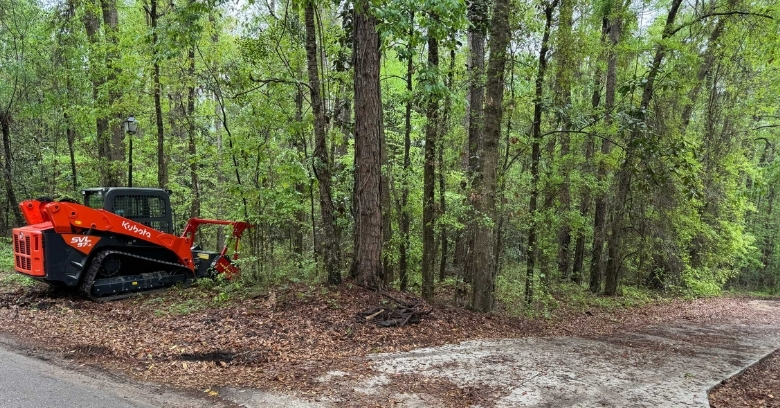
A forestry mulcher is a tractor or tracked machine with a heavy cutting head that shreds vegetation where it stands, and it works on thick brush, vines, palmetto, and small to medium trees. Forestry mulching disturbs the soil less than pushing and piling does, and sandy soil stays in place better with the roots left in the ground.
The diameter of the trees is a key detail in planning a mulching job, and selective mulching clears the understory and keeps the shade trees. The mulch left behind is a thick blanket that suppresses new growth for a time, and the chips can be left as they are on wild land.
Hydraulic Mulching
Hydraulic mulching sprays a slurry of water, mulch fibers, and often seed onto bare ground, and a green dye often shows where the spray has been applied. Hydromulch protects soil while seed sprouts and roots take hold, and good timing matters, since a storm can arrive before the cover does.
Hydraulic mulching depends on weather, water, and the right mix, and some mixes include fertilizer to help the grass start. A mix chosen for local conditions establishes faster, and watering during the first weeks speeds up growth.
Leaving the Land in Better Shape
Grinding growth into chips returns plant material to the soil as it decays, and the roots stay in the ground to hold the soil. Land close to water calls for methods that keep soil in place, and owners should ask about local rules before work begins.
Natural mulch has a long track record as a way to protect soil, and it keeps roots cool, holds water, and slows weeds. Mulch made on site is a natural byproduct of the work, though it may need to age, and a thick layer on paths keeps mud down.
Choosing the Right Machine for the Growth
Forestry mulchers are mounted on skid steers, tracked carriers, or excavators, and smaller units handle brush and vines in tight spaces. The machine blends water, mulch, and seed and sprays the mix through a hose or a boom, and access to the site and a supply of water are part of the planning.
Machines that grind trees and brush are heavy and loud, and nearby buildings, vehicles, and fences need protection from thrown material. Old fencing and debris can be hidden by seasons of growth, and nothing replaces a slow look at the ground first.
Working the Land in Tallahassee Florida
Sandy ground benefits more than most from a protective cover, and a layer of mulch can make a real difference to new plantings. Summer here brings heat, humidity, and daily storms, and bare soil exposed in the wet season needs cover quickly.
Wind and flooding from a major storm can turn a tidy lot into a mess of debris, and crews are in high demand after a storm, and waiting times grow. Thick underbrush is fuel, and dry spells make fires more likely, and local fire agencies publish guidance for owners.
Holding the Ground in Place
A mulching head cuts trees off at or just above the ground and leaves the stump, and the owner should decide whether the stumps can stay or must be ground out. A slope held by living and dead roots keeps its shape much better than bare soil, and mulching is often chosen for slopes, ditch banks, and pond edges.
Chips from a mulching pass vary in size, from fine shreds to chunky pieces, and aging in place lets the layer settle and mellow. The right depth depends on whether the owner wants to suppress growth or let seed sprout, and it helps to check the depth near foundations and keep it thin there.
When Mulching Works Best
Wet-season rain and soft soil slow tracked machines and cause ruts, and hydraulic mulching and seeding follow a different rhythm. Within a season, a mulched lot may show new shoots from stumps and vines, and a follow-up pass is part of the plan for many properties.
Refreshing a mulch layer is routine upkeep for any landscape, and fresh chips can be spread over the old layer. A clear gap around a house is a common wildfire recommendation, and chips are better used farther out on the property.
Choosing Between Mulching Types
Overgrown acreage that needs to be opened up calls for a grinding machine, and the two methods often follow each other on the same property. Many projects use both methods in sequence, and the plan should say which comes first and how long the gap will be.
Ordinary landscape mulching is the choice when the goal is to protect plants and beds, and it keeps roots cool, holds water, and slows weeds. Asking the right question at the start saves time, and talk about how much time you have for the work.
Wildlife, Nesting, and Care on Wooded Land
Wooded and overgrown land is home to birds, reptiles, and small mammals, and local wildlife agencies publish guidance for property owners. Many property owners schedule mulching and clearing for the late fall and winter, and it helps to ask about local rules on nesting season and protected species.
Preparing for a Mulching Job
Flagging tape or stakes help define the limits of the work, and it helps to discuss trees to keep, trees to remove, and any areas to avoid. Check local rules, since some areas require approval before clearing or tree removal, and the work goes smoothly.
With those questions answered, choosing among Mulching Contractor in Tallahassee Florida gets easier, and a few minutes on the phone is enough to start.
Reach us at 850-787-9300 to get your lot ready for its next use.
Verified

Verified
Verified
Verified
Verified