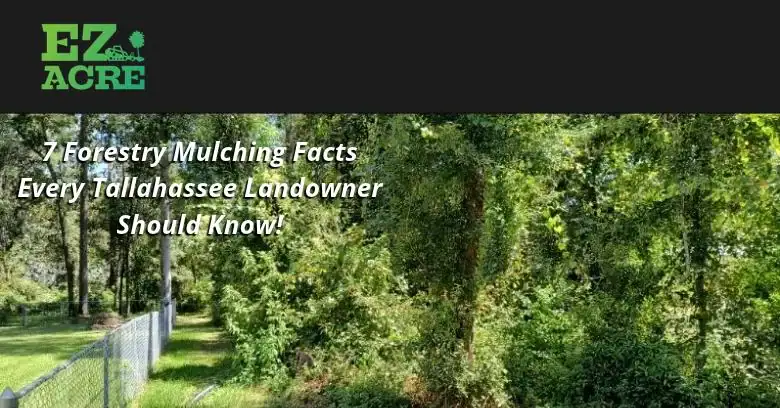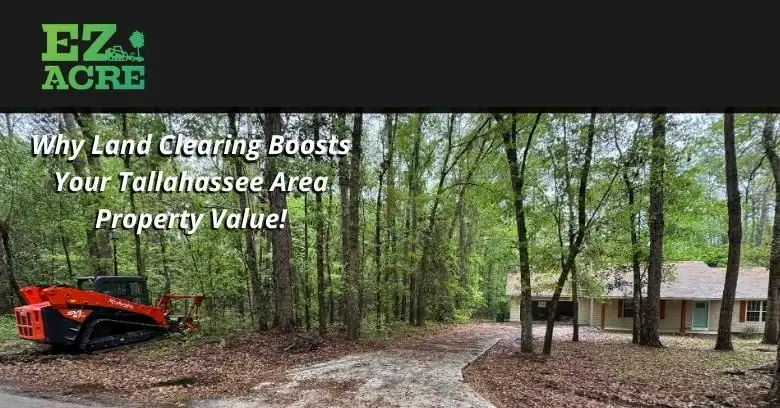
Acreage in the Big Bend rarely sits still. Leave five acres alone for a few seasons and titi, privet, and greenbriar close the gaps, volunteer pines crowd the pasture edge, and a storm-snapped canopy turns into a tangle nobody wants to walk through. Owners notice the change slowly. Buyers, appraisers, and lenders notice it immediately and they price it in. A parcel that cannot be walked, surveyed, or visualized gets discounted, because every unknown behind the brush line becomes the buyer's risk to carry.
That gap between raw acreage and usable acreage is where real dollars live. For property owners across Tallahassee Florida, land clearing is one of the few improvements that can raise both the appraised value and the practical enjoyment of a property without pouring a foundation or pulling a building permit. Sightlines cleared by an experienced land clearing contractor reveal topography, drainage patterns, and mature specimen trees. Open ground lets a survey crew set corners, a soil tester reach a proposed drainfield, and a buyer stand in the middle of a future homesite instead of guessing from the road.
This article walks through how land clearing actually influences value in Tallahassee and nearby Quincy Florida and the greater Leon, Gadsden, and Wakulla counties. It also includes what appraisers and buyers respond to, how forestry mulching differs from traditional grub-and-haul, which local permits and protected-tree rules apply before a machine ever rolls off the trailer, what the work typically costs regionally, and why the December-through-February window produces the cleanest results. The goal is a decision framework, not a sales pitch: knowing what to clear, what to keep, and when to do it separates a value-adding project from an expensive scrape.
What Buyers and Appraisers Actually See
Value is not assigned to acreage in the abstract. It is assigned to acreage that can be used and that use must be demonstrable.
Usable Acreage Versus Raw Acreage
A five-acre listing sounds generous until wetlands, setbacks, easements, and slope subtract from it. Owners often discover after consulting a land clearing contractor that only two or three acres are genuinely buildable. Clearing does not create buildable land, but it makes the buildable portion visible as well as verifiable and that changes how a comparable-sales analysis treats the parcel. Once you can see and measure a homesite, a driveway route, and a septic area, the property competes with improved lots rather than speculative timberland.
There is also a practical financing angle. Lenders and appraisers are more comfortable with parcels where access is established and the site is legible. Overgrowth hides everything an inspector wants to confirm: old fill, buried debris, erosion channels, sinkhole features in the sandy karst soils south toward Crawfordville, and standing water that only shows up after a heavy week. Professional land clearing in Tallahassee Florida and the surrounding counties resolves those unknowns before they turn into a price negotiation.
Curb Appeal and Selective Clearing
The most common mistake is clearing too much. Wholesale scraping erases the very features that command a premium here such as spreading live oaks, southern magnolias, mature bald cypress along a creek edge, and the dogwood understory that makes a North Florida lot feel established. Those specimens take decades to replace and buyers price them accordingly.
Selective land clearing does the opposite. Understory brush, vines, and crowded pine volunteers come out while designated canopy trees stay, often with a protective clearance radius flagged before work begins. The result reads as a park rather than a construction site. A skilled land clearing contractor serving Tallahassee and Quincy Florida knows how to run a mulcher around root zones and drip lines without compacting soil or scarring bark and that restraint preserves the appraisal benefit instead of trading it for open ground.
Two Clearing Methods, Two Different Outcomes
Almost every project in the region resolves into one of two approaches or a combination of both. The choice drives cost, timeline, and what you can use the ground for afterward.
Forestry Mulching
A mulcher, typically a compact track loader in the 75 to 120 horsepower range running a drum head, grinds standing brush and small trees in place. Nothing is piled, nothing is hauled, and nothing is burned. What remains is a mulch mat roughly two to four inches deep that holds topsoil, suppresses regrowth for a season, and provides genuine erosion control in a county that averages about 60 inches of rain a year, most of it between June and September.
Production is honest but not instant. A machine in that class covers roughly a quarter-acre to an acre per day. Dense titi thickets, established privet, or hardwood stems over six inches push toward the low end of that range. The trade-off is that mulching leaves roots and stumps intact. For a recreational tract, a hunting lease, pasture reclamation, a firebreak, or a property being prepped for sale, that is fine and often preferable. For a slab, pad, pond, or septic drainfield, more work is required.
Grub-and-Haul
Traditional land clearing uses a dozer or excavator with a root rake to pull stumps and root balls, then either burns the piles under a Florida Forest Service authorization, processes them through an air-curtain burner, or trucks the material off-site. It is the required approach anywhere structural or subsurface work is planned, because roots decompose, settle, and undermine both foundations and drainfields.
Grubbing costs more and disturbs more. It also exposes soil that must be managed against washout, which matters on the red clay hills of Bradfordville and north Leon County, where saturated ground ruts easily. Many owners get the best of both: mulch the bulk of the acreage, then grub only the building envelope and driveway. Land clearing around Tallahassee Florida often follows that sequence because it controls cost while still producing a construction-ready pad.
Local Rules That Shape the Scope
Land clearing is regulated here and the rules are not identical from parcel to parcel. Both the City of Tallahassee and Leon County protect trees above certain size thresholds, with additional heritage-tree designations that trigger permitting and inch-for-inch mitigation when removal is approved. Verify through City Growth Management or the county's development support and environmental management office during planning, not after a tree is on the ground.
Several other layers commonly apply:
- Canopy Road Protection Zone restrictions apply within roughly 100 feet of the centerline of designated canopy roads, including Miccosukee, Centerville, Old Bainbridge, Meridian, and Old St. Augustine.
- Land disturbance generally requires an Environmental Management Permit and disturbing an acre or more triggers NPDES stormwater requirements into play including silt fence, turbidity barriers, and a stabilization plan.
- Open burning of debris piles requires authorization from the Florida Forest Service and conditions can suspend it on short notice.
- Notify Sunshine 811 before any grubbing or stump work, since utility locates protect both the crew and the owner's wallet.
- Wetland-adjacent parcels in the Lake Jackson, Ochlockonee, and Lake Talquin basins may require environmental resource review through the Northwest Florida Water Management District.
- Gopher tortoise burrows are common in Wakulla County's sandy soils; relocation requires an FWC permit as well as a permitted agent and finding burrows mid-project stops work.
That last point is worth emphasizing. A stopped job is expensive in a way no estimate anticipates. A land clearing contractor working in Quincy Florida or anywhere in the region should walk the property for burrows, wetland indicators, and protected specimens before quoting, not after mobilizing.
What the Work Typically Costs in the Region
Regional trade averages give owners a reasonable frame of reference, though every parcel prices differently based on stem density, slope, access, and disposal method. Across the Panhandle, forestry mulching typically runs somewhere between $500 and $2,500 per acre. Light brush clearing commonly falls in the $1,500 to $3,000 per acre range, while heavy clearing with haul-off can reach $3,000 to $6,000 or more per acre. Hourly mulching work is - ften quoted in the $150 to $250 per hour range and stump grinding generally runs $100 to $400 per stump depending on diameter and access.
Marketable timber can offset part of the bill. At roadside, Panhandle pulpwood has been trading around $10 to $14 per ton and sawtimber around $25 to $35 per ton. On a tract with enough volume and truck access, a timber sale ahead of clearing changes the math considerably and it is a conversation worth having before the mulcher grinds up material that had value standing.
Storm recovery still shapes demand for land clearing& in Quincy Florida and across Gadsden County, where Hurricane Michael's 2018 damage was severe and the memory of downed-canopy backlogs is fresh. Hermine in 2016, the May 2024 Tallahassee tornadoes, and Helene later that year reinforced the same lesson of how deferred brush and leaning timber become emergency expenses on someone else's schedule. Property owners in Quincy Florida who cleared proactively generally faced smaller cleanup bills and shorter access outages afterward.
Timing, Vegetation, and the Invasive Species Problem
The best clearing window in North Florida runs from December through February. Ground is drier, vegetation is dormant, sightlines are open, and ticks, chiggers, yellow flies, as well as snakes are far less of a factor for the crew. Summer brings afternoon thunderstorms, saturated clay, rutting, as well as machine downtime and hurricane season from June 1 through November 30 adds scheduling risk on top of that.
Invasives deserve their own strategy. Cogon grass, Chinese tallow, coral ardisia, Chinese privet, Japanese climbing fern, kudzu, air potato, and wisteria all establish aggressively here, and several of them spread when mishandled. Mulching cogon grass without a follow-up herbicide program fragments the rhizomes and worsens the infestation. Any competent land clearing contractor should identify what is growing on a parcel before recommending a method, because the right answer for privet is not the right answer for cogon grass.
On wooded lots near the Apalachicola National Forest, clearing also serves a defensible-space purpose. Managing the zero-to-five-foot, five-to-thirty-foot, and thirty-to-hundred-foot zones around structures reduces wildfire exposure and is increasingly something insurers and buyers ask about. Well-planned land clearing in Tallahassee Florida can accomplish access, aesthetics, and fire mitigation in a single mobilization when the plan accounts for all three from the start.
Working With the Right Crew
Equipment matters less than judgment. The questions that separate a good outcome from a regrettable one are asked before the trailer gates drop: What is the end use? Where does water move on this parcel? Which trees stay? What permits apply? Is there marketable timber? Are there burrows or wetland edges? A detailed planning conversation drives everything and keeps a project moving once the plan is set.
Local knowledge is not a marketing line in this region. The red clay hills north of town behave nothing like the deep sand and karst south toward Crawfordville and a crew that has worked both knows where rutting, drainage failures, and sinkhole risk actually show up. Serving property owners in Tallahassee and Quincy Florida as well as the surrounding North Florida communities means matching method to soil, season, and goal rather than running one approach everywhere.
Closing Thoughts
Land clearing raises property value when it is planned as an improvement rather than executed as a demolition such as when it reveals usable acreage, preserves the canopy specimens buyers pay for, resolves the drainage and access questions an appraiser needs answered, and stays inside the tree-protection and stormwater rules that govern parcels in Leon and Gadsden counties. Owners who wait typically pay more because brush thickens, invasives spread, storm-damaged timber becomes an emergency, and the winter window that produces the cleanest work fills up fast.
The practical next step is a site walk with a land clearing contractor who will define the end use, flag the trees worth keeping, confirm which permits apply, and honestly price mulching versus grubbing for the specific ground in question. Property acquired for a homesite, a pasture, a shop, or an eventual sale only performs when the land can be seen, measured, and used. The right land clearing company will work with owners throughout the Tallahassee and Quincy area to get that groundwork right the first time!
Key Takeaways
- Land clearing increases value primarily by converting raw acreage into demonstrably usable acreage that appraisers, lenders, and buyers can verify.
- Forestry mulching leaves a two to four-inch mulch mat that protects topsoil and controls erosion, but it leaves roots and stumps in place, so a slab, pond, or septic drainfield still requires grubbing.
- Selective clearing that preserves live oaks, southern magnolias, and bald cypress protects curb appeal, while wholesale scraping can reduce a property's market appeal.
- Tree removal in the City of Tallahassee and Leon County can trigger permits, heritage-tree mitigation, and Canopy Road Protection Zone restrictions, so verify requirements before work begins.
- Regional pricing generally ranges from about $500 to $2,500 per acre for mulching up to $3,000 to $6,000 or more per acre for heavy clearing with haul-off and marketable timber may offset part of that cost.
- December through February offers the driest ground, dormant vegetation, and fewest pests, making it the most efficient window for land clearing work in North Florida.
Frequently Asked Questions
Will land clearing raise my appraisal or just my tax bill?
Land clearing typically raises appraised value when it improves usability and access, though it can also affect the assessed value used for property taxes. Appraisers respond to verifiable homesite potential, established access, and preserved canopy trees. Owners with agricultural classifications or timber exemptions should confirm how a land-use change affects their status before clearing.
Do I need a permit to remove trees on my own acreage?
Often yes, because both the City of Tallahassee and Leon County protect trees above certain size thresholds and designate heritage trees that require permits and mitigation. Land disturbance generally requires an Environmental Management Permit and disturbing an acre or more adds stormwater and erosion control requirements. Confirm the specifics with City Growth Management or the county's environmental management office for your parcel.
Can I keep the mulch or does it have to be hauled off?
The mulch stays on site with forestry mulching, which is one of the method's main advantages. The resulting mat holds topsoil in place, suppresses regrowth for a season, and eliminates haul-off and burn costs. If the ground needs to be bare for construction, you can windrow the mulch or remove it during grubbing.
How long before grass or pasture grows through the mulch mat?
A thinner mat often allows grass establishment within a single growing season, while a heavier mat can take a year or more to break down enough for good seed-to-soil contact. Thinning the mat, discing, and seeding at the right time of year all speed the process. Soil testing and appropriate fertility also matter for pasture establishment.
Will a mulch mat interfere with a septic drainfield or well siting?
Yes, in the sense that a drainfield area needs to be grubbed and free of stumps, roots, and undecomposed organic material. Mulch and root systems interfere with soil evaluation and long-term drainfield performance. Plan for the drainfield and well locations before clearing so those areas receive the correct treatment.
Can you clear around specific live oaks and magnolias I want to keep?
Yes, selective land clearing is standard practice and the preferred approach on most residential acreage. Trees to be retained are flagged before work begins and machines work outside root zones to avoid compaction and bark damage. Keeping mature specimens generally supports both appraised value and buyer appeal.
What happens to the stumps and roots?
With mulching, stumps and roots remain in the ground and decompose naturally over time. With grub-and-haul, an excavator or dozer with a root rake pulls them for burning under Florida Forest Service authorization, processing through an air-curtain burner, or hauling off-site. Individual stumps can also be ground down, typically at a per-stump cost that varies with diameter and access.
How much of my five acres will actually be buildable?
That depends on wetlands, setbacks, easements, slope, and soil conditions and it is common for only a portion of a parcel to be genuinely buildable. Wetland-adjacent tracts in the Lake Jackson, Ochlockonee, or Lake Talquin basins may require review by the Water Management District. A survey combined with a site walk before clearing gives the most reliable answer.
When is the best time of year to schedule land clearing?
December through February is generally the best window, thanks to drier ground, dormant vegetation, better visibility, and fewer ticks, chiggers, and snakes. Summer thunderstorms and saturated soils cause rutting and downtime, and hurricane season runs from June 1 through November 30. Because that winter window is popular, schedule well in advance.