

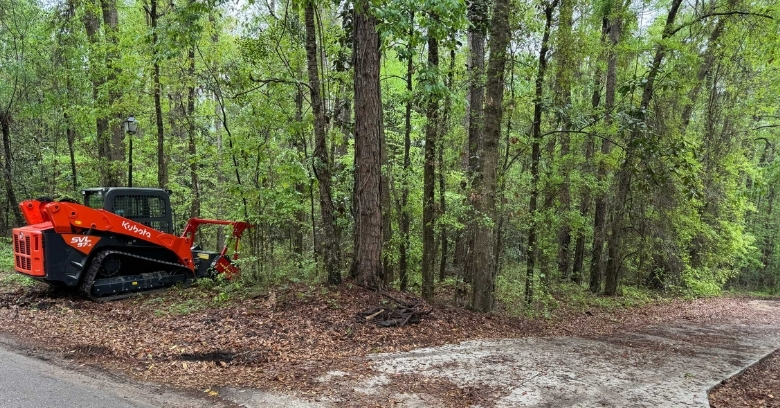
Exploring Mulching in Midway Florida?
EZ Acre is a land services business that does mulching work in Midway Florida.
Call 850-787-9300 to start a conversation about your land.
One Word, Several Kinds of Work
Mulching is the practice of covering ground with a layer of organic material or of grinding vegetation into chips, and the three most common kinds are forestry mulching, hydraulic mulching, and ordinary bed mulching. Covered soil loses less water to the sun and the wind, and owners use it to protect land that has just been disturbed.
Anyone comparing options for Mulching is typically facing thick growth or exposed soil, and knowing the options makes it easier to ask good questions.
Forestry Mulchers Explained
In forestry mulching, a powerful head cuts, grinds, and spreads the growth in a single pass, and the chips stay on the ground and form a protective layer. Because the roots stay in the ground, the soil holds together better than after a bulldozer clearing, and the mulch layer protects the surface from the next rain.
The size of material a mulcher can handle depends on the machine, and the operator can leave chosen trees standing while clearing around them. The depth of chips varies with the amount of growth that was cut, and a thick layer may need to be raked near buildings.
Spraying Mulch and Seed on Bare Ground
Spray-applied mulch covers large areas of soil quickly and evenly, and a green dye often shows where the spray has been applied. Hydromulch protects soil while seed sprouts and roots take hold, and a quick covering reduces the sediment that reaches ditches and ponds.
Hydraulic mulching depends on weather, water, and the right mix, and slopes may need an extra layer or a stronger binder. Grass seed choice matters as much as the mulch, and watering during the first weeks speeds up growth.
Gentler Ways to Clear and Cover Ground
Mulch made from cleared brush stays on the land and feeds the soil over time, and nothing leaves the property except what the owner chooses to send away. Near streams and wetlands, leaving roots and a mulch cover reduces runoff, and clearing around water often needs special permission.
Wood-based mulch is both attractive and useful around plants, and mulch should not be piled against trunks or house walls. Chips left from a clearing or tree job can be spread on paths and beds, and a thick layer on paths keeps mud down.
Machines Behind the Work
Forestry mulchers are mounted on skid steers, tracked carriers, or excavators, and smaller units handle brush and vines in tight spaces. Hydroseeding equipment ranges from small trailers to large trucks, and the machine must be able to reach the area it will spray.
A mulching head can throw chips, rocks, and debris a long way, and nearby buildings, vehicles, and fences need protection from thrown material. Metal and stone strike the teeth and can fly out at high speed, and marking the hazards before work begins is a good habit.
What the Climate Means for Mulching Work
Much of the ground in this region is light, sandy, and low in organic matter, and returning chips to the ground builds organic matter slowly. Daily thunderstorms can interrupt outdoor work and soften the ground, and crews often start early to get ahead of the afternoon storms.
After a hurricane, mulching is one way to deal with a large volume of vegetation on site, and clearing storm debris promptly keeps the yard safe and usable. Thick underbrush is fuel, and dry spells make fires more likely, and a clear zone around buildings is a common recommendation.
After the Trees Are Cut
The machine can grind a stump to a few inches above the surface or below it with extra effort, and stumps left in place rot slowly over several seasons. On hills and banks, intact roots are the reason mulching is preferred to scraping, and the chip layer adds another layer of protection.
Freshly ground chips are uneven and can contain splinters and long strands, and finer chips decay faster than larger pieces. Mulch depth matters, and too much can be as much of a problem as too little, and a light pass with a rake or box blade levels the surface.
Seasonal Planning for Mulching
Timing a forestry job for dry weather protects both the land and the schedule, and planting too late can leave bare ground exposed to the storms. Growth comes back quickly after mulching in a warm, wet climate, and a managed property stays open with little effort.
Wood chips decay, and the layer thins a little each season, and raking and fluffing the surface helps it shed water. Homeowners in fire-prone areas are advised to use a noncombustible zone near the foundation, and a little planning gives the benefit of mulch with lower risk.
Choosing Between Mulching Types
Dense vegetation that blocks access and sight lines is the job forestry mulching is built for, and hydraulic mulching is the choice when the problem is bare soil that needs cover. A property may be cleared by mulching and then seeded with a hydraulic application, and a single conversation can settle the whole sequence.
For a home landscape, a few inches of mulch around the plants does the job, and a thin edge along the lawn keeps the bed neat. The best starting point is what you want the land to look like afterward, and talk about how much time you have for the work.
Wildlife, Nesting, and Care on Wooded Land
Habitat is part of every parcel of untended land, and the crew can pause or adjust the work for a nest or a den. Timing the work outside the peak nesting period reduces harm to wildlife, and responsible work treats the land as more than a pile of material.
Questions to Settle Before Work Begins
A clear boundary and a plan for the work area prevent disputes and mistakes, and it helps to photograph the property before work begins. The details of access, permits, and disposal should be settled before the job starts, and the schedule can be planned around approvals.
A clear idea of the goal for the land makes Mulching in Midway Florida simple to narrow down, and it is easy to take it from there.
Phone 850-787-9300 when you are ready to plan a mulching project.
Verified

Verified
Verified
Verified
Verified














