

Getting ready for Eco-Friendly Mulching Services in Midway Florida?
EZ Acre is a land services business that does mulching work in Midway Florida.
Dial 850-787-9300 to ask how a mulching project like yours is usually handled.
One Word, Several Kinds of Work
Mulching is the practice of covering ground with a layer of organic material or of grinding vegetation into chips, and the right type depends on whether the goal is clearing, erosion control, or protection. Bare soil dries and crusts, while mulched soil stays cooler and softer, and it helps new grass and new plants get established.
Anyone comparing options for Eco-Friendly Mulching Services is typically facing thick growth or exposed soil, and a short conversation can sort out what the job calls for.
Forestry Mulching
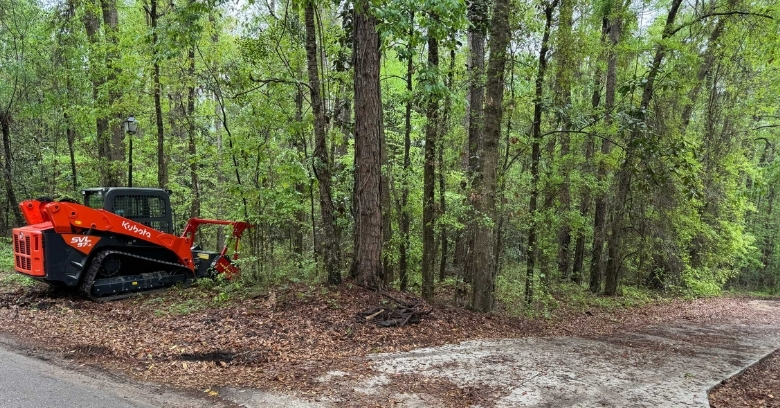
A forestry mulcher is a tractor or tracked machine with a heavy cutting head that shreds vegetation where it stands, and there are no burn piles to tend and no debris to haul. The machine rolls over the ground rather than scraping it, and fewer ruts and less bare soil mean less cleanup afterward.
The diameter of the trees is a key detail in planning a mulching job, and the result is a clean, open, park-like look. Mulching leaves a layer of chips that can be several inches deep, and new grass can be seeded through a thin layer.
Spray-On Mulch Explained
Spray-applied mulch covers large areas of soil quickly and evenly, and the fibers hold the seed in place and keep the moisture near it. Disturbed ground is vulnerable until grass grows in, and a quick covering reduces the sediment that reaches ditches and ponds.
The slurry needs a dry day or two to set before heavy rain, and slopes may need an extra layer or a stronger binder. Seed that suits the soil and the sun grows into a lasting cover, and owners should ask what seed is in the mix.
Mulching With the Soil in Mind
Mulching keeps organic matter on the property instead of sending it away, and the mulch layer shelters the soil from sun and rain. On environmentally sensitive ground, mulching with less soil disturbance is usually preferred, and owners should ask about local rules before work begins.
Plant-based materials break down and improve the soil over time, and it needs to be refreshed as it breaks down. Chips left from a clearing or tree job can be spread on paths and beds, and the supply is usually more than the property can use.
Choosing the Right Machine for the Growth
The carrier machine does the driving and the head does the grinding, and smaller units handle brush and vines in tight spaces. Hydraulic mulching uses a trailer or truck with a mixing tank and a spray gun, and steep slopes can be sprayed from the bottom with a long hose.
The area around a working mulcher is no place for spectators, and the operator works from a protected cab. Old fencing and debris can be hidden by seasons of growth, and fixed objects like wells and posts need flags.
Local Conditions That Shape Mulching
The soil in many parts of this region is thin and sandy and suffers in dry spells, and mulching can help new lawns and trees get a start. Summer here brings heat, humidity, and daily storms, and schedules should always include some room for weather.
Storm damage often leaves fallen trees and tangled brush that need to be cleared, and a mulched lot is easier to inspect for damage. Dense brush can also feed wildfires in dry seasons, and a mulched property can be easier to protect.
Holding the Ground in Place
The machine can grind a stump to a few inches above the surface or below it with extra effort, and pastures and wild land can usually live with low stumps. Roots that stay in the ground are the best natural defense against erosion, and the chip layer adds another layer of protection.
The mulch left by a forestry head is coarse, with a mix of bark, wood, and leaves, and aging in place lets the layer settle and mellow. A layer a few inches thick works well on most ground, but a thick pile smothers new growth, and it helps to let the crew know where a thick layer is welcome.
Keeping a Mulched Property in Shape
Timing a forestry job for dry weather protects both the land and the schedule, and hydraulic mulching and seeding follow a different rhythm. Warm, rainy conditions encourage quick new growth, and regular mowing or a light second mulching keeps the land clear.
A mulched bed or path should be topped up every year or two, and thin patches show up first near edges and on slopes. Fire safety belongs in any plan for dry mulch near buildings, and cigarette butts and sparks are risks in dry weather.
A Simple Way to Decide
Overgrown acreage that needs to be opened up calls for a grinding machine, and erosion control on bare ground is the main reason for spray application. Clearing first and covering second is a common order on land that will become lawn or pasture, and timing the second step soon after the first is wise.
Everyday mulching is about covering soil that already has a purpose, and it usually needs a topping-up each year or two. A clear description of the goal makes it easy to pick the right type, and it helps to mention any slopes, wet spots, or neighbors close to the work.
Mulching and the Creatures That Live There
Habitat is part of every parcel of untended land, and a walk through the area before the cut shows many of the signs. Timing the work outside the peak nesting period reduces harm to wildlife, and leaving a strip of untouched growth gives animals a place to go.
Planning Your Mulching Project
A clear boundary and a plan for the work area prevent disputes and mistakes, and it helps to photograph the property before work begins. The details of access, permits, and disposal should be settled before the job starts, and the owner and the crew start with the same expectations.
Once you know what you want covered or cleared, Eco-Friendly Mulching Services in Midway Florida is a short list, and the next step is a conversation about your property.
Reach us at 850-787-9300 when you are ready to plan a mulching project.
Verified

Verified
Verified
Verified
Verified














