

Looking into Mulching in Bradfordville Florida?
EZ Acre offers mulching work for property owners in Bradfordville Florida.
Call 850-787-9300 to start a conversation about your land.
The Basics of the Practice
The word mulching covers several kinds of work, from grinding brush on site to spreading a protective layer over bare soil, and a short description of the property usually shows which type fits. A layer of mulch keeps the sun from baking the soil and holds water near the roots, and it can keep a property looking tidy for a long time.
Most people who search for Mulching have brush or bare ground that needs attention, and a short conversation can sort out what the job calls for.
Forestry Mulchers Explained
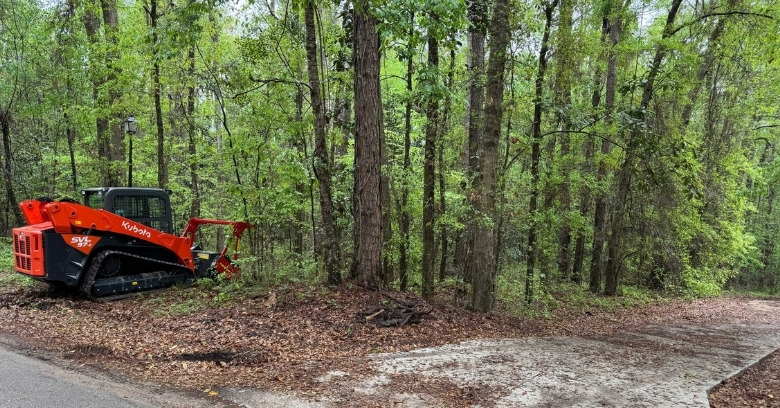
This method grinds standing vegetation into mulch without hauling any of it away, and the chips stay on the ground and form a protective layer. The machine rolls over the ground rather than scraping it, and stumps are cut low, and the remaining roots decay in time.
Light brush and vines are easy work, but big hardwoods call for a heavy machine, and the result is a clean, open, park-like look. The finished ground is covered with a carpet of chips, and the chips can be left as they are on wild land.
Hydraulic Mulching
The hydraulic method mixes water with mulch and a binder in a tank and sprays it across the soil, and it is used on slopes, new lawns, roadsides, and freshly graded sites. Erosion control is one of the main jobs of hydraulic mulching, and good timing matters, since a storm can arrive before the cover does.
Planting season and rainfall both shape the timing of a spray job, and slopes may need an extra layer or a stronger binder. The mulch only protects the soil until the grass takes over, and new grass needs time before it can take foot traffic.
Mulching With the Soil in Mind
Mulching keeps organic matter on the property instead of sending it away, and the roots stay in the ground to hold the soil. Gentler methods suit land near wetlands, ponds, and wildlife habitat, and buffers of untouched vegetation may be required near the water.
Organic mulch such as wood chips, pine straw, and bark is common in gardens and landscapes, and colors and textures vary with the source of the wood. Using fresh chips from a clearing job as landscape mulch saves effort, and owners often ask the crew to leave the chips where they are useful.
Mulching Equipment and Methods
Forestry mulchers are mounted on skid steers, tracked carriers, or excavators, and smaller units handle brush and vines in tight spaces. Hydraulic mulching uses a trailer or truck with a mixing tank and a spray gun, and the size of the tank decides how many acres a load covers.
Operators and bystanders both face real hazards on a mulching job, and nearby buildings, vehicles, and fences need protection from thrown material. Metal and stone strike the teeth and can fly out at high speed, and marking the hazards before work begins is a good habit.
Local Conditions That Shape Mulching
Sand holds little water or nutrients, and mulch helps with both, and mulching can help new lawns and trees get a start. Daily thunderstorms can interrupt outdoor work and soften the ground, and hydraulic mulching must be timed between rains.
Tropical systems topple trees and scatter limbs across properties, and crews are in high demand after a storm, and waiting times grow. Mulching reduces the thick tangle of dead and living growth that burns, and a clear zone around buildings is a common recommendation.
Stumps, Slopes, and Erosion
After the trunk is ground, the stump and roots stay in the soil to decay, and the owner should decide whether the stumps can stay or must be ground out. Leaving roots intact means rainfall has less power to carry soil away, and new seed can be sown straight into the mulch.
Freshly ground chips are uneven and can contain splinters and long strands, and the appearance changes over time from fresh wood color to soft brown. The right depth depends on whether the owner wants to suppress growth or let seed sprout, and owners can ask for the layer to be spread evenly.
Timing, Seasons, and Upkeep
Dry weather lets the operator work safely and cleanly on most ground, and planting too late can leave bare ground exposed to the storms. Warm, rainy conditions encourage quick new growth, and a managed property stays open with little effort.
Mulch is not permanent, and part of its value is that it decays into the soil, and weeds that sprout through a thin layer are pulled early. Local fire rules sometimes limit the amount of mulch near buildings, and cigarette butts and sparks are risks in dry weather.
Choosing Between Mulching Types
Forestry mulching is the choice when the problem is thick growth that has to come out, and the two methods often follow each other on the same property. Many projects use both methods in sequence, and a gap between clearing and cover is a window for erosion.
Everyday mulching is about covering soil that already has a purpose, and the material can be delivered in bulk or made from cleared growth. A clear description of the goal makes it easy to pick the right type, and it helps to mention any slopes, wet spots, or neighbors close to the work.
Checking for Wildlife Before the Cut
Thick brush shelters animals that nest, burrow, and hide in the growth, and the crew can pause or adjust the work for a nest or a den. Many property owners schedule mulching and clearing for the late fall and winter, and the mulcher should be stopped if a nest is found.
Questions to Settle Before Work Begins
The first step in any mulching job is knowing exactly where it starts and stops, and a site visit lets the crew see the land in person. Ask who handles permits, utility locates, and any debris that will not be mulched, and the owner and the crew start with the same expectations.
A clear idea of the goal for the land makes Mulching in Bradfordville Florida simple to narrow down, and it is easy to take it from there.
Phone 850-787-9300 to talk about mulching your land.
Verified

Verified
Verified
Verified
Verified














