Comparing Forestry Mulching in Crawfordville Florida?
EZ Acre helps property owners in Crawfordville Florida turn brush and small trees into mulch.
Phone 850-787-9300 to describe your property and the growth on it.
What Mulching Means on Land
On a property, mulching usually means grinding or spreading plant material so it protects the soil, and each type solves a different problem on the land. Mulch holds moisture, shades the soil, and slows weeds, and it can keep a property looking tidy for a long time.
That is the need behind many searches for Forestry Mulching, and the rest of this page explains the main types and the details that matter.
Grinding Brush and Trees in Place
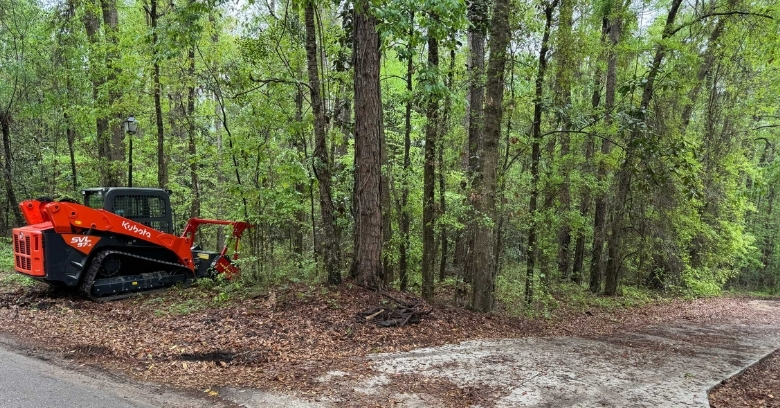
The mulching head spins at high speed and reduces brush, saplings, and even sizable trees to chips, and the chips stay on the ground and form a protective layer. Because the roots stay in the ground, the soil holds together better than after a bulldozer clearing, and the mulch layer protects the surface from the next rain.
The diameter of the trees is a key detail in planning a mulching job, and selective mulching clears the understory and keeps the shade trees. A mulched lot has a soft, brown surface instead of bare soil, and it breaks down slowly and returns nutrients to the soil.
Spray-On Mulch Explained
In hydraulic mulching, a machine pumps a wet blend of fiber and seed onto the surface, and the fibers hold the seed in place and keep the moisture near it. A slope stripped of vegetation can lose soil quickly in a heavy rain, and slopes and drainage swales benefit the most.
The slurry needs a dry day or two to set before heavy rain, and the right blend depends on the soil and the slope. The mulch only protects the soil until the grass takes over, and some sites need a second application.
Leaving the Land in Better Shape
Mulching keeps organic matter on the property instead of sending it away, and fewer trucks and less hauling mean less fuel burned and less traffic. Gentler methods suit land near wetlands, ponds, and wildlife habitat, and buffers of untouched vegetation may be required near the water.
Landscape mulch is the familiar layer spread around trees, shrubs, and flower beds, and colors and textures vary with the source of the wood. Chips left from a clearing or tree job can be spread on paths and beds, and the supply is usually more than the property can use.
Machines Behind the Work
The carrier machine does the driving and the head does the grinding, and operators can work close to structures and fences with the right setup. A hydroseeder is a tank on wheels with an agitator and a pump, and the machine must be able to reach the area it will spray.
Operators and bystanders both face real hazards on a mulching job, and people and pets should stay well back from the work. Hidden objects in the ground can damage the machine and create hazards, and fixed objects like wells and posts need flags.
Ground and Weather Around Crawfordville Florida
Sand holds little water or nutrients, and mulch helps with both, and a covered surface stays cooler in the summer sun. The wet season runs through the summer with frequent heavy rain, and machines can bog down in saturated ground, so dry spells are the best window.
Hurricane season runs from June through November and brings storms that fell trees and fill yards with debris, and grinding the material in place can be faster than hauling it away. Thick underbrush is fuel, and dry spells make fires more likely, and a mulched property can be easier to protect.
Stumps, Slopes, and Erosion
A mulching head cuts trees off at or just above the ground and leaves the stump, and stumps left in place rot slowly over several seasons. The root mass under a cleared slope binds the soil together while new growth starts, and bare patches can be covered by hydraulic mulch if needed.
Chips from a mulching pass vary in size, from fine shreds to chunky pieces, and finer chips decay faster than larger pieces. Excess mulch on a cleared lot can be raked or spread thin, and it helps to let the crew know where a thick layer is welcome.
Seasonal Planning for Mulching
Machines work best on firm ground, and the drier part of the year provides that, and new seed needs rain after the application, but not a flood. Within a season, a mulched lot may show new shoots from stumps and vines, and regular mowing or a light second mulching keeps the land clear.
Mulch breaks down over time and needs topping up where a thick layer is wanted, and thin patches show up first near edges and on slopes. Fire safety belongs in any plan for dry mulch near buildings, and gravel or bare ground near the walls is a safe choice.
Choosing Between Mulching Types
If the land is covered in brush, vines, and small trees, a mulching head is the natural fit, and exposed ground that must be seeded and held in place is the target of the hydraulic type. Clearing first and covering second is a common order on land that will become lawn or pasture, and owners should ask how the pieces fit together.
For a home landscape, a few inches of mulch around the plants does the job, and it keeps roots cool, holds water, and slows weeds. Asking the right question at the start saves time, and it helps to mention any slopes, wet spots, or neighbors close to the work.
Sharing the Land With Animals
Wooded and overgrown land is home to birds, reptiles, and small mammals, and local wildlife agencies publish guidance for property owners. Nesting season is the time of year when clearing needs the most care, and it helps to ask about local rules on nesting season and protected species.
Planning Your Mulching Project
Flagging tape or stakes help define the limits of the work, and a site visit lets the crew see the land in person. Check local rules, since some areas require approval before clearing or tree removal, and the work goes smoothly.
Everything above comes down to one decision, and Forestry Mulching in Crawfordville Florida is where you make it, and it is easy to take it from there.
Ring 850-787-9300 to talk about mulching your land.
Verified

Verified
Verified
Verified
Verified