

Comparing Forestry Mulching in Midway Florida?
EZ Acre helps property owners in Midway Florida turn brush and small trees into mulch.
Reach us at 850-787-9300 to start a conversation about your land.
One Word, Several Kinds of Work
The word mulching covers several kinds of work, from grinding brush on site to spreading a protective layer over bare soil, and each has its own equipment, its own purpose, and its own best season. Mulch works by covering the ground so that water stays in and weeds stay out, and owners use it to protect land that has just been disturbed.
Most people who search for Forestry Mulching have brush or bare ground that needs attention, and the next step is understanding which kind of mulching fits.
Grinding Brush and Trees in Place
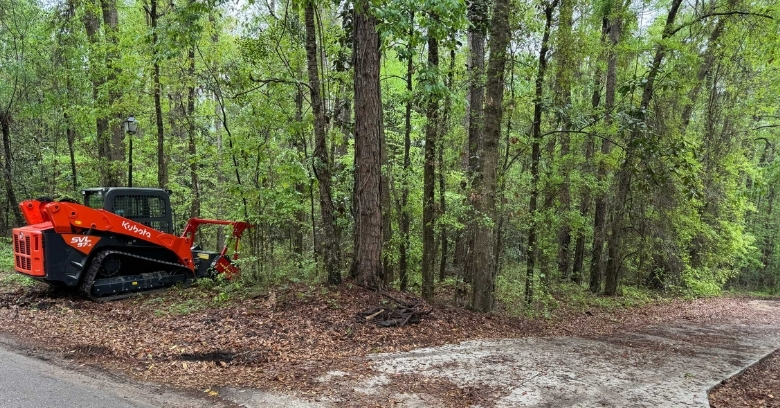
In forestry mulching, a powerful head cuts, grinds, and spreads the growth in a single pass, and the machine can reach places where a truck and chipper cannot. Because the roots stay in the ground, the soil holds together better than after a bulldozer clearing, and sandy soil stays in place better with the roots left in the ground.
The diameter of the trees is a key detail in planning a mulching job, and a walk through the land before the work marks what stays. The finished ground is covered with a carpet of chips, and a thick layer may need to be raked near buildings.
Hydromulch for Slopes and New Lawns
Hydromulch is a liquid mixture of paper or wood fiber, water, and tackifier that dries into a protective crust, and it is used on slopes, new lawns, roadsides, and freshly graded sites. Disturbed ground is vulnerable until grass grows in, and rules for construction sites frequently require erosion control.
The slurry needs a dry day or two to set before heavy rain, and a good schedule fits the application between storms. Seed that suits the soil and the sun grows into a lasting cover, and patience pays off once the lawn fills in.
Eco-Friendly Mulching Practices
Using the vegetation that was cut as mulch closes the loop on the clearing job, and the mulch layer shelters the soil from sun and rain. Near streams and wetlands, leaving roots and a mulch cover reduces runoff, and owners should ask about local rules before work begins.
Organic mulch such as wood chips, pine straw, and bark is common in gardens and landscapes, and it keeps roots cool, holds water, and slows weeds. Using fresh chips from a clearing job as landscape mulch saves effort, and a thick layer on paths keeps mud down.
Choosing the Right Machine for the Growth
Different machines suit different terrain and different density of growth, and larger machines tackle big trees and large acreage. Hydroseeding equipment ranges from small trailers to large trucks, and steep slopes can be sprayed from the bottom with a long hose.
Machines that grind trees and brush are heavy and loud, and nearby buildings, vehicles, and fences need protection from thrown material. A walk-through before the work reveals many of the surprises, and a careful survey saves equipment and prevents accidents.
Sandy Soil, Wet Seasons, and Storms Around Midway Florida
The soil in many parts of this region is thin and sandy and suffers in dry spells, and a covered surface stays cooler in the summer sun. Summer here brings heat, humidity, and daily storms, and hydraulic mulching must be timed between rains.
Storm damage often leaves fallen trees and tangled brush that need to be cleared, and clearing weak trees and brush ahead of the season reduces what a storm can do. Thinning understory growth reduces the fuel available to a fire, and a mulched property can be easier to protect.
Holding the Ground in Place
After the trunk is ground, the stump and roots stay in the soil to decay, and building areas generally need stumps and large roots removed. Roots that stay in the ground are the best natural defense against erosion, and the chip layer adds another layer of protection.
Freshly ground chips are uneven and can contain splinters and long strands, and a thick mat of fresh chips can tie up nitrogen briefly as it decomposes. Excess mulch on a cleared lot can be raked or spread thin, and chips piled in one spot can be moved for use elsewhere.
When Mulching Works Best
Wet-season rain and soft soil slow tracked machines and cause ruts, and new seed needs rain after the application, but not a flood. Fast-growing plants resprout from the roots left in the ground, and a follow-up pass is part of the plan for many properties.
Mulch breaks down over time and needs topping up where a thick layer is wanted, and raking and fluffing the surface helps it shed water. Homeowners in fire-prone areas are advised to use a noncombustible zone near the foundation, and a little planning gives the benefit of mulch with lower risk.
Which Type of Mulching Fits Your Land
When the goal is to clear and leave the chips behind, forestry mulching does both at once, and a freshly graded slope or a new lawn area belongs to the spray method. Forestry work opens the ground, and the hydraulic spray then protects it, and the plan should say which comes first and how long the gap will be.
For a home landscape, a few inches of mulch around the plants does the job, and it keeps roots cool, holds water, and slows weeds. The best starting point is what you want the land to look like afterward, and talk about how much time you have for the work.
Mulching and the Creatures That Live There
Wooded and overgrown land is home to birds, reptiles, and small mammals, and some species and their burrows are protected by law. Timing the work outside the peak nesting period reduces harm to wildlife, and it helps to ask about local rules on nesting season and protected species.
Getting the Job Scoped Right
A clear boundary and a plan for the work area prevent disputes and mistakes, and it helps to know where utilities, wells, and septic fields are located. Check local rules, since some areas require approval before clearing or tree removal, and changes are easier to handle on paper than in the field.
A clear idea of the goal for the land makes Forestry Mulching in Midway Florida simple to narrow down, and it is easy to take it from there.
Phone 850-787-9300 to talk about mulching your land.
Verified

Verified
Verified
Verified
Verified














