

Exploring Hydraulic Mulching Services in Midway Florida?
EZ Acre handles mulching jobs on lots and acreage around Midway Florida.
Call 850-787-9300 to talk through what you want mulched.
Turning Growth Into Mulch
Mulching is the practice of covering ground with a layer of organic material or of grinding vegetation into chips, and each type solves a different problem on the land. Covered soil loses less water to the sun and the wind, and it can keep a property looking tidy for a long time.
Most people who search for Hydraulic Mulching Services have brush or bare ground that needs attention, and the rest of this page explains the main types and the details that matter.
Forestry Mulchers Explained
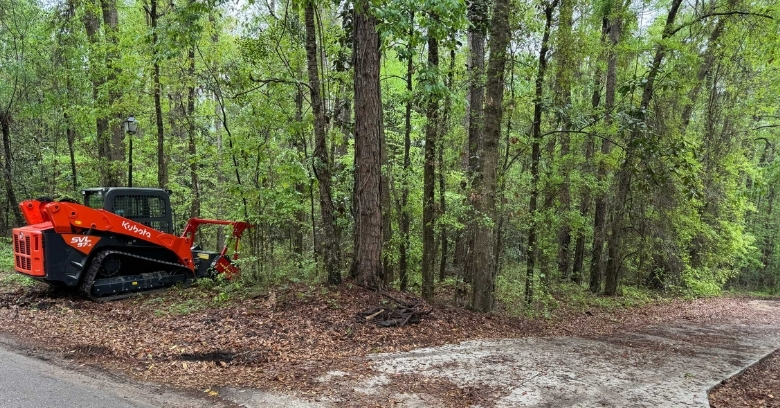
A forestry mulcher is a tractor or tracked machine with a heavy cutting head that shreds vegetation where it stands, and the chips stay on the ground and form a protective layer. The machine rolls over the ground rather than scraping it, and the mulch layer protects the surface from the next rain.
The diameter of the trees is a key detail in planning a mulching job, and selective mulching clears the understory and keeps the shade trees. Mulching leaves a layer of chips that can be several inches deep, and it breaks down slowly and returns nutrients to the soil.
Spray-On Mulch Explained
The hydraulic method mixes water with mulch and a binder in a tank and sprays it across the soil, and a green dye often shows where the spray has been applied. Disturbed ground is vulnerable until grass grows in, and rules for construction sites frequently require erosion control.
Planting season and rainfall both shape the timing of a spray job, and the right blend depends on the soil and the slope. Grass seed choice matters as much as the mulch, and new grass needs time before it can take foot traffic.
Leaving the Land in Better Shape
Leaving chips in place recycles nutrients that would otherwise be hauled to a landfill, and the roots stay in the ground to hold the soil. Gentler methods suit land near wetlands, ponds, and wildlife habitat, and owners should ask about local rules before work begins.
Natural mulch has a long track record as a way to protect soil, and mulch should not be piled against trunks or house walls. Mulch made on site is a natural byproduct of the work, though it may need to age, and owners often ask the crew to leave the chips where they are useful.
Choosing the Right Machine for the Growth
Forestry mulchers are mounted on skid steers, tracked carriers, or excavators, and larger machines tackle big trees and large acreage. Hydraulic mulching uses a trailer or truck with a mixing tank and a spray gun, and the machine must be able to reach the area it will spray.
The area around a working mulcher is no place for spectators, and people and pets should stay well back from the work. Rocks, old fence wire, buried metal, and stumps are risks for any mulching head, and nothing replaces a slow look at the ground first.
What the Climate Means for Mulching Work
Soils around Midway Florida are often sandy, and sandy soil drains quickly and dries out fast, and returning chips to the ground builds organic matter slowly. The wet season runs through the summer with frequent heavy rain, and hydraulic mulching must be timed between rains.
After a hurricane, mulching is one way to deal with a large volume of vegetation on site, and grinding the material in place can be faster than hauling it away. Dense brush can also feed wildfires in dry seasons, and burn bans are common in dry spells.
What Is Left Behind and How It Behaves
Stumps remain after mulching, usually cut low and often ground down as part of the pass, and pastures and wild land can usually live with low stumps. A slope held by living and dead roots keeps its shape much better than bare soil, and mulching is often chosen for slopes, ditch banks, and pond edges.
Mulch from a field machine is rougher than the bagged mulch sold for flower beds, and the rough texture makes the layer stay in place. Piling chips deeply against trees or buildings invites rot and pests, and a light pass with a rake or box blade levels the surface.
Scheduling Around the Weather
Dry weather lets the operator work safely and cleanly on most ground, and new seed needs rain after the application, but not a flood. Growth comes back quickly after mulching in a warm, wet climate, and cutting sprouts while they are small is far easier than waiting.
Mulch breaks down over time and needs topping up where a thick layer is wanted, and a light touch each season beats a heavy overhaul. Local fire rules sometimes limit the amount of mulch near buildings, and gravel or bare ground near the walls is a safe choice.
Choosing the Method for the Property
Dense vegetation that blocks access and sight lines is the job forestry mulching is built for, and a freshly graded slope or a new lawn area belongs to the spray method. Many projects use both methods in sequence, and a single conversation can settle the whole sequence.
Ordinary landscape mulching is the choice when the goal is to protect plants and beds, and it keeps roots cool, holds water, and slows weeds. The best starting point is what you want the land to look like afterward, and it helps to have a picture in mind of the finished property.
Wildlife, Nesting, and Care on Wooded Land
Wooded and overgrown land is home to birds, reptiles, and small mammals, and a walk through the area before the cut shows many of the signs. The calendar matters for both legal and practical reasons, and responsible work treats the land as more than a pile of material.
Preparing for a Mulching Job
Walk the property and decide which areas will be mulched and which will stay untouched, and a site visit lets the crew see the land in person. Ask who handles permits, utility locates, and any debris that will not be mulched, and there are no surprises when the crew arrives.
With those questions answered, choosing among Hydraulic Mulching Services in Midway Florida gets easier, and a few minutes on the phone is enough to start.
Ring 850-787-9300 to get your lot ready for its next use.
Verified

Verified
Verified
Verified
Verified














