

Researching Tree Cutting in Midway Florida?
EZ Acre clears land, brush, and trees for property owners in Midway Florida.
Reach us at 850-787-9300 to ask how a clearing project like yours is usually handled.
What the Work Really Covers
Land clearing covers trees, underbrush, vines, and the debris left behind, and the amount of work depends on how thick the growth is and what the owner plans to do. Some owners clear to reduce brush that has taken over fence lines and drives, and that is why the first step is a conversation about the plan.
Most people who search for Tree Cutting own a lot or acreage that has grown out of control, and the rest of this page covers the main methods and the details that matter.
Brush, Underbrush, and Invasive Growth
Brush is the mix of shrubs, saplings, vines, and tangled growth that fills in an untended lot, and the work can be done with machines or by hand around delicate areas. Some plants take over a property so thoroughly that they have to be removed on purpose, and the removal plan should include a way to keep them from returning.
Selective clearing removes only the growth that is in the way, and the result is a park-like property instead of bare ground. Complete clearing removes everything within the work area, and the choice between selective and complete depends on the plan for the land.
Tree Removal, Cutting, and Stump Work
Cutting a tree down is the most dangerous part of clearing, and it is done by trained crews, and crews look at lean, rot, and dead limbs before starting a cut. Stumps remain after a tree is cut, and they can be ground down or pulled out, and grinding is common where a lawn or pad will go.
Local governments often regulate the removal of large or protected trees, and owners should ask about rules before they sign off on tree removal. A wooded lot is a home for animals, and the law protects some of them, and a pause for a nest or a burrow is part of responsible work.
Equipment and Methods
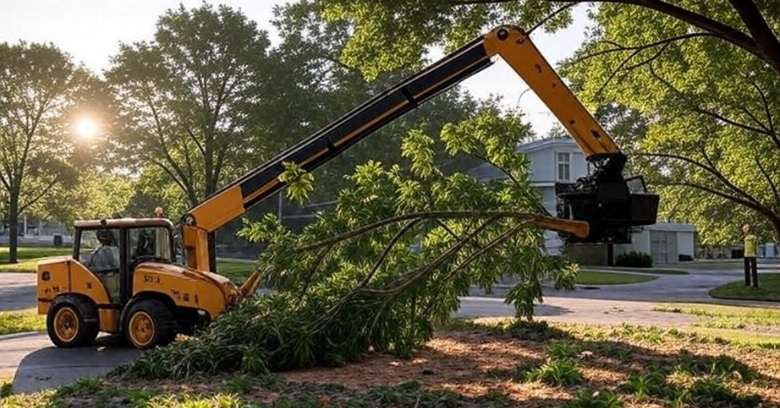
Excavators with grapples pick up trunks and root balls and stack them, and each machine suits a particular type of growth. Chainsaws and brush cutters are used where machines cannot go, and a walk-through helps mark what must be protected.
The method that works best depends on the land and the goal, and some trunks can be sold or used for lumber or firewood. The weight of a machine and the wetness of the ground work against each other, and crews usually plan the work around dry weather.
Disposing of Brush and Wood
Clearing produces a large amount of wood, brush, and plant material, and the way it is handled depends on the amount and the use the owner has in mind. Spreading chips on bare ground helps hold it in place, and owners often ask to keep the chips.
After clearing, the ground is often graded and seeded or stabilized, and owners should decide how the ground will be finished before work begins. A last look at the property catches missed spots and leftover debris, and asking questions at the end is part of a good job.
Working the Land in Midway Florida
Much of the ground around Midway Florida is sandy and soft, and heavy machines can sink, and working in mud damages the land and slows the job. Hot, humid weather and afternoon storms shape the clearing schedule, and drinking water and breaks are essential.
Hurricane season runs from June through November, and storms can bring down trees and fill yards with debris, and demand for clearing and tree work jumps after a storm. Warm weather and plenty of rain make vegetation grow quickly here, and clearing once and then maintaining is the usual approach.
Making Room for What Comes Next
Builders ask for extra room around the pad for equipment, materials, and grading, and the stumps and roots inside the pad area must come out completely. Road clearing leaves room on both sides for water to run off, and drainage along the edge keeps the surface from washing out.
Overgrown fence lines are a common reason people call for clearing, and a strip cleared on each side makes the fence easy to build and to maintain. Pasture restoration begins with clearing, and the grass follows, and stumps and roots must be removed or ground low enough for a mower to pass.
Rules and Limits on the Land
Marshy corners, swales, and ponds on a property may be subject to protection, and clearing in the wrong place can bring fines and an order to restore the area. A cleared slope sheds water and sediment much faster than a vegetated one, and leaving a strip of vegetation along the water protects the bank.
Utilities and structures below and above the ground must be located before clearing, and the owner should know where the well and septic field sit. Grinding a stump is often safer than pulling it when lines are close, and the crew should be told about any lines before the work begins.
From First Visit to Finished Lot
A small lot can be cleared in a day or two, while larger parcels can take weeks, and access to the property and the condition of the ground also change the pace. Rain delays are common, especially in the wet season, and owners should be flexible about start dates.
A lot that is cleared and then left alone will grow over again, and regular upkeep costs less effort than another full clearing. Talking about the long-term plan at the start helps the work fit the land, and the result is land that stays useful.
Property Lines and Shared Ground
Clearing can change the view and the shade of an entire block, and the schedule and the expected noise are worth sharing. A survey or a set of marked corners shows where the property ends, and the cleared area should stay well inside the line.
Questions to Settle Before Work Begins
Walk the property and decide which areas will be cleared and which will stay untouched, and a plan on paper keeps the crew and the owner on the same page. The details of permits, access, and disposal should be settled before the job starts, and changes are easier to handle on paper than in the field.
Once you know what you want cleared, Tree Cutting in Midway Florida is a short list, and the details are quick to confirm.
Call 850-787-9300 to ask about brush, trees, and stumps on your property.
Verified

Verified
Verified
Verified
Verified














