Getting ready for Forestry Mulching Services in The Florida Panhandle?
EZ Acre offers mulching work for property owners in The Florida Panhandle.
Call 850-787-9300 to go over the size of the area and the kind of vegetation.
The Basics of the Practice
A mulch layer is any covering of plant material that sits on top of the soil, and each has its own equipment, its own purpose, and its own best season. Covered soil loses less water to the sun and the wind, and mulching is a common step after clearing and planting.
Anyone comparing options for Forestry Mulching Services is typically facing thick growth or exposed soil, and the rest of this page explains the main types and the details that matter.
Forestry Mulchers Explained
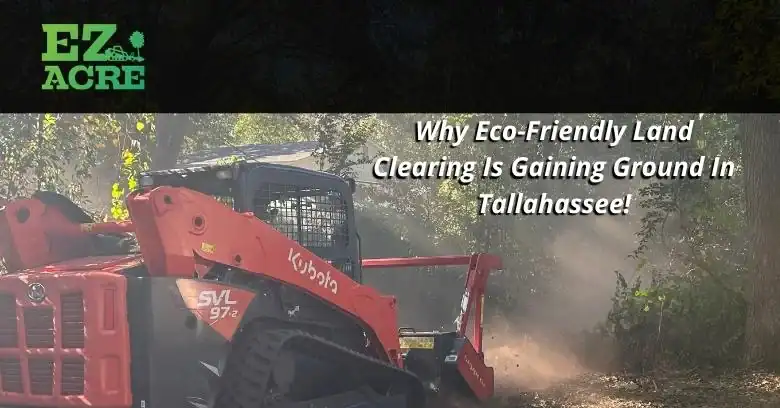
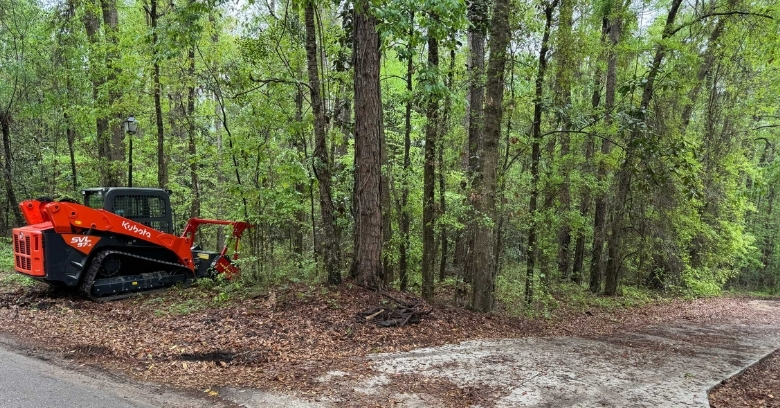
The mulching head spins at high speed and reduces brush, saplings, and even sizable trees to chips, and one machine does the work that once took a crew with saws, a chipper, and a truck. Leaving the ground largely intact is one of the main reasons owners choose mulching, and stumps are cut low, and the remaining roots decay in time.
Light brush and vines are easy work, but big hardwoods call for a heavy machine, and a walk through the land before the work marks what stays. The mulch left behind is a thick blanket that suppresses new growth for a time, and the chips can be left as they are on wild land.
Spraying Mulch and Seed on Bare Ground
Hydromulch is a liquid mixture of paper or wood fiber, water, and tackifier that dries into a protective crust, and a green dye often shows where the spray has been applied. Disturbed ground is vulnerable until grass grows in, and good timing matters, since a storm can arrive before the cover does.
Planting season and rainfall both shape the timing of a spray job, and water must be available on site or hauled in. Grass seed choice matters as much as the mulch, and watering during the first weeks speeds up growth.
Leaving the Land in Better Shape
Mulching keeps organic matter on the property instead of sending it away, and fewer trucks and less hauling mean less fuel burned and less traffic. Care near water is a legal requirement in many cases, not only a preference, and a careful crew will mark the line it will not cross.
Organic mulch such as wood chips, pine straw, and bark is common in gardens and landscapes, and it needs to be refreshed as it breaks down. Using fresh chips from a clearing job as landscape mulch saves effort, and a thick layer on paths keeps mud down.
Choosing the Right Machine for the Growth
Mulching heads attach to heavy machines that are strong enough to turn the drum at high speed, and the choice depends on the site and the size of the job. A hose reaches into slopes and corners where trucks cannot drive, and the size of the tank decides how many acres a load covers.
Operators and bystanders both face real hazards on a mulching job, and nearby buildings, vehicles, and fences need protection from thrown material. Hidden objects in the ground can damage the machine and create hazards, and fixed objects like wells and posts need flags.
Working the Land in The Florida Panhandle
Sandy ground benefits more than most from a protective cover, and returning chips to the ground builds organic matter slowly. Summer here brings heat, humidity, and daily storms, and hydraulic mulching must be timed between rains.
Hurricane season runs from June through November and brings storms that fell trees and fill yards with debris, and crews are in high demand after a storm, and waiting times grow. Thinning understory growth reduces the fuel available to a fire, and a clear zone around buildings is a common recommendation.
After the Trees Are Cut
Stumps remain after mulching, usually cut low and often ground down as part of the pass, and pastures and wild land can usually live with low stumps. The root mass under a cleared slope binds the soil together while new growth starts, and steep ground still needs watching after the first heavy rain.
Chips from a mulching pass vary in size, from fine shreds to chunky pieces, and finer chips decay faster than larger pieces. The right depth depends on whether the owner wants to suppress growth or let seed sprout, and it helps to let the crew know where a thick layer is welcome.
Keeping a Mulched Property in Shape
Timing a forestry job for dry weather protects both the land and the schedule, and the best timing depends on what is being grown. Within a season, a mulched lot may show new shoots from stumps and vines, and a managed property stays open with little effort.
Refreshing a mulch layer is routine upkeep for any landscape, and thin patches show up first near edges and on slopes. Local fire rules sometimes limit the amount of mulch near buildings, and gravel or bare ground near the walls is a safe choice.
Choosing the Method for the Property
Overgrown acreage that needs to be opened up calls for a grinding machine, and a freshly graded slope or a new lawn area belongs to the spray method. Forestry work opens the ground, and the hydraulic spray then protects it, and the plan should say which comes first and how long the gap will be.
For a home landscape, a few inches of mulch around the plants does the job, and the material can be delivered in bulk or made from cleared growth. The best starting point is what you want the land to look like afterward, and it helps to think about how the land will be used over the next year.
Wildlife, Nesting, and Care on Wooded Land
Thick brush shelters animals that nest, burrow, and hide in the growth, and some species and their burrows are protected by law. Nesting season is the time of year when clearing needs the most care, and the mulcher should be stopped if a nest is found.
Questions to Settle Before Work Begins
Start by marking the area to be mulched and describing the growth, and a plan on paper keeps the crew and the owner on the same page. The details of access, permits, and disposal should be settled before the job starts, and changes are easier to handle on paper than in the field.
With those questions answered, choosing among Forestry Mulching Services in The Florida Panhandle gets easier, and it is easy to take it from there.
Ring 850-787-9300 to ask about brush, trees, and bare ground on your property.