

Exploring Mulching in Woodville Florida?
EZ Acre works on mulching and land preparation for properties in and around Woodville Florida.
Call 850-787-9300 to start a conversation about your land.
One Word, Several Kinds of Work
On a property, mulching usually means grinding or spreading plant material so it protects the soil, and each has its own equipment, its own purpose, and its own best season. Bare soil dries and crusts, while mulched soil stays cooler and softer, and it can keep a property looking tidy for a long time.
People looking up Mulching usually have a clear idea of the result they want, and the next step is understanding which kind of mulching fits.
Grinding Brush and Trees in Place
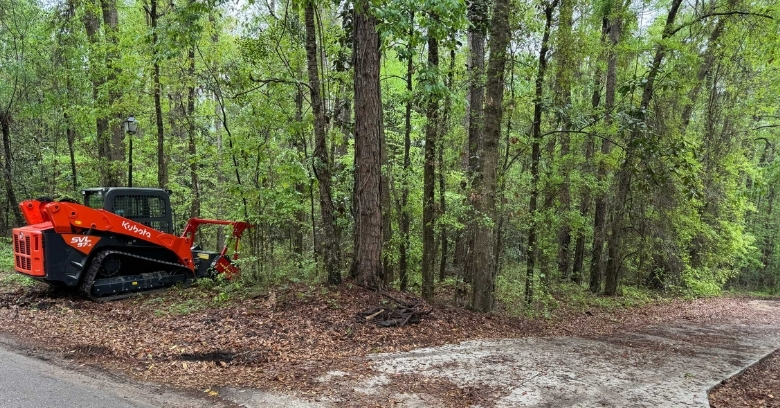
A forestry mulcher is a tractor or tracked machine with a heavy cutting head that shreds vegetation where it stands, and one machine does the work that once took a crew with saws, a chipper, and a truck. Leaving the ground largely intact is one of the main reasons owners choose mulching, and the mulch layer protects the surface from the next rain.
The size of material a mulcher can handle depends on the machine, and the operator can leave chosen trees standing while clearing around them. The depth of chips varies with the amount of growth that was cut, and it breaks down slowly and returns nutrients to the soil.
Hydraulic Mulching
Hydraulic mulching sprays a slurry of water, mulch fibers, and often seed onto bare ground, and it is used on slopes, new lawns, roadsides, and freshly graded sites. Disturbed ground is vulnerable until grass grows in, and slopes and drainage swales benefit the most.
A mix with seed needs enough moisture to sprout, so the season matters, and the right blend depends on the soil and the slope. The mulch only protects the soil until the grass takes over, and patience pays off once the lawn fills in.
Eco-Friendly Mulching Practices
Using the vegetation that was cut as mulch closes the loop on the clearing job, and nothing leaves the property except what the owner chooses to send away. Gentler methods suit land near wetlands, ponds, and wildlife habitat, and clearing around water often needs special permission.
Organic mulch such as wood chips, pine straw, and bark is common in gardens and landscapes, and a depth of a few inches is enough for most beds. Using fresh chips from a clearing job as landscape mulch saves effort, and the supply is usually more than the property can use.
Choosing the Right Machine for the Growth
A tracked mulcher can work on soft ground that would stop a wheeled machine, and rubber tracks spread the weight over wet or sandy ground. A hydroseeder is a tank on wheels with an agitator and a pump, and operators work in passes to cover the area evenly.
Operators and bystanders both face real hazards on a mulching job, and a clear buffer around the machine is standard. Metal and stone strike the teeth and can fly out at high speed, and owners should point out anything they know is buried.
Local Conditions That Shape Mulching
The soil in many parts of this region is thin and sandy and suffers in dry spells, and a layer of mulch can make a real difference to new plantings. The wet season runs through the summer with frequent heavy rain, and hydraulic mulching must be timed between rains.
Hurricane season runs from June through November and brings storms that fell trees and fill yards with debris, and grinding the material in place can be faster than hauling it away. Thinning understory growth reduces the fuel available to a fire, and the mulch layer left behind is less flammable than standing brush.
Holding the Ground in Place
Stumps remain after mulching, usually cut low and often ground down as part of the pass, and the owner should decide whether the stumps can stay or must be ground out. Leaving roots intact means rainfall has less power to carry soil away, and steep ground still needs watching after the first heavy rain.
Chip size depends on the machine, the teeth, and the type of growth, and the rough texture makes the layer stay in place. Excess mulch on a cleared lot can be raked or spread thin, and it helps to check the depth near foundations and keep it thin there.
When Mulching Works Best
Machines work best on firm ground, and the drier part of the year provides that, and planting too early in a dry spell wastes seed. Within a season, a mulched lot may show new shoots from stumps and vines, and regular mowing or a light second mulching keeps the land clear.
A mulched bed or path should be topped up every year or two, and raking and fluffing the surface helps it shed water. A clear gap around a house is a common wildfire recommendation, and chips are better used farther out on the property.
A Simple Way to Decide
Dense vegetation that blocks access and sight lines is the job forestry mulching is built for, and exposed ground that must be seeded and held in place is the target of the hydraulic type. A property may be cleared by mulching and then seeded with a hydraulic application, and a gap between clearing and cover is a window for erosion.
Everyday mulching is about covering soil that already has a purpose, and it keeps roots cool, holds water, and slows weeds. A clear description of the goal makes it easy to pick the right type, and it helps to have a picture in mind of the finished property.
Checking for Wildlife Before the Cut
Habitat is part of every parcel of untended land, and some species and their burrows are protected by law. Many property owners schedule mulching and clearing for the late fall and winter, and responsible work treats the land as more than a pile of material.
Questions to Settle Before Work Begins
Walk the property and decide which areas will be mulched and which will stay untouched, and a site visit lets the crew see the land in person. Make sure everyone knows what is included in the work and what is not, and the work goes smoothly.
That is how most property owners approach Mulching in Woodville Florida, and a few minutes on the phone is enough to start.
Call 850-787-9300 to talk about mulching your land.
Verified

Verified
Verified
Verified
Verified














