

Researching Eco-Friendly Mulching Company in Woodville Florida?
EZ Acre works on mulching and land preparation for properties in and around Woodville Florida.
Phone 850-787-9300 to ask how a mulching project like yours is usually handled.
What Mulching Means on Land
The word mulching covers several kinds of work, from grinding brush on site to spreading a protective layer over bare soil, and each has its own equipment, its own purpose, and its own best season. Mulch holds moisture, shades the soil, and slows weeds, and mulching is a common step after clearing and planting.
Anyone comparing options for Eco-Friendly Mulching Company is typically facing thick growth or exposed soil, and the next step is understanding which kind of mulching fits.
Forestry Mulching
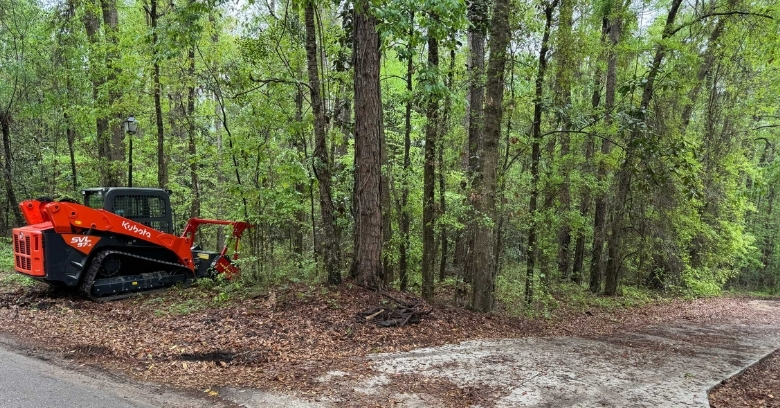
A forestry mulcher is a tractor or tracked machine with a heavy cutting head that shreds vegetation where it stands, and one machine does the work that once took a crew with saws, a chipper, and a truck. Forestry mulching disturbs the soil less than pushing and piling does, and fewer ruts and less bare soil mean less cleanup afterward.
The diameter of the trees is a key detail in planning a mulching job, and the operator can leave chosen trees standing while clearing around them. The finished ground is covered with a carpet of chips, and the chips can be left as they are on wild land.
Hydromulch for Slopes and New Lawns
Hydromulch is a liquid mixture of paper or wood fiber, water, and tackifier that dries into a protective crust, and a green dye often shows where the spray has been applied. Cover on bare ground is the first defense against washing and gullies, and good timing matters, since a storm can arrive before the cover does.
Planting season and rainfall both shape the timing of a spray job, and some mixes include fertilizer to help the grass start. Grass types vary in how well they handle sun, shade, and sandy ground, and some sites need a second application.
Leaving the Land in Better Shape
Using the vegetation that was cut as mulch closes the loop on the clearing job, and the roots stay in the ground to hold the soil. Land close to water calls for methods that keep soil in place, and the plan should explain how the soil will be protected.
Plant-based materials break down and improve the soil over time, and colors and textures vary with the source of the wood. Mulch made on site is a natural byproduct of the work, though it may need to age, and extra chips can be stacked for later use.
Choosing the Right Machine for the Growth
Mulching heads attach to heavy machines that are strong enough to turn the drum at high speed, and operators can work close to structures and fences with the right setup. A hose reaches into slopes and corners where trucks cannot drive, and operators work in passes to cover the area evenly.
Safety is a big part of mulching work because the cutting head is powerful, and the operator works from a protected cab. Old fencing and debris can be hidden by seasons of growth, and owners should point out anything they know is buried.
Working the Land in Woodville Florida
Much of the ground in this region is light, sandy, and low in organic matter, and a covered surface stays cooler in the summer sun. Daily thunderstorms can interrupt outdoor work and soften the ground, and crews often start early to get ahead of the afternoon storms.
After a hurricane, mulching is one way to deal with a large volume of vegetation on site, and clearing weak trees and brush ahead of the season reduces what a storm can do. Dense brush can also feed wildfires in dry seasons, and local fire agencies publish guidance for owners.
Stumps, Slopes, and Erosion
Mulching removes everything above the ground and leaves the root system in place, and building areas generally need stumps and large roots removed. Roots that stay in the ground are the best natural defense against erosion, and bare patches can be covered by hydraulic mulch if needed.
Mulch from a field machine is rougher than the bagged mulch sold for flower beds, and a thick mat of fresh chips can tie up nitrogen briefly as it decomposes. The right depth depends on whether the owner wants to suppress growth or let seed sprout, and owners can ask for the layer to be spread evenly.
Keeping a Mulched Property in Shape
Dry weather lets the operator work safely and cleanly on most ground, and the best timing depends on what is being grown. Fast-growing plants resprout from the roots left in the ground, and regular mowing or a light second mulching keeps the land clear.
Mulch breaks down over time and needs topping up where a thick layer is wanted, and thin patches show up first near edges and on slopes. Dry wood chips can burn, so thick mulch is best kept away from structures, and chips are better used farther out on the property.
Choosing the Method for the Property
Overgrown acreage that needs to be opened up calls for a grinding machine, and hydraulic mulching is the choice when the problem is bare soil that needs cover. Clearing first and covering second is a common order on land that will become lawn or pasture, and the plan should say which comes first and how long the gap will be.
Ordinary landscape mulching is the choice when the goal is to protect plants and beds, and a thin edge along the lawn keeps the bed neat. Asking the right question at the start saves time, and it helps to think about how the land will be used over the next year.
Wildlife, Nesting, and Care on Wooded Land
Before a mulcher goes in, the land may hold nests, dens, and burrows, and local wildlife agencies publish guidance for property owners. Nesting season is the time of year when clearing needs the most care, and it helps to ask about local rules on nesting season and protected species.
Getting the Job Scoped Right
The first step in any mulching job is knowing exactly where it starts and stops, and a site visit lets the crew see the land in person. Make sure everyone knows what is included in the work and what is not, and the schedule can be planned around approvals.
A clear idea of the goal for the land makes Eco-Friendly Mulching Company in Woodville Florida simple to narrow down, and the next step is a conversation about your property.
Reach us at 850-787-9300 to ask about brush, trees, and bare ground on your property.
Verified

Verified
Verified
Verified
Verified














