

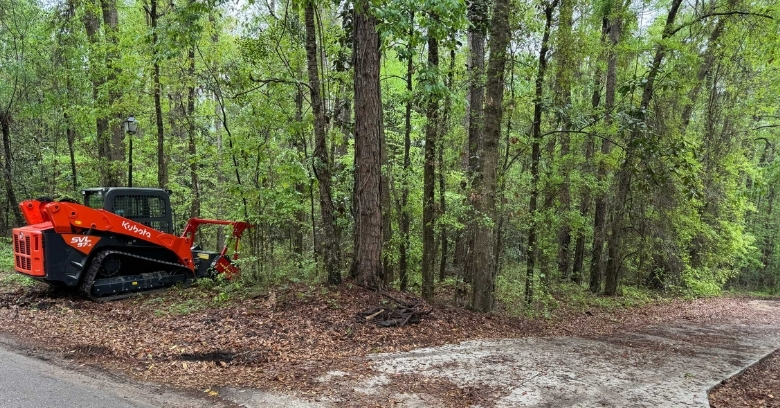
Getting ready for Hydraulic Mulching in Woodville Florida?
EZ Acre is a land services business that does mulching work in Woodville Florida.
Dial 850-787-9300 to ask how a mulching project like yours is usually handled.
Turning Growth Into Mulch
Mulching is the practice of covering ground with a layer of organic material or of grinding vegetation into chips, and each has its own equipment, its own purpose, and its own best season. Covered soil loses less water to the sun and the wind, and it can keep a property looking tidy for a long time.
People looking up Hydraulic Mulching usually have a clear idea of the result they want, and the question left is which method suits the property.
Mulching as a Clearing Method
A forestry mulcher is a tractor or tracked machine with a heavy cutting head that shreds vegetation where it stands, and it works on thick brush, vines, palmetto, and small to medium trees. The root systems of cut plants stay in place and keep the soil from washing away, and stumps are cut low, and the remaining roots decay in time.
Machines vary in power, and the thickness of the growth determines which one is needed, and the cutting head can be steered close to trees without harming them. Mulching leaves a layer of chips that can be several inches deep, and it breaks down slowly and returns nutrients to the soil.
Spray-On Mulch Explained
Spray-applied mulch covers large areas of soil quickly and evenly, and a green dye often shows where the spray has been applied. Cover on bare ground is the first defense against washing and gullies, and slopes and drainage swales benefit the most.
Applying hydromulch just before a long dry spell wastes seed, and a good schedule fits the application between storms. Grass seed choice matters as much as the mulch, and some sites need a second application.
Keeping Organic Matter on the Property
Grinding growth into chips returns plant material to the soil as it decays, and fewer trucks and less hauling mean less fuel burned and less traffic. Gentler methods suit land near wetlands, ponds, and wildlife habitat, and buffers of untouched vegetation may be required near the water.
Wood-based mulch is both attractive and useful around plants, and it needs to be refreshed as it breaks down. Using fresh chips from a clearing job as landscape mulch saves effort, and aged chips are better for gardens than fresh ones.
How a Mulching Job Gets Done
The carrier machine does the driving and the head does the grinding, and rubber tracks spread the weight over wet or sandy ground. A hydroseeder is a tank on wheels with an agitator and a pump, and the size of the tank decides how many acres a load covers.
Operators and bystanders both face real hazards on a mulching job, and a clear buffer around the machine is standard. Hidden objects in the ground can damage the machine and create hazards, and a careful survey saves equipment and prevents accidents.
What the Climate Means for Mulching Work
Sandy ground benefits more than most from a protective cover, and a covered surface stays cooler in the summer sun. Summer here brings heat, humidity, and daily storms, and bare soil exposed in the wet season needs cover quickly.
Wind and flooding from a major storm can turn a tidy lot into a mess of debris, and clearing weak trees and brush ahead of the season reduces what a storm can do. Thinning understory growth reduces the fuel available to a fire, and the mulch layer left behind is less flammable than standing brush.
After the Trees Are Cut
A mulching head cuts trees off at or just above the ground and leaves the stump, and pastures and wild land can usually live with low stumps. On hills and banks, intact roots are the reason mulching is preferred to scraping, and mulching is often chosen for slopes, ditch banks, and pond edges.
Chips from a mulching pass vary in size, from fine shreds to chunky pieces, and the rough texture makes the layer stay in place. Mulch depth matters, and too much can be as much of a problem as too little, and a light pass with a rake or box blade levels the surface.
When Mulching Works Best
Dry weather lets the operator work safely and cleanly on most ground, and hydraulic mulching and seeding follow a different rhythm. Regrowth is normal and does not mean the first pass was wasted, and a managed property stays open with little effort.
Mulch is not permanent, and part of its value is that it decays into the soil, and fresh chips can be spread over the old layer. Dry wood chips can burn, so thick mulch is best kept away from structures, and it helps to ask local fire officials about the recommendations for the area.
Choosing the Method for the Property
Overgrown acreage that needs to be opened up calls for a grinding machine, and a freshly graded slope or a new lawn area belongs to the spray method. Forestry work opens the ground, and the hydraulic spray then protects it, and a single conversation can settle the whole sequence.
Bed mulching suits yards, gardens, and the areas around new plantings, and a thin edge along the lawn keeps the bed neat. A clear description of the goal makes it easy to pick the right type, and it helps to think about how the land will be used over the next year.
Sharing the Land With Animals
Brush that looks empty can be full of life, especially in spring and early summer, and local wildlife agencies publish guidance for property owners. Nesting season is the time of year when clearing needs the most care, and the mulcher should be stopped if a nest is found.
What to Settle First
Flagging tape or stakes help define the limits of the work, and it helps to discuss trees to keep, trees to remove, and any areas to avoid. Ask who handles permits, utility locates, and any debris that will not be mulched, and the schedule can be planned around approvals.
A clear idea of the goal for the land makes Hydraulic Mulching in Woodville Florida simple to narrow down, and the details are quick to confirm.
Dial 850-787-9300 to talk about mulching your land.
Verified

Verified
Verified
Verified
Verified














