

Exploring Mulching Services in The Florida Panhandle?
EZ Acre helps property owners in The Florida Panhandle turn brush and small trees into mulch.
Dial 850-787-9300 to talk through what you want mulched.
What Mulching Means on Land
The word mulching covers several kinds of work, from grinding brush on site to spreading a protective layer over bare soil, and the three most common kinds are forestry mulching, hydraulic mulching, and ordinary bed mulching. Mulch holds moisture, shades the soil, and slows weeds, and it also slows the washing away of soil in heavy rain.
A search for Mulching Services often starts with an overgrown lot or a freshly disturbed slope, and the rest of this page explains the main types and the details that matter.
Forestry Mulchers Explained
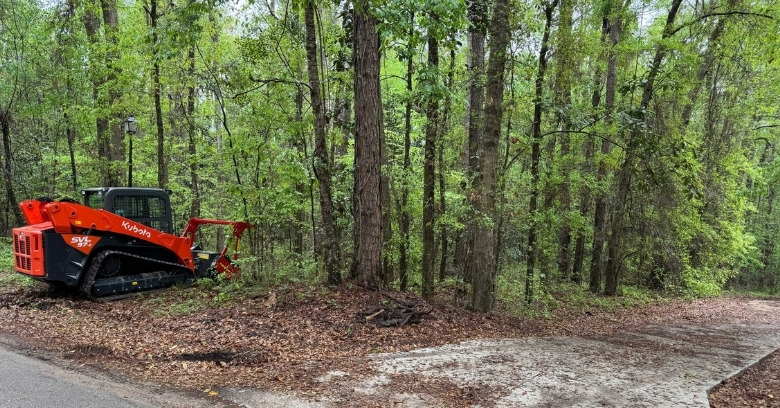
A forestry mulcher is a tractor or tracked machine with a heavy cutting head that shreds vegetation where it stands, and the machine can reach places where a truck and chipper cannot. Forestry mulching disturbs the soil less than pushing and piling does, and fewer ruts and less bare soil mean less cleanup afterward.
Light brush and vines are easy work, but big hardwoods call for a heavy machine, and the cutting head can be steered close to trees without harming them. A mulched lot has a soft, brown surface instead of bare soil, and new grass can be seeded through a thin layer.
Spray-On Mulch Explained
Spray-applied mulch covers large areas of soil quickly and evenly, and the binder helps the mulch stay put through rain and wind. Hydromulch protects soil while seed sprouts and roots take hold, and slopes and drainage swales benefit the most.
Hydraulic mulching depends on weather, water, and the right mix, and slopes may need an extra layer or a stronger binder. A mix chosen for local conditions establishes faster, and patience pays off once the lawn fills in.
Keeping Organic Matter on the Property
Leaving chips in place recycles nutrients that would otherwise be hauled to a landfill, and fewer trucks and less hauling mean less fuel burned and less traffic. Land close to water calls for methods that keep soil in place, and buffers of untouched vegetation may be required near the water.
Landscape mulch is the familiar layer spread around trees, shrubs, and flower beds, and colors and textures vary with the source of the wood. Using fresh chips from a clearing job as landscape mulch saves effort, and the supply is usually more than the property can use.
Mulching Equipment and Methods
Different machines suit different terrain and different density of growth, and the choice depends on the site and the size of the job. The machine blends water, mulch, and seed and sprays the mix through a hose or a boom, and operators work in passes to cover the area evenly.
A mulching head can throw chips, rocks, and debris a long way, and people and pets should stay well back from the work. Old fencing and debris can be hidden by seasons of growth, and fixed objects like wells and posts need flags.
What the Climate Means for Mulching Work
Sand holds little water or nutrients, and mulch helps with both, and the benefit is greatest in the dry months. Hot, wet weather makes vegetation grow fast and bare soil wash easily, and hydraulic mulching must be timed between rains.
Tropical systems topple trees and scatter limbs across properties, and clearing weak trees and brush ahead of the season reduces what a storm can do. Thinning understory growth reduces the fuel available to a fire, and the mulch layer left behind is less flammable than standing brush.
Roots, Chips, and Bare Soil
Mulching removes everything above the ground and leaves the root system in place, and stumps to be removed completely are handled with a dedicated stump grinder. Roots that stay in the ground are the best natural defense against erosion, and steep ground still needs watching after the first heavy rain.
The mulch left by a forestry head is coarse, with a mix of bark, wood, and leaves, and finer chips decay faster than larger pieces. Excess mulch on a cleared lot can be raked or spread thin, and it helps to check the depth near foundations and keep it thin there.
Seasonal Planning for Mulching
The dry months are the most dependable time for heavy mulching equipment, and the best timing depends on what is being grown. Growth comes back quickly after mulching in a warm, wet climate, and a follow-up pass is part of the plan for many properties.
Mulch is not permanent, and part of its value is that it decays into the soil, and thin patches show up first near edges and on slopes. Local fire rules sometimes limit the amount of mulch near buildings, and cigarette butts and sparks are risks in dry weather.
Choosing the Method for the Property
If the land is covered in brush, vines, and small trees, a mulching head is the natural fit, and a freshly graded slope or a new lawn area belongs to the spray method. Many projects use both methods in sequence, and timing the second step soon after the first is wise.
Everyday mulching is about covering soil that already has a purpose, and a thin edge along the lawn keeps the bed neat. The best starting point is what you want the land to look like afterward, and it helps to have a picture in mind of the finished property.
Protecting Habitat During the Work
Wooded and overgrown land is home to birds, reptiles, and small mammals, and a walk through the area before the cut shows many of the signs. Cutting during the main nesting months can destroy active nests and young birds, and it helps to ask about local rules on nesting season and protected species.
Preparing for a Mulching Job
A clear boundary and a plan for the work area prevent disputes and mistakes, and it helps to photograph the property before work begins. Check local rules, since some areas require approval before clearing or tree removal, and there are no surprises when the crew arrives.
Everything above comes down to one decision, and Mulching Services in The Florida Panhandle is where you make it, and the next step is a conversation about your property.
Dial 850-787-9300 to talk about mulching your land.














