

Looking into Forestry Mulching in The Florida Panhandle?
EZ Acre helps property owners in The Florida Panhandle turn brush and small trees into mulch.
Phone 850-787-9300 to describe your property and the growth on it.
Mulch as a Way to Clear and Protect
On a property, mulching usually means grinding or spreading plant material so it protects the soil, and the three most common kinds are forestry mulching, hydraulic mulching, and ordinary bed mulching. Covered soil loses less water to the sun and the wind, and mulching is a common step after clearing and planting.
That is the need behind many searches for Forestry Mulching, and a short conversation can sort out what the job calls for.
Mulching as a Clearing Method
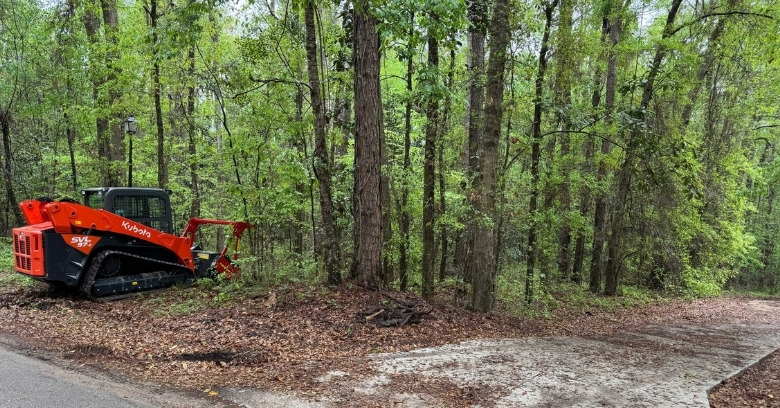
A forestry mulcher is a tractor or tracked machine with a heavy cutting head that shreds vegetation where it stands, and one machine does the work that once took a crew with saws, a chipper, and a truck. The root systems of cut plants stay in place and keep the soil from washing away, and it is often chosen for slopes, wet edges, and land near water.
The diameter of the trees is a key detail in planning a mulching job, and the cutting head can be steered close to trees without harming them. The depth of chips varies with the amount of growth that was cut, and it breaks down slowly and returns nutrients to the soil.
Hydromulch for Slopes and New Lawns
Spray-applied mulch covers large areas of soil quickly and evenly, and a green dye often shows where the spray has been applied. Cover on bare ground is the first defense against washing and gullies, and good timing matters, since a storm can arrive before the cover does.
The slurry needs a dry day or two to set before heavy rain, and slopes may need an extra layer or a stronger binder. The mulch only protects the soil until the grass takes over, and patience pays off once the lawn fills in.
Mulching With the Soil in Mind
Grinding growth into chips returns plant material to the soil as it decays, and fewer trucks and less hauling mean less fuel burned and less traffic. On environmentally sensitive ground, mulching with less soil disturbance is usually preferred, and buffers of untouched vegetation may be required near the water.
Landscape mulch is the familiar layer spread around trees, shrubs, and flower beds, and mulch should not be piled against trunks or house walls. Wood chips from clearing are a practical covering for trails, bare ground, and steep banks, and extra chips can be stacked for later use.
How a Mulching Job Gets Done
Mulching heads attach to heavy machines that are strong enough to turn the drum at high speed, and larger machines tackle big trees and large acreage. The machine blends water, mulch, and seed and sprays the mix through a hose or a boom, and operators work in passes to cover the area evenly.
A mulching head can throw chips, rocks, and debris a long way, and the crew checks the ground for hidden objects before the cut. Old fencing and debris can be hidden by seasons of growth, and nothing replaces a slow look at the ground first.
Local Conditions That Shape Mulching
Soils around The Florida Panhandle are often sandy, and sandy soil drains quickly and dries out fast, and returning chips to the ground builds organic matter slowly. The wet season runs through the summer with frequent heavy rain, and hydraulic mulching must be timed between rains.
After a hurricane, mulching is one way to deal with a large volume of vegetation on site, and clearing weak trees and brush ahead of the season reduces what a storm can do. Mulching reduces the thick tangle of dead and living growth that burns, and a mulched property can be easier to protect.
Roots, Chips, and Bare Soil
After the trunk is ground, the stump and roots stay in the soil to decay, and stumps left in place rot slowly over several seasons. On hills and banks, intact roots are the reason mulching is preferred to scraping, and bare patches can be covered by hydraulic mulch if needed.
The mulch left by a forestry head is coarse, with a mix of bark, wood, and leaves, and aging in place lets the layer settle and mellow. Mulch depth matters, and too much can be as much of a problem as too little, and it helps to check the depth near foundations and keep it thin there.
When Mulching Works Best
Wet-season rain and soft soil slow tracked machines and cause ruts, and hydraulic mulching and seeding follow a different rhythm. Fast-growing plants resprout from the roots left in the ground, and a managed property stays open with little effort.
Mulch breaks down over time and needs topping up where a thick layer is wanted, and thin patches show up first near edges and on slopes. Dry wood chips can burn, so thick mulch is best kept away from structures, and it helps to ask local fire officials about the recommendations for the area.
Choosing the Method for the Property
Forestry mulching is the choice when the problem is thick growth that has to come out, and hydraulic mulching is the choice when the problem is bare soil that needs cover. A property may be cleared by mulching and then seeded with a hydraulic application, and a gap between clearing and cover is a window for erosion.
Spreading wood chips or bark around trees and shrubs is the simplest and most familiar form of mulching, and the appearance is a bonus on top of the benefits to the plants. A clear description of the goal makes it easy to pick the right type, and talk about how much time you have for the work.
Checking for Wildlife Before the Cut
Brush that looks empty can be full of life, especially in spring and early summer, and the crew can pause or adjust the work for a nest or a den. Timing the work outside the peak nesting period reduces harm to wildlife, and the mulcher should be stopped if a nest is found.
Questions to Settle Before Work Begins
Flagging tape or stakes help define the limits of the work, and it helps to know where utilities, wells, and septic fields are located. Ask who handles permits, utility locates, and any debris that will not be mulched, and the work goes smoothly.
Once you know what you want covered or cleared, Forestry Mulching in The Florida Panhandle is a short list, and the next step is a conversation about your property.
Reach us at 850-787-9300 to start planning the work.














