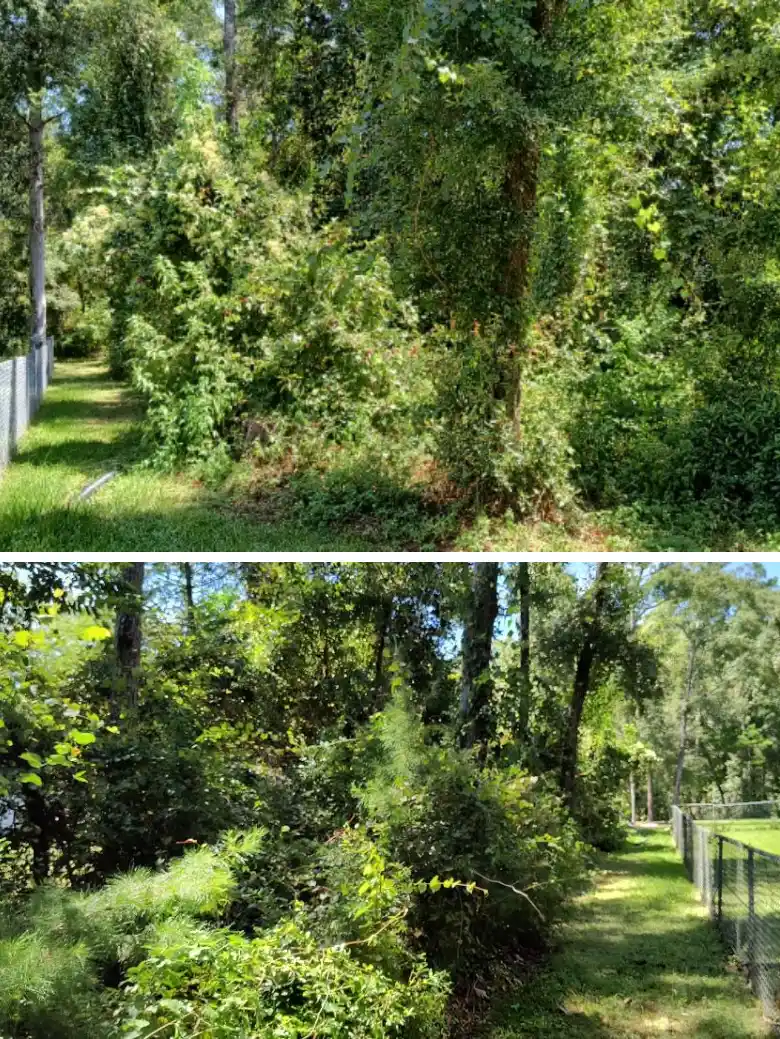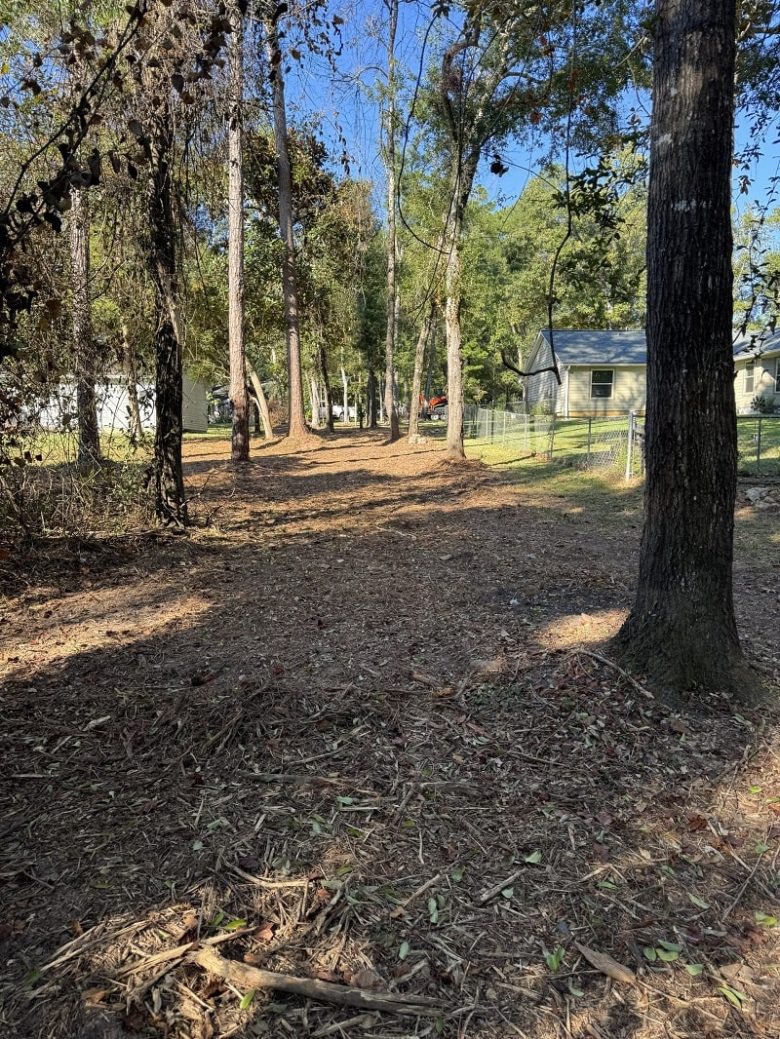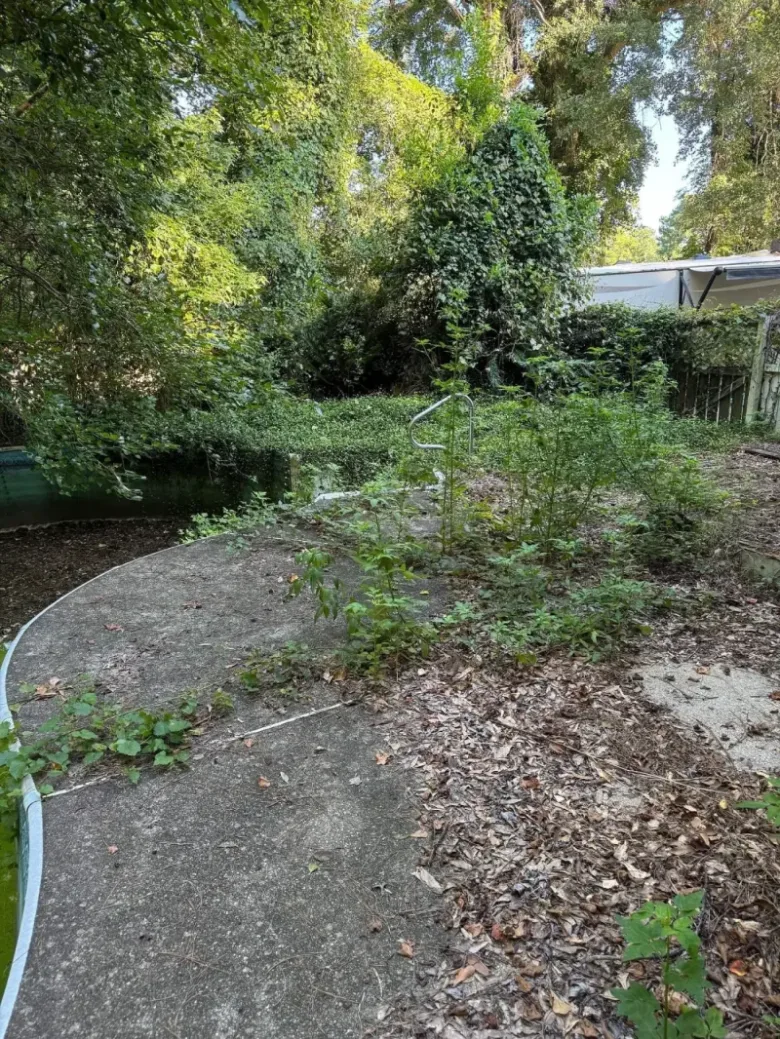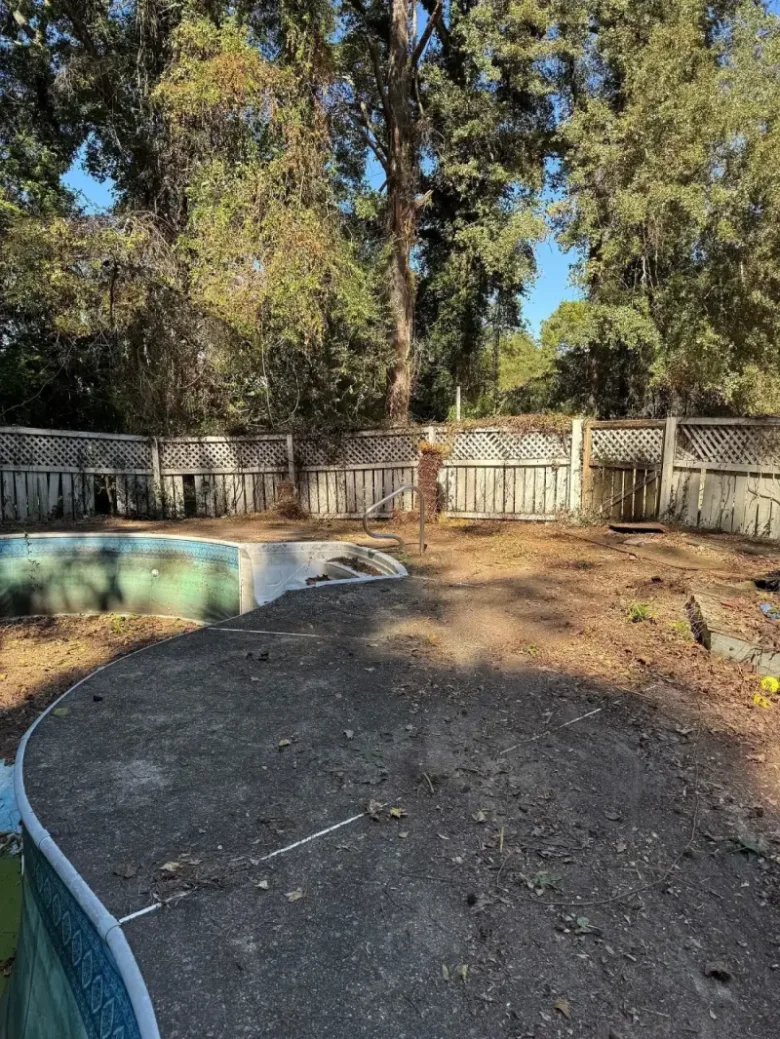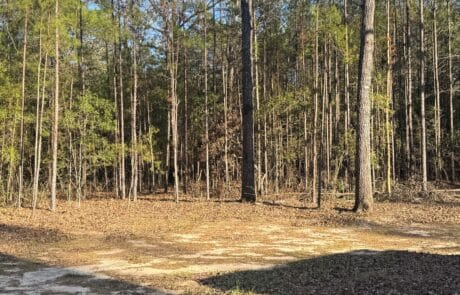
Neglected, overgrown land can catch property owners off guard. A few seasons of neglect in North Florida, and a clean pasture edge turns into a wall of titi, yaupon, privet, and saw palmetto thick enough that you can't walk a fence line, let alone survey a building site. Add the broken crowns and leaning hangers left behind by Hermine, Michael, Idalia, and Helene, and plenty of woodlots around Tallahassee, Florida, have become a liability instead of an asset. Forestry mulching is the first tool most owners reach for, and for good reason: it grinds standing vegetation in place, with no burn pile, no dump trailer, and no exposed dirt for the next thunderstorm to hit.
The trouble is that most people hire forestry mulching before they understand it. They expect a finished building pad and get a mulch mat with stumps under it. They schedule the job in the middle of a wet August and wonder why production crawls. They clear a stand of Chinese tallow without a follow-up plan and watch it resprout two growing seasons later, thicker than before. None of those outcomes are failures of the machine. They're failures of planning.
This article explains the outcomes of the forestry mulching process and how to time it with Panhandle rainfall and burn restrictions. It also covers equipment specifications for different stem sizes and soil types, relevant Leon County regulations on protected wildlife, and how to assess the best forestry mulching contractor to do the work.
What Forestry Mulching Actually Delivers
A mulching head, whether it's a drum or disc from a manufacturer like Fecon, Denis Cimaf, FAE, or Diamond, mounts to a compact track loader in the 75 to 120 horsepower range or to a purpose-built carrier running 200 horsepower or more. The head grinds brush, vines, and small trees into chips on the spot. Nothing gets hauled off, and nothing gets stacked and burned.
Cut to Grade, Not Below It
This is the single most important thing to understand before you sign anything. The head cuts vegetation at or slightly above grade. Root balls and stumps stay in the ground. Forestry mulching isn't grubbing or stump removal, and a mulched area isn't a buildable pad. If you intend to pour a slab, set a barn, or cut a driveway, that work requires a separate grubbing and grading phase. Owners from Bradfordville, Florida, to Crawfordville, Florida, often plan the clearing budget and forget the pad budget, then stall mid-project.
The Mulch Mat and What It Does
What's left behind is a layer of forestry mulch typically 2 to 6 inches deep. That mat suppresses weed germination, slows erosion on the red clay slopes common throughout Leon County, and breaks down in roughly one to three years in Panhandle humidity. It also ties up nitrogen in the top inch of soil while it decomposes, which matters if you're seeding pasture. Plan on raking back the heaviest accumulations, or budget for supplemental nitrogen, before you broadcast grass seed.
Timing the Work Around North Florida Weather
Tallahassee averages about 59 inches of annual rainfall, with most falling from June to September. Saturated flatwoods soil changes everything about a forestry mulching project because tracks rut, production drops, and crews spend more time managing the ground than cutting brush.
The best window runs from October through March. Soil is firmer, brush is dormant and easier to grind, and tick as well as snake presence drops sharply for the crew walking the site. Late spring brings the opposite problem. Keetch-Byram drought index readings climb, counties tighten burn restrictions, and pile burning needs Florida Forest Service authorization that may not be available when you want it. Forestry mulching sidesteps that bottleneck entirely, since there's nothing to burn.
That said, summer work isn't impossible. A tracked carrier exerts around 4 to 6 psi of ground pressure compared to 25 psi or more for a wheeled machine, so a well-equipped crew can often work ground that would bog a skid steer. A straight week of afternoon storms still warrants rescheduling, and any honest forestry mulching contractor will tell you so instead of tearing up your pasture to stay on the calendar.
Matching Equipment to Your Stems and Soil
Not every overgrown acre is the same job, and your forestry mulching quote should reflect that.
Stem Size and Realistic Production
A compact track loader head handles stems up to about 6 to 8 inches comfortably. Anything 10 inches and up is usually felled first, then processed. Production tracks accordingly:
- Light brush with stems under 4 inches: roughly 1 to 2 acres per day.
- Mixed stems running 6 to 10 inches, or thick saw palmetto: often 0.25 to 0.75 acres per day.
- Steep slopes, wet ground, or long travel distances between work areas: slower still.
National trade pricing typically falls between $500 and $2,500 per acre, or $150 to $350 per hour, driven by stem density, slope, soil moisture, and access. A quote far below that range usually means the estimator hasn't walked the property.
Teeth, Sand, and Ground Contact
Carbide teeth withstand the abrasive sand and sandy loam that define much of the terrain from Bradfordville, Florida, south toward the coast. Knife or planer teeth cut faster in clean wood, but they dull quickly when the head hits dirt. Because forestry mulching to grade means constant ground contact, carbide is the practical choice for most North Florida work.
Access and Setup
A typical mulching carrier plus trailer needs 10 to 12 feet of gate or trail width. Check narrow gates, low limbs over the entrance, and soft shoulders at the road before the day of the job. Also call Sunshine 811 for utility locates, and talk about setbacks from your well head, septic drain field, and fence lines.
Permits, Protected Trees, and Wildlife
Forestry mulching isn't permit-free, and treating it that way can turn a straightforward project into an expensive one.
The Leon County Land Development Code includes tree protection standards, rules covering large "patriarch" specimens, and a 100-foot Canopy Road Protection Zone along corridors including Old Bainbridge, Centerville, Miccosukee, Meridian, and Old St. Augustine. Depending on scope, an Environmental Management Permit may apply. Thresholds vary, so verify your specific parcel with the county. The Leon County GIS parcel viewer is a useful starting point for boundaries, canopy road proximity, and mapped wetlands.
A few other triggers worth knowing:
- Wetlands on the parcel can require review by the Northwest Florida Water Management District or FDEP under an environmental resource permit.
- Disturbing one acre or more generally triggers the state NPDES construction stormwater permit.
- Gopher tortoises are state-listed. Burrows need a 25-foot buffer, and relocation requires FWC permitting. They're common on the sandy uplands around Bradfordville and out toward Crawfordville, so a burrow survey before the machine moves is time well spent.
Those big live oaks most owners want to keep are usually an asset, not an obstacle. A careful operator mulches the understory around them, leaves the canopy intact, and improves the tree's long-term health by removing competition.
Invasives, Regrowth, and the Follow-Up Plan
Grinding a stem does not eliminate the root system. In the Tallahassee area, species such as Titi, Chinese tallow, privet, chinaberry, and wax myrtle can resprout within one to two growing seasons unless a licensed applicator treats the cut stumps with herbicide. Incorporate this essential follow-up treatment into your management plan from the start.
Certain species in Tallahassee require attention before any machinery is used. For instance, cogongrass spreads through rhizomes, and Japanese climbing fern spreads via spores. A mulching head that processes either of these can spread them throughout the area. To prevent this, map these patches first, apply appropriate treatments, or fence them off from the work zone. The same caution applies to coral ardisia, air potato, and kudzu, which are well established in the region.
A sensible sequence looks like this:
- Walk the property and flag invasives, burrows, wells, septic components, and keeper trees.
- Confirm permitting needs and utility locates.
- Mulch during the dry window.
- Treat resprouts in the following growing season.
- Seed or plant once the mat has begun breaking down.
Hiring a Forestry Mulching Contractor
The equipment is only half the equation. Experience with local soils, species, and regulations is the other half. Before you hire a mulching contractor, ask:
- What head and carrier will be on site, and what maximum stem size does it handle?
- Is the estimate per acre or per hour, and what assumptions drive it?
- Who confirms permits, locates, and tortoise burrows - the crew, or the owner?
- How is the mulch mat finished, and how deep will it be?
- What happens if the ground is too wet on the scheduled day?
Clear answers signal a crew that has worked North Florida ground before. EZ Acre serves residential, commercial, and agricultural properties across Tallahassee, Bradfordville, and the surrounding region, including Bradfordville, Crawfordville, Monticello, and Quincy, with a team-first approach built on showing up on time and leaving the property better than it was found.
Final Thoughts
Forestry mulching works because it solves the right problem of overgrown vegetation, removed in place, without hauling, burning, or exposing bare soil to erosion. It does not remove stumps, it does not create a building pad, and it does not stop regrowth on its own. Owners who understand those limits get what they wanted.
If you have acreage in the Tallahassee, Florida, area that has gotten away from you, start with a property walk-through and an honest scope. Map the invasives, flag the trees worth keeping, check the parcel for canopy road and wetland constraints, and aim for the dry season. Then call a forestry mulching contractor who knows this terrain and get on the schedule before the winter window fills up!
Key Takeaways
- Forestry mulching cuts vegetation to grade and leaves stumps and root balls in place, so it isn't grubbing and doesn't produce a buildable pad.
- The best working window in North Florida runs from October through March, when soil is firm, brush is dormant, and burn restrictions don't affect the job.
- Expect 1 to 2 acres per day in light brush and as little as a quarter acre per day in heavy stems or thick saw palmetto.
- Resprouting species like titi, privet, and Chinese tallow need licensed cut-stump herbicide follow-up within a growing season or two.
- Check Leon County tree protection rules, canopy road zones, wetlands, and gopher tortoise burrows before any machine moves onto the property.
Frequently Asked Questions
Will the stumps grow back after mulching?
Yes, many species will. Titi, privet, Chinese tallow, and wax myrtle resprout within one to two growing seasons unless a licensed applicator treats the cut stumps.
Can I build a house or barn on mulched ground?
No, a mulched area is not a buildable pad. The stumps and root balls remain in the soil, so you'll need a separate grubbing, grading, and compaction phase first.
Will the mulch mat keep my pasture grass from coming up?
It can slow it down. The mat suppresses germination by design and ties up nitrogen in the top inch of soil, so rake back heavy accumulations or add nitrogen before seeding.
Is the mulch layer a fire or termite risk near my house?
Keep the mat pulled back from the foundation, just as you would with landscape mulch. Away from structures, the chips decompose in about 1 to 3 years and pose little concern.
How close can the machine work to my well or septic drain field?
Mark them before work begins and keep the carrier off the drain field. A tracked machine spreads its weight at around 4 to 6 psi, but repeated passes over shallow septic components are still a risk.
Do I need a permit in Leon County?
Possibly, depending on acreage, wetlands, and tree protection rules. Canopy road zones, patriarch trees, and one acre or more of disturbance can all trigger county or state review.
What happens if gopher tortoise burrows are on my property?
Work stops within 25 feet of the burrow. Gopher tortoises are state-listed, relocation requires FWC permitting, and a survey before clearing keeps the project legal and on schedule.