

Researching Eco-Friendly Mulching in Woodville Florida?
EZ Acre handles mulching jobs on lots and acreage around Woodville Florida.
Reach us at 850-787-9300 to talk through what you want mulched.
The Basics of the Practice
On a property, mulching usually means grinding or spreading plant material so it protects the soil, and the three most common kinds are forestry mulching, hydraulic mulching, and ordinary bed mulching. Covered soil loses less water to the sun and the wind, and owners use it to protect land that has just been disturbed.
That is the need behind many searches for Eco-Friendly Mulching, and a short conversation can sort out what the job calls for.
Mulching as a Clearing Method
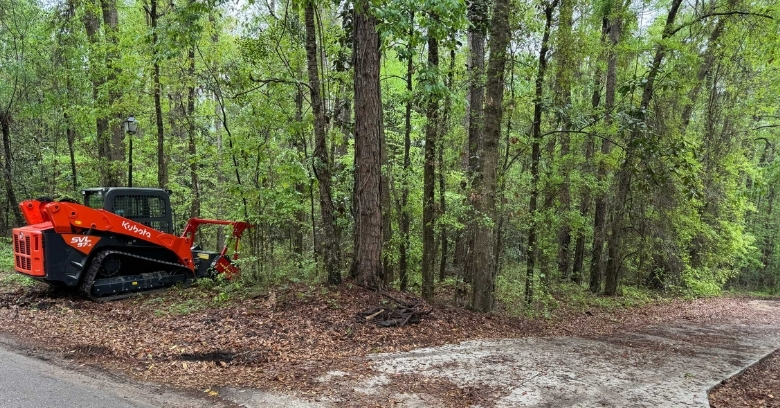
A forestry mulcher is a tractor or tracked machine with a heavy cutting head that shreds vegetation where it stands, and the chips stay on the ground and form a protective layer. Because the roots stay in the ground, the soil holds together better than after a bulldozer clearing, and it is often chosen for slopes, wet edges, and land near water.
Larger mulching heads can take trees many inches across, and smaller ones are meant for brush, and the result is a clean, open, park-like look. The finished ground is covered with a carpet of chips, and the chips can be left as they are on wild land.
Protecting Soil With a Liquid Mulch
In hydraulic mulching, a machine pumps a wet blend of fiber and seed onto the surface, and the fibers hold the seed in place and keep the moisture near it. A slope stripped of vegetation can lose soil quickly in a heavy rain, and sites that have been graded often get hydromulch within days.
The slurry needs a dry day or two to set before heavy rain, and slopes may need an extra layer or a stronger binder. The mulch only protects the soil until the grass takes over, and watering during the first weeks speeds up growth.
Keeping Organic Matter on the Property
Grinding growth into chips returns plant material to the soil as it decays, and the roots stay in the ground to hold the soil. On environmentally sensitive ground, mulching with less soil disturbance is usually preferred, and owners should ask about local rules before work begins.
Plant-based materials break down and improve the soil over time, and it keeps roots cool, holds water, and slows weeds. Chips left from a clearing or tree job can be spread on paths and beds, and the supply is usually more than the property can use.
How a Mulching Job Gets Done
Different machines suit different terrain and different density of growth, and smaller units handle brush and vines in tight spaces. A hydroseeder is a tank on wheels with an agitator and a pump, and the machine must be able to reach the area it will spray.
A mulching head can throw chips, rocks, and debris a long way, and the operator works from a protected cab. Rocks, old fence wire, buried metal, and stumps are risks for any mulching head, and a careful survey saves equipment and prevents accidents.
Local Conditions That Shape Mulching
Much of the ground in this region is light, sandy, and low in organic matter, and returning chips to the ground builds organic matter slowly. The wet season runs through the summer with frequent heavy rain, and schedules should always include some room for weather.
Hurricane season runs from June through November and brings storms that fell trees and fill yards with debris, and grinding the material in place can be faster than hauling it away. Dense brush can also feed wildfires in dry seasons, and burn bans are common in dry spells.
Roots, Chips, and Bare Soil
The machine can grind a stump to a few inches above the surface or below it with extra effort, and the owner should decide whether the stumps can stay or must be ground out. Leaving roots intact means rainfall has less power to carry soil away, and mulching is often chosen for slopes, ditch banks, and pond edges.
Chips from a mulching pass vary in size, from fine shreds to chunky pieces, and a thick mat of fresh chips can tie up nitrogen briefly as it decomposes. Mulch depth matters, and too much can be as much of a problem as too little, and it helps to let the crew know where a thick layer is welcome.
Seasonal Planning for Mulching
Wet-season rain and soft soil slow tracked machines and cause ruts, and new seed needs rain after the application, but not a flood. Within a season, a mulched lot may show new shoots from stumps and vines, and a follow-up pass is part of the plan for many properties.
Refreshing a mulch layer is routine upkeep for any landscape, and raking and fluffing the surface helps it shed water. Dry wood chips can burn, so thick mulch is best kept away from structures, and it helps to ask local fire officials about the recommendations for the area.
A Simple Way to Decide
Dense vegetation that blocks access and sight lines is the job forestry mulching is built for, and exposed ground that must be seeded and held in place is the target of the hydraulic type. Using the two together turns wild growth into a stable, planted surface, and the plan should say which comes first and how long the gap will be.
For a home landscape, a few inches of mulch around the plants does the job, and the appearance is a bonus on top of the benefits to the plants. Asking the right question at the start saves time, and it helps to mention any slopes, wet spots, or neighbors close to the work.
Wildlife, Nesting, and Care on Wooded Land
Thick brush shelters animals that nest, burrow, and hide in the growth, and some species and their burrows are protected by law. Timing the work outside the peak nesting period reduces harm to wildlife, and a short survey of the land by a person who knows the area is useful.
Planning Your Mulching Project
Flagging tape or stakes help define the limits of the work, and a plan on paper keeps the crew and the owner on the same page. The details of access, permits, and disposal should be settled before the job starts, and the work goes smoothly.
Once you know what you want covered or cleared, Eco-Friendly Mulching in Woodville Florida is a short list, and it is easy to take it from there.
Reach us at 850-787-9300 to get your lot ready for its next use.
Verified

Verified
Verified
Verified
Verified














